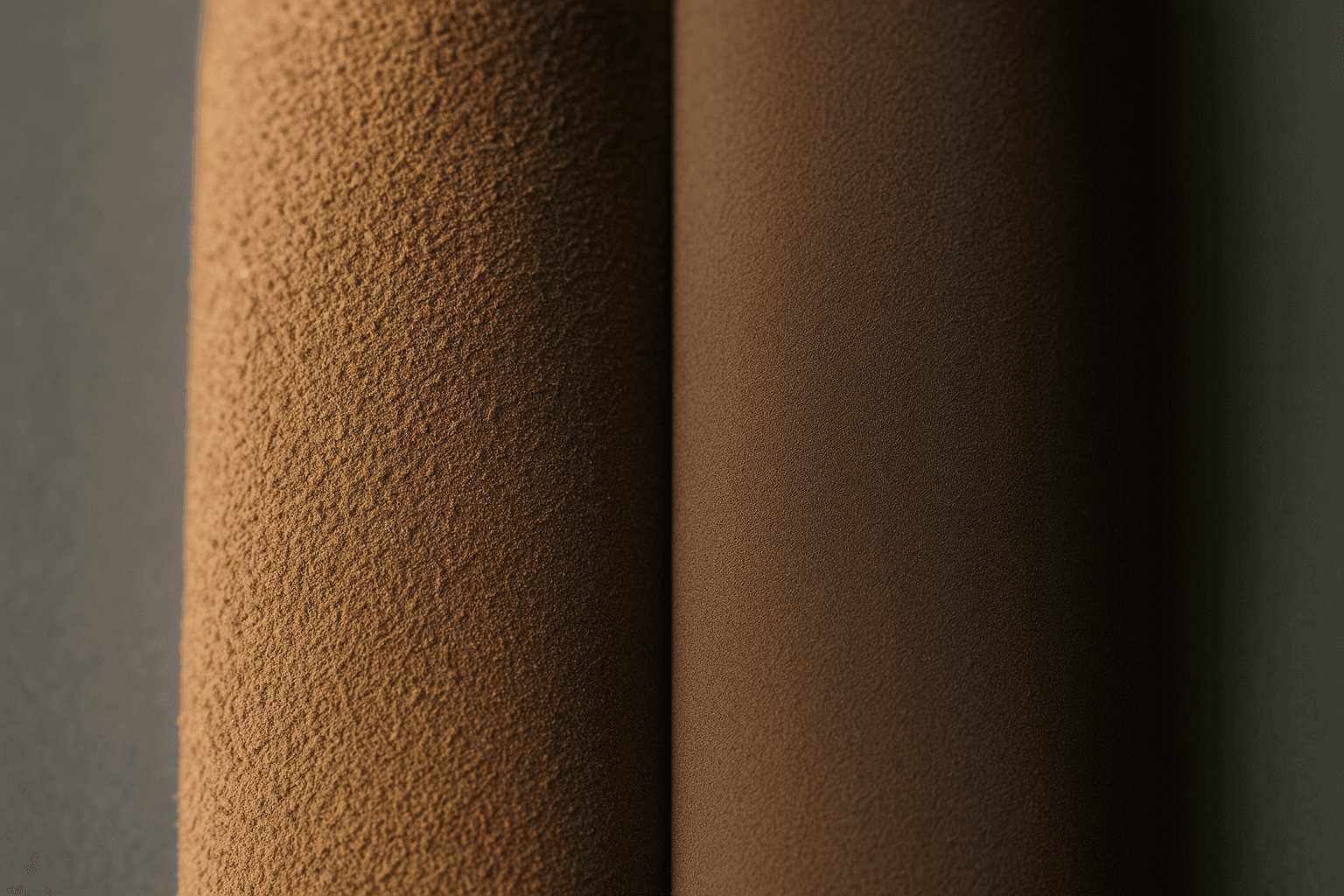
What Is a Suede Coat? A Complete Definition, History, and Anatomy

A suede coat is a coat made from suede - leather where the inside (flesh) layer of an animal hide has been brushed to create a soft, velvety surface called the nap. The result is outerwear that combines the warmth and structure of leather with a tactile, light-catching texture that no other material in fashion replicates.
This guide is the definition page for the suede coat as a category. What counts as a suede coat, what does not, the anatomy of the garment, the history of the form, and how to evaluate one. It is the cornerstone of the rest of our suede coat library.
The Definition
A suede coat is outerwear made from leather (animal hide that has been preserved through tanning) where the soft, brushed underside of the hide is presented as the visible surface. The brushed surface (the nap) is what distinguishes suede from smooth leather. A coat is considered a suede coat if the entire visible exterior is suede - garments where suede appears only as a panel, trim, or accent are described by their dominant material.
What Counts and What Does Not
- Counts: a coat with the full exterior cut from goatskin, lambskin, calfskin, deerskin, or pigskin suede.
- Counts: a coat with shearling collar trim where the body is suede - this is still a suede coat (the Penny Lane silhouette is a classic example). See our Penny Lane coat guide.
- Does not count: a coat made entirely of shearling (sheepskin with the wool attached on the inside). This is a shearling coat. See our suede coat vs shearling coat guide.
- Does not count: a coat made from microfibre or polyester engineered to mimic suede texture. This is a faux suede or synthetic suede coat - related but a different category.
- Does not count: a wool or cashmere coat with suede elbow patches. This is a wool coat with suede detailing.
- Edge case: a coat made from nubuck (top-grain leather buffed to a fine nap) is sometimes confused with suede but is technically a separate category. The nap is shorter, the material denser, the price often higher.
Anatomy of a Suede Coat
Every suede coat has the same fundamental anatomy, regardless of silhouette or price tier:
- The hide. The source animal (lamb, goat, calf, deer, pig, or cow split) determines softness, durability, weight, and price. See our lambskin vs goatskin vs calfskin guide.
- The tannage. The chemistry that stabilises raw hide into leather. Vegetable, chrome, or aldehyde tanning each shape colour, ageing, and lifespan. See our vegetable-tanned suede coat guide.
- The weight. Suede is split to a target thickness in millimetres or ounces. Lightweight (0.6-0.8 mm) drapes; heavyweight (1.2-1.4 mm) holds structure. See our heavyweight vs lightweight suede coat guide.
- The lining. Viscose, silk, cotton, quilted, or shearling - lining determines warmth, drape, and how easily the coat layers over knitwear. See our suede coat lining guide.
- The silhouette. Trench, car coat, swing, wrap, duster, Penny Lane, cocoon, cape - each silhouette serves a different occasion and figure. See our suede coat silhouettes guide.
- The length. Cropped, hip, mid-thigh, knee, midi, or maxi - the single biggest variable in how a coat reads on the body. See our suede coat lengths guide.
- The colour. Drum-dyed through the full thickness of the hide rather than printed on the surface, which is why suede colours catch light unlike any other dyed material. See our suede coat colour guide.
- The construction. Seam quality, hardware, lining attachment, and reinforcement at high-stress points (cuffs, pockets, collar) determine whether the coat lasts five seasons or fifteen.
A Brief History
The word suede comes from the French gants de Suède - 'gloves from Sweden' - referring to soft Swedish gloves imported into France in the 18th and 19th centuries. The technique of brushing the underside of leather predates the term by millennia, but suede as a recognised material category emerged from this Swedish-French exchange. The Wikipedia entry on suede covers the etymology and material classification in detail.
Suede coats as a fashion category took shape in the early 20th century. Aviator and motorcycle outerwear in the 1920s and 1930s used suede for its windbreaking quality. The 1970s turned suede coats into a cultural moment - Afghan coats, Penny Lane shearling-trimmed silhouettes, and Laurel Canyon folk style brought suede coats from utility into mainstream fashion. The 1990s saw a sleeker, urban suede coat (Helmut Lang, Calvin Klein) before the 2010s and 2020s revival drew the silhouette back toward its 1970s roots. For the full timeline, see our history of suede.
How to Evaluate a Suede Coat
Five questions answer most evaluation decisions:
- What is the hide? A premium suede coat names its source animal (lambskin, goatskin, calfskin). Generic 'genuine leather' or unspecified 'suede' usually indicates split cowhide or pigskin.
- How was it tanned? Vegetable-tanned suede ages with patina; chrome-tanned suede holds bright colours and dries faster; aldehyde-tanned suede is the softest. See our vegetable-tanned guide.
- Where was it made? Italian, Spanish, and certain regional French tanneries set the global benchmark for suede quality. Country of origin matters more in suede than in many other categories.
- How is it lined? A premium suede coat lists its lining material. Generic 'fabric lining' usually means low-grade polyester.
- Does it fit you today, with the layers you actually wear? Suede has limited stretch, so the fit you buy is the fit you keep. See our suede coat fit guide.
Where Suede Coats Sit Among Outerwear
Suede coats occupy a specific position in the outerwear landscape. They are warmer than gabardine, lighter than wool melton, more breathable than leather, and more textural than any of them. They handle mild and cool weather brilliantly and struggle in heavy rain or snow. They span smart-casual to elevated styling but rarely formal in the strictest sense. See our comparisons:
- Suede coat vs leather coat - same hide, different surface.
- Suede coat vs wool coat - the most common outerwear comparison.
- Suede coat vs shearling coat - same animal, different garment.
What a Suede Coat Is For
A suede coat works hardest in three contexts: mild and transitional weather where wool would overheat; smart-casual and elevated outfits where the texture lifts a simple base; and as a long-horizon investment piece where 10-15 years of regular wear pays back the upfront cost. See our suede coat investment piece guide and 12 outfit formulas.
What a Suede Coat Asks of the Owner
More than a wool coat, less than a shearling coat. A suede coat needs brushing after wear, periodic protector spray, careful weather avoidance, and proper off-season storage. None of this is difficult, but it requires consistency. See our suede coat care and storage guide and suede coat in the rain.
Frequently Asked Questions
- What exactly is a suede coat made of?
A suede coat is made of animal hide that has been tanned (preserved) and split to expose the soft underside. The brushed underside, called the nap, is the visible surface. The most common source animals for premium suede coats are lamb, goat, and calf.
- Is a suede coat real leather?
Yes. Suede is leather - just leather where the soft interior surface is presented rather than the smooth exterior. The same hide that produces smooth leather can produce suede; the difference is which side faces out.
- How is a suede coat different from a leather coat?
Smooth leather coats use the outer (grain) side of the hide. Suede coats use the inner side, brushed to a velvety nap. This makes suede softer, more textured, and less weather-resistant than smooth leather. See our suede vs leather comparison for the full breakdown.
- Can a synthetic suede coat be called a suede coat?
Strictly no. Microfibre, polyester, and ultrasuede are engineered fabrics that mimic suede's texture but are not leather. Reputable brands describe these as 'faux suede' or 'synthetic suede'. The distinction matters for breathability, drape, ageing, and longevity.
- What is the most important thing to know before buying a suede coat?
The hide source. A coat described only as 'genuine suede' without naming lamb, goat, or calf is usually split cowhide or pigskin - significantly less durable and less luxurious than premium hides. Premium brands name the source animal because the distinction adds value.
Anatomy of a Suede Coat
| Part | Function | Material Options |
|---|---|---|
| Outer shell | Defines colour and texture | Lambskin, goatskin, calfskin |
| Lining | Insulation and slip | Silk, viscose, quilted satin, shearling |
| Buttons or fastenings | Closure and detail | Horn, leather-covered, hidden snap |
| Pockets | Function and silhouette | Welt, flap, patch |
| Collar | Frames the face | Notched, shawl, stand |
| Belt | Defines waist | Self-suede, leather, optional |
Shop the Collection
Every piece is cut from 100% genuine suede and made to be worn for years, not seasons.
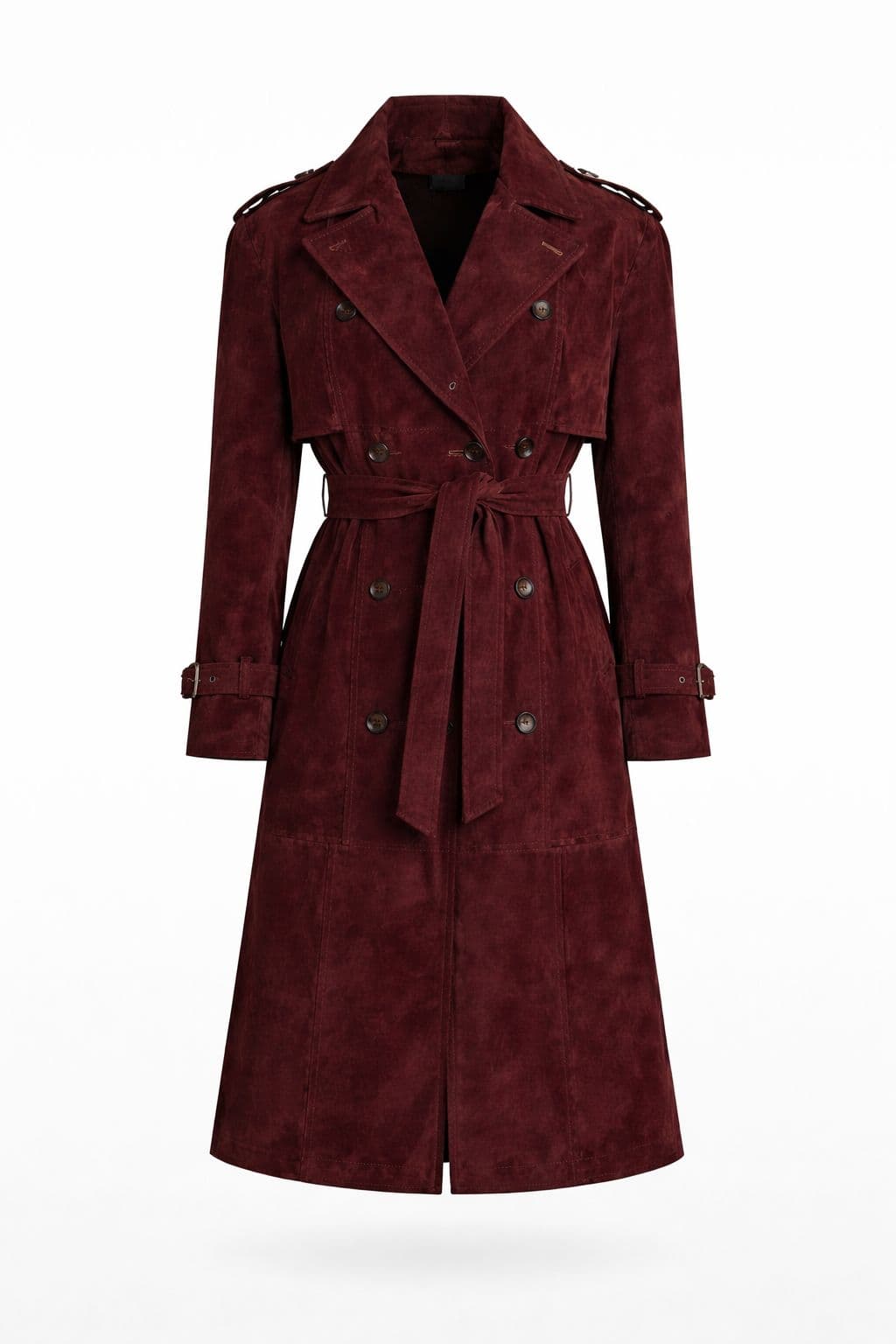
Clémence Bordeaux Suede Coat - 100% Genuine Premium Suede
$920
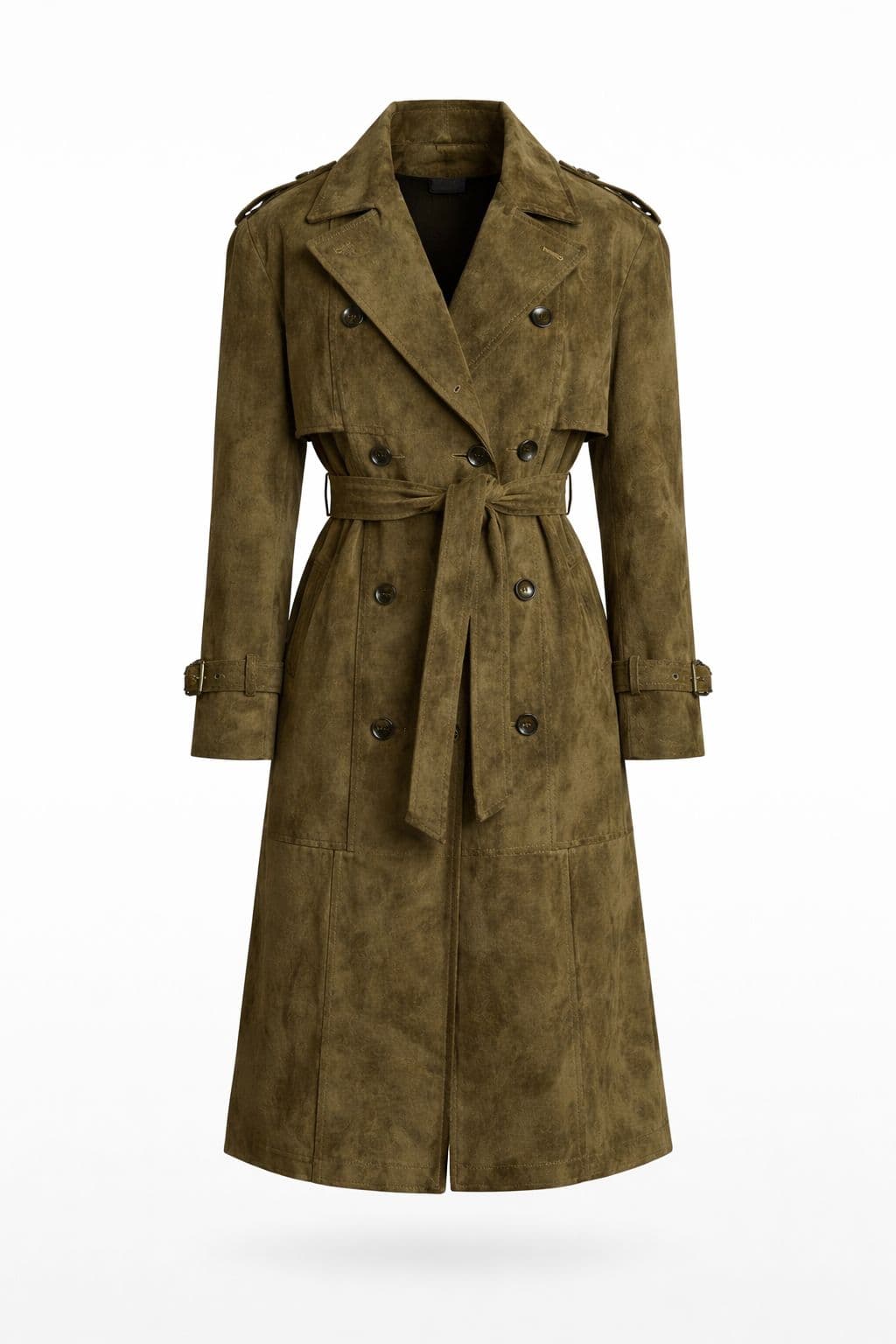
Clémence Olive Suede Coat - 100% Genuine Premium Suede
$920
Free shipping on orders above $330.