Is a Suede Coat Worth the Investment? Cost-per-Wear, Longevity, Resale

A premium suede coat costs €700 to €1,500. That is more than most coats most people own. The investment-piece argument for suede coats is real, but it is also frequently overstated. This guide gives the honest version: when a suede coat is genuinely an investment, when it is just an expensive coat, and how to model real cost-per-wear before you buy.
What Makes Something an Investment Piece
An investment piece earns its price across years of regular wear. Three conditions must hold:
- It is durable enough to last 10-15 years of regular wear without major damage.
- It is timeless enough to remain stylistically relevant across that period.
- It is versatile enough to actually be worn frequently, not stored as a special occasion item.
Suede coats can hit all three conditions, but only the right ones do. A poorly chosen suede coat fails on at least one of these tests.
Real Cost-per-Wear Math
Cost-per-wear (CPW) is purchase price divided by lifetime wears. For a suede coat:
| Coat price | 60 wears/year for 5 years (300) | 60 wears/year for 10 years (600) | 60 wears/year for 15 years (900) |
|---|---|---|---|
| €600 | €2.00 | €1.00 | €0.67 |
| €840 | €2.80 | €1.40 | €0.93 |
| €1,200 | €4.00 | €2.00 | €1.33 |
| €1,500 | €5.00 | €2.50 | €1.67 |
By the 10-year mark, a well-cared-for €840 suede coat costs less per wear than a €30 fast-fashion coat that lasts 18 months. The investment math works - but only if the coat actually reaches 10 years.
What Determines Whether Your Suede Coat Lasts 5 Years or 15
Five things separate the suede coat that becomes a wardrobe anchor from the one that gets retired after a few seasons:
1. Hide Quality
Genuine goatskin, lambskin, or calfskin suede outlasts split cowhide and microfibre 'suede-feel' fabrics by an order of magnitude. Premium hides develop patina; lower-quality hides develop wear. See our guide on lambskin vs goatskin vs calfskin suede coats.
2. Tanning Method
Vegetable-tanned suede ages with dignity. Cheap chrome-tanned suede can crack, stiffen, or develop chemical odours within years. Tanning matters more than most buyers realise. See our vegetable-tanned suede coat guide.
3. Construction
Look for: bound seams, fully finished interior linings, reinforced shoulder seams, real metal hardware, and even stitch density throughout. Cheap construction shows up at high-friction points (cuffs, pockets, collar) within 18 months.
4. Fit
A coat that does not fit well will not be worn, regardless of quality. The most common reason expensive coats sit unworn is poor fit. See our guide on how a suede coat should fit.
5. Care
Regular brushing, periodic protector spray, and proper off-season storage easily double a suede coat's lifespan. Neglected suede ages five times faster than maintained suede. See our suede coat care and storage guide.
When a Suede Coat Is Not an Investment
Three honest scenarios where the investment argument fails:
- If you live in a climate with significant rain or snow and do not own a backup outerwear option, your suede coat will be over-exposed to weather and age fast.
- If you bought a fashionable silhouette rather than a classic one (extreme cropped, exaggerated shoulders, novelty colours), the coat may date stylistically before it wears out physically.
- If you bought outside your daily aesthetic - a beautiful piece you 'want to grow into' - it will likely sit unworn. Cost-per-wear stays high because the wear count stays low.
Suede Coats on the Resale Market
The resale market for premium suede coats is healthy but selective. Pieces that hold value best:
- Recognised heritage brands (Loewe, The Row, Khaite, Toteme, Saint Laurent) hold 40-60 percent of original retail after 5 years if well-maintained.
- Classic silhouettes (trench, Penny Lane, car coat) outperform trend-led shapes.
- Neutral colours (camel, chocolate, bordeaux) sell faster than statement colours.
- Coats with documented care history (original receipts, brushed and protected, stored properly) command 15-25 percent more than identical untracked pieces.
Less recognised brands, even when the suede is excellent, typically resell at 20-35 percent of original retail. The investment is in the wearing, not the resale - which is the right way to think about clothing in any case.
Practical Buying Framework
If you are deciding whether a specific suede coat justifies its price, ask:
- Will I wear this coat at least 50 times in the next year? If no, the investment math will not work.
- Will I still want to wear this coat in 5 years? Trend-led silhouettes fail this test.
- Can I commit to brushing, protecting, and storing this coat properly? Suede asks more from owners than wool does.
- Do I own appropriate alternative outerwear for genuinely bad weather? If no, this coat will be over-exposed and short-lived.
- Is the construction quality matching the price? Inspect seams, lining, hardware, and edges before buying.
If you can answer yes to all five, the investment is sound. If even one is uncertain, reconsider the purchase or choose a less expensive option.
Frequently Asked Questions
- Are suede coats actually worth the high price?
A premium suede coat is worth the price if you wear it 50 or more times per year for at least 5 years and care for it properly. Under those conditions, cost-per-wear drops below €3 - economical for any garment. Without those conditions, the price is hard to justify.
- How long should a suede coat last?
A well-made, well-cared-for premium suede coat should last 10-15 years of regular wear. Heritage examples last 20-30 years with restoration. Lower-quality suede coats often fail within 3-5 years.
- Do suede coats hold their resale value?
Recognised premium brands hold 40-60 percent of retail after 5 years if maintained. Less recognised brands hold 20-35 percent regardless of suede quality. Classic silhouettes and neutral colours resell faster than trend pieces.
- What is a fair price for a high-quality suede coat?
€700 to €1,500 for genuine goatskin, lambskin, or calfskin suede with proper construction. Below €500, expect compromises in hide quality, tanning, or construction. Above €2,000, you are usually paying for brand prestige rather than meaningfully better suede.
- Is buying a vintage suede coat a better investment?
Sometimes. Vintage suede coats from the 1970s-1990s often used hides and construction methods that are hard to replicate today, and prices on the secondhand market can be a fraction of new equivalents. The risks are condition (hidden damage, dryness) and fit (smaller historic sizing). Buy from a trusted dealer who can authenticate condition.
Shop the Collection
Every piece is cut from 100% genuine suede and made to be worn for years, not seasons.
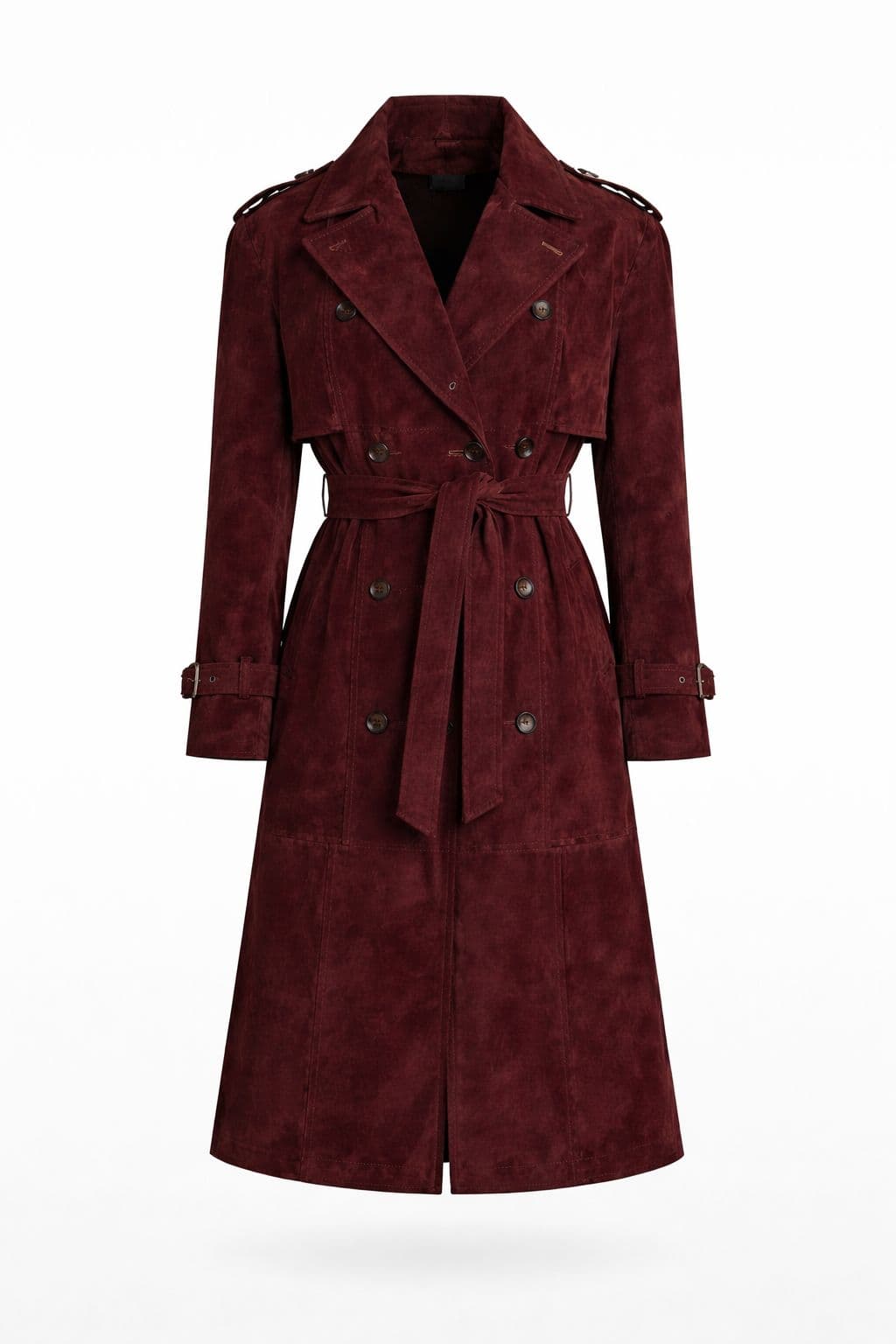
Clémence Bordeaux Suede Coat - 100% Genuine Premium Suede
$920
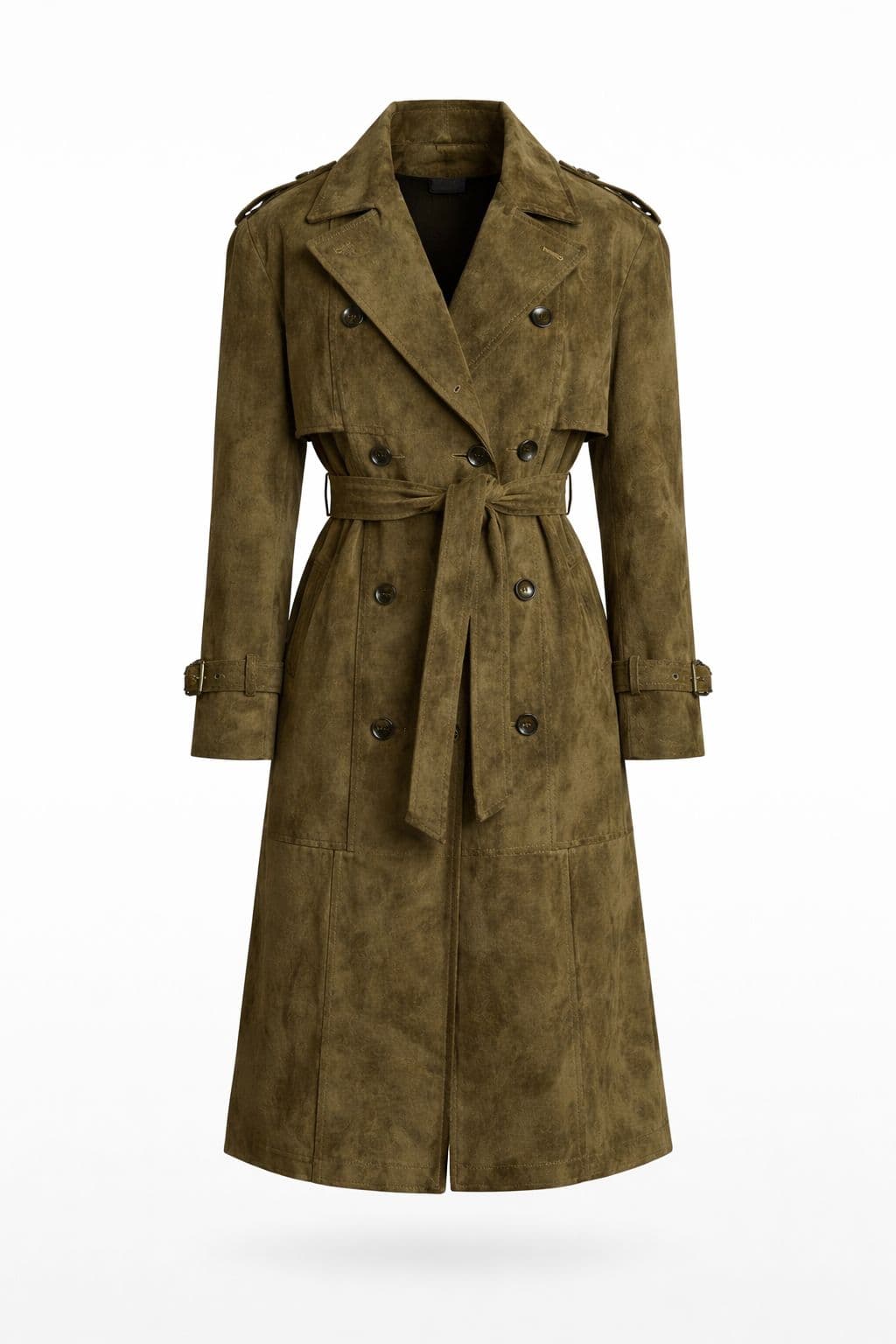
Clémence Olive Suede Coat - 100% Genuine Premium Suede
$920
Free shipping on orders above $330.