Suede vs Leather: Key Differences, Pros & Cons for Outerwear
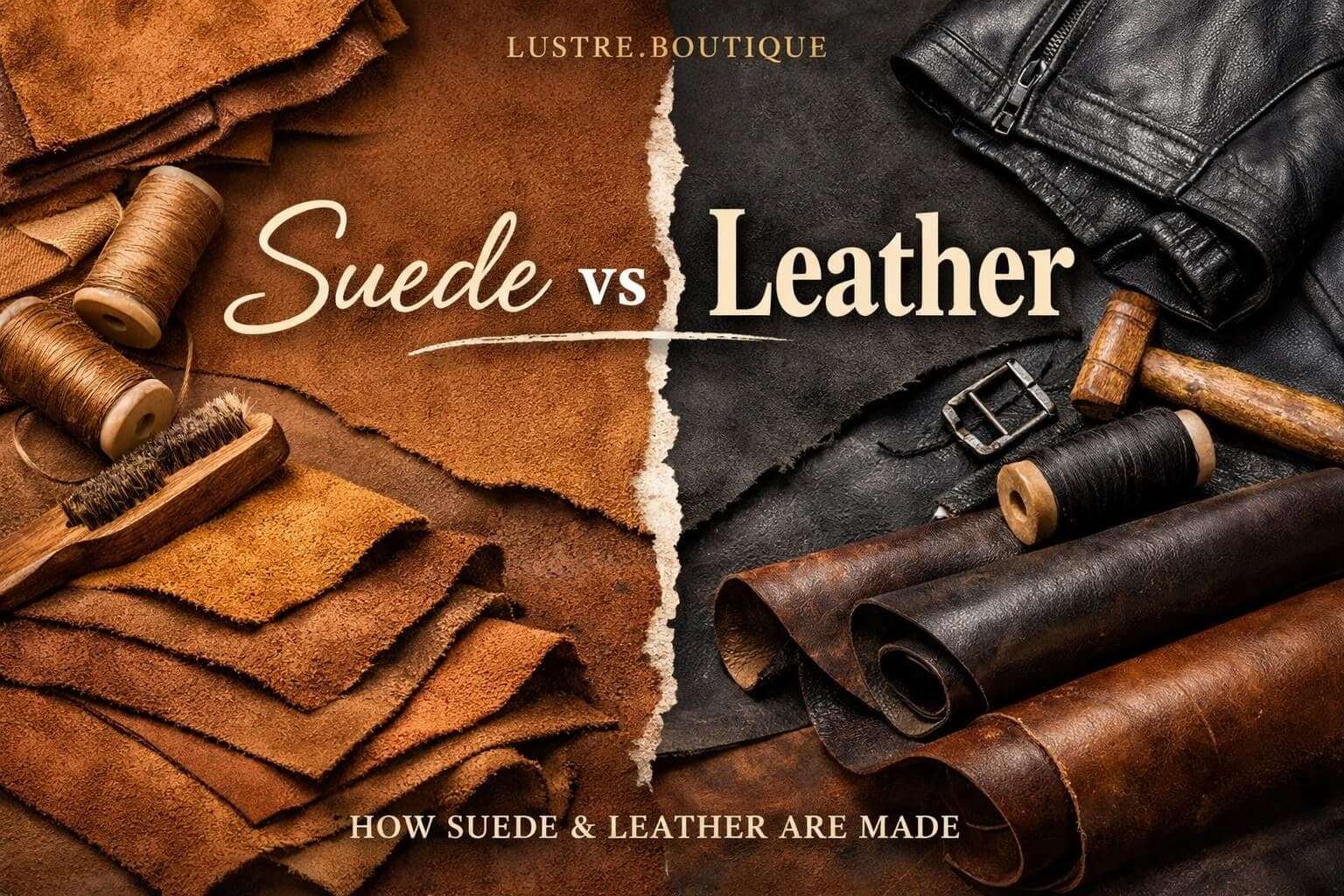
Walk into any leather-goods showroom and you will find two fundamentally different surfaces cut from the very same animal hide. Smooth, or “grain,” leather uses the tough outer layer; suede uses the softer inner split. That single distinction shapes everything from how a coat drapes on your shoulders to how you care for it a decade later. Understanding suede versus leather is the first step toward choosing outerwear that truly matches your lifestyle.
How Suede and Leather Are Made
All leather begins with a raw hide. During tanning, the hide is split into layers. The outermost layer-the grain side-becomes what most people simply call “leather.” It retains the hide’s natural surface, pores, and a tight fibre structure that resists abrasion.
The underside of that same split is buffed into the soft, napped finish we know as suede. Because the fibres are looser and finer, the surface has the velvety texture that makes suede so distinctive. The word itself derives from the French phrase “gants de Suède,” meaning gloves from Sweden, where soft undressed kidskin was first fashioned into luxury accessories.
Texture and Appearance
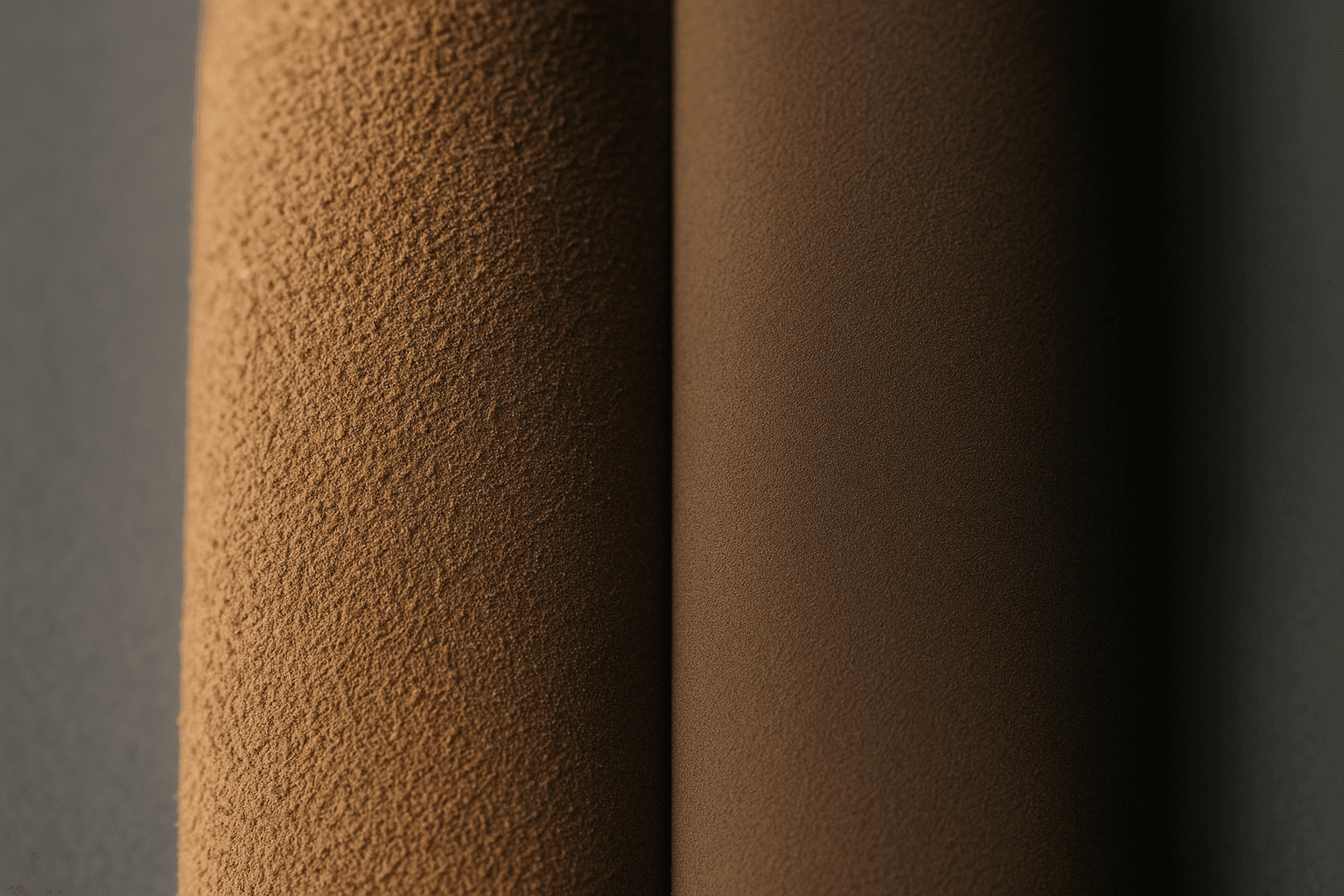
The most immediate difference is tactile. Smooth leather has a polished, sometimes glossy surface that reflects light uniformly. Suede, by contrast, has a matte, napped finish that absorbs light and creates depth of colour, shifting subtly as the nap moves under your hand.
- Smooth leather: sleek, polished, uniform sheen; projects a sharp, structured silhouette.
- Suede: velvety nap, matte finish, rich tonal depth; projects a softer, more textured aesthetic.
For outerwear, this translates into two very different visual personalities. A smooth leather jacket reads bold and architectural. A suede coat reads refined, approachable, and quietly luxurious.
Durability and Longevity
Grain leather’s tight fibre structure gives it a natural resistance to scuffs and moisture. It is inherently tougher and, when conditioned regularly, develops a handsome patina rather than showing wear.
Suede is softer and more porous, which means it is more susceptible to staining and water marks. However, that vulnerability is often overstated. A well-made suede coat treated with a quality protectant spray can last just as long as its smooth-leather counterpart-decades, in many cases-provided it receives minimal but consistent care.
Breathability and Comfort
Suede’s open fibre structure gives it a significant edge in breathability. Air moves through the nap more freely than through sealed grain leather, making suede coats more comfortable in mild and transitional weather. This is one reason suede remains the preferred material for luxury spring and autumn outerwear.
Smooth leather, being denser, provides a more effective windbreak and slightly better rain resistance out of the box. In cold, wet climates, a lined leather coat may be the pragmatic choice. In temperate conditions, suede’s lighter hand and superior breathability make it the more comfortable option for daily wear.
Weight and Drape
Because suede comes from the thinner, inner split, it is generally lighter than full-grain leather of the same hide. A suede trench or overcoat drapes more fluidly and feels less rigid on the body. This is a key reason luxury houses favour suede for long coats: the material moves with the wearer rather than imposing its own structure.
Care and Maintenance Compared
- Smooth leather: wipe with a damp cloth; condition with leather cream every few months; polish for extra sheen.
- Suede: brush regularly with a soft suede brush; apply protectant spray before first wear and seasonally thereafter; blot spills immediately; use a suede eraser for scuffs.
Neither material is “maintenance-free,” but suede care is simpler than many assume. A two-minute brushing after each wear keeps the nap lifted and fresh. For deeper cleaning, a professional suede specialist can restore a coat to near-original condition.
Cost Considerations
Premium suede and premium smooth leather occupy a similar price bracket. The determining factor is not the split but the quality of the hide, the tanning method, and the craftsmanship of the garment. A well-constructed suede coat from ethically sourced hides represents the same calibre of investment as a comparable leather piece.
Which Is Better for Coats and Outerwear?
There is no universally “better” material-only the better fit for your needs. Choose smooth leather if you prioritise rain resistance, a sharp structured look, and minimal maintenance. Choose suede if you value breathability, a softer drape, tactile richness, and a distinctly luxurious texture that stands apart from the crowd.
At Lustré, we specialise in suede because we believe its unique combination of lightness, warmth, and sensory depth makes it the ideal material for coats that become lifelong wardrobe companions. Explore our suede coat collection to feel the difference for yourself.
Side-by-Side Comparison
| Property | Suede | Smooth Leather |
|---|---|---|
| Texture | Soft, brushed nap | Smooth, often glossy surface |
| Durability (years) | 15 to 25 with care | 20 to 40 with care |
| Breathability | High - open fibre structure | Moderate |
| Water Resistance | Low without protector spray | Moderate to high |
| Care Effort | Weekly brushing, periodic spray | Monthly conditioning, occasional polish |
| Weight (g per m squared) | 350 to 550 | 600 to 900 |
| Typical Price (entry luxury) | 700 to 1200 euros | 900 to 1800 euros |
FAQ
Frequently Asked Questions
- Is suede less durable than leather?
Suede is slightly less durable than full-grain smooth leather because the open nap is more vulnerable to abrasion and moisture. With regular care, a luxury suede coat still lasts fifteen to twenty-five years, which is long enough to be a true investment piece.
- Which is warmer, suede or leather?
Suede is warmer for its weight because the brushed nap traps insulating air. Smooth leather is more wind-resistant but conducts cold faster. For dry cold, lined suede outperforms; for wet cold, smooth leather is more practical.
- Can I waterproof suede to match leather?
A suede protector spray brings water resistance close to but not equal to that of smooth leather. Reapply every six to eight weeks. Even with treatment, avoid wearing suede in heavy rain for prolonged periods.
- Which ages better, suede or leather?
Smooth leather develops a patina; suede deepens slightly in colour and softens further. Both age beautifully when cared for. Suede looks worn faster if neglected because dust and oil show on the nap more visibly than on a smooth grain.
- Is suede or leather better for a first luxury coat?
If you live in a wet climate or want minimal maintenance, choose smooth leather. If you want softer hand, more visual warmth, and a more distinctive texture, choose suede. For most European climates outside heavy winter rain, suede is the more rewarding choice.
Shop the Collection
Every piece is cut from 100% genuine suede and made to be worn for years, not seasons.
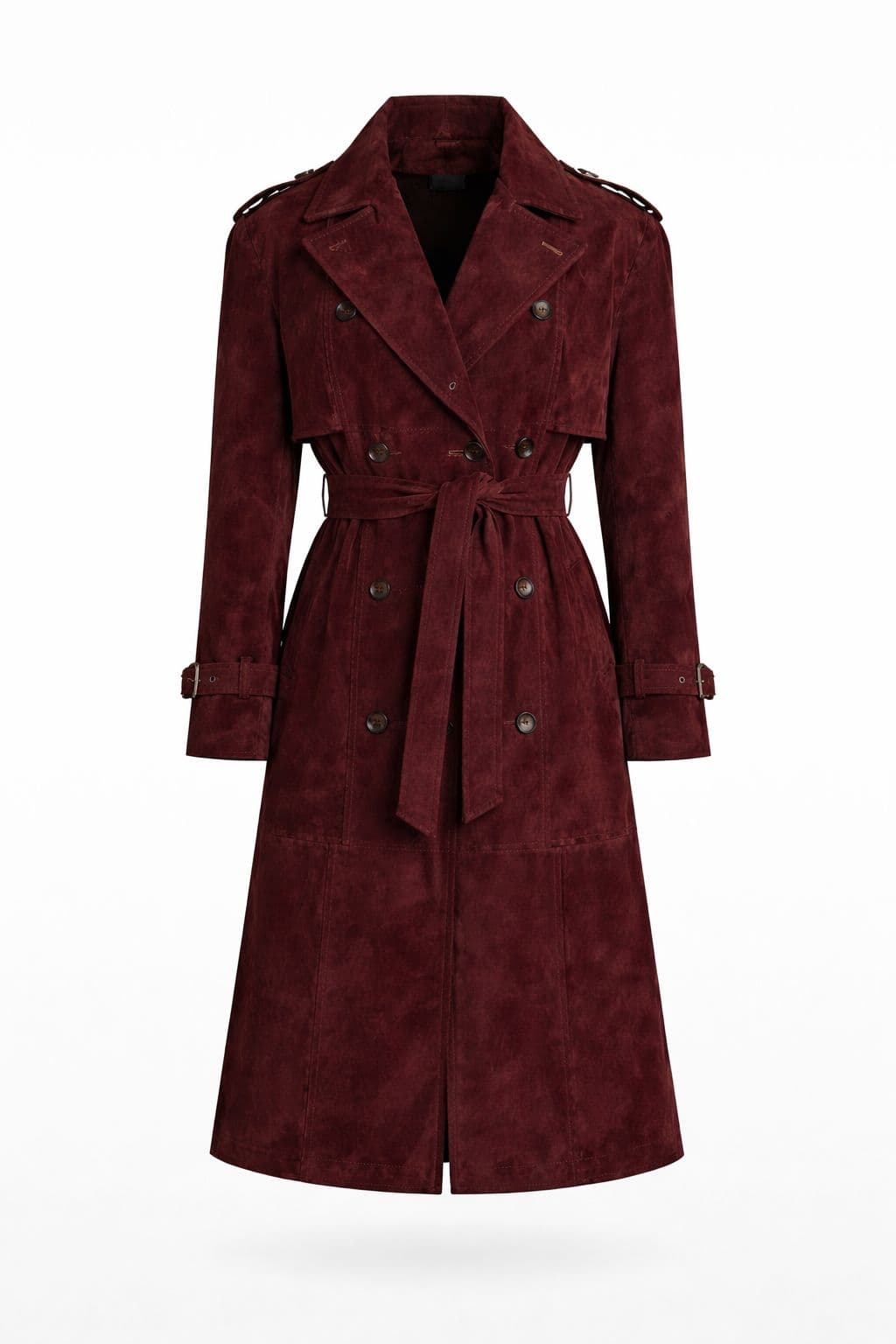
Clémence Bordeaux Suede Coat - 100% Genuine Premium Suede
$920
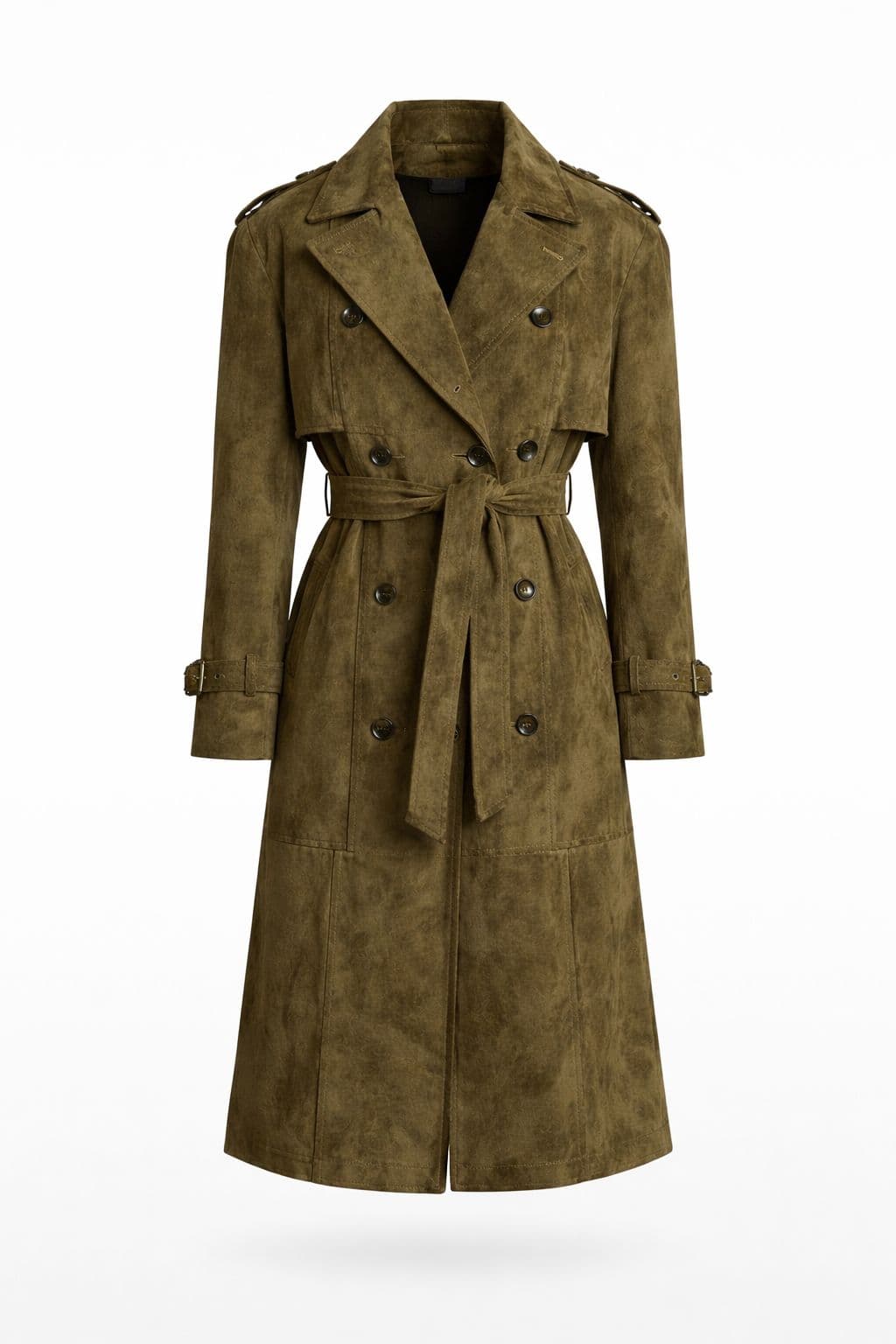
Clémence Olive Suede Coat - 100% Genuine Premium Suede
$920
Free shipping on orders above $330.