Suede Coat vs Leather Coat: Which Should You Buy?
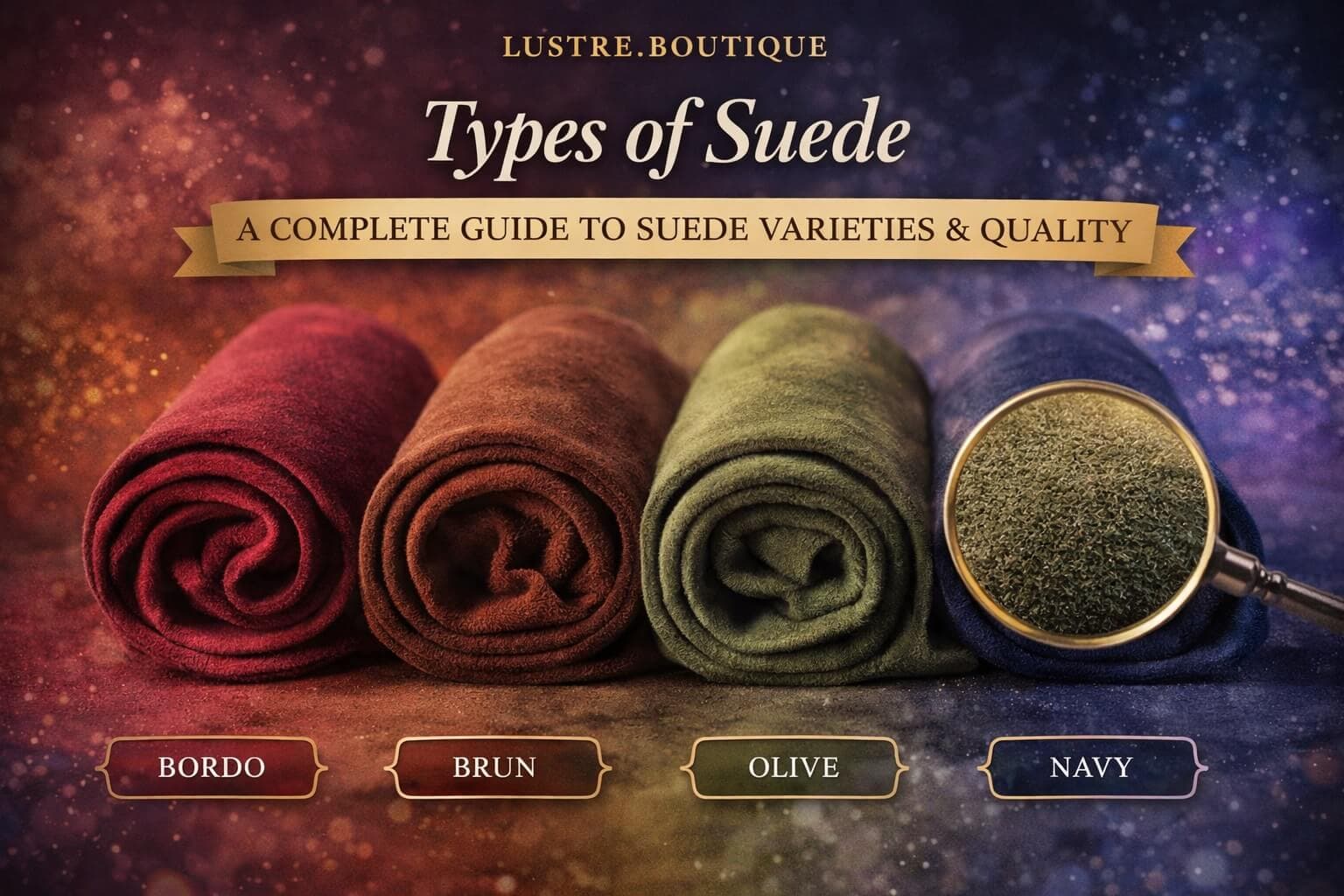
Suede and smooth leather come from the same animal hide but are finished on opposite sides, resulting in two materials with very different personalities. If you are deciding between a suede coat and a leather coat (or simply wondering how they compare), this guide covers every angle: texture, warmth, weight, durability, care, and style - so you can choose with confidence.
Material Differences at a Glance
| Property | Suede Coat | Smooth Leather Coat |
|---|---|---|
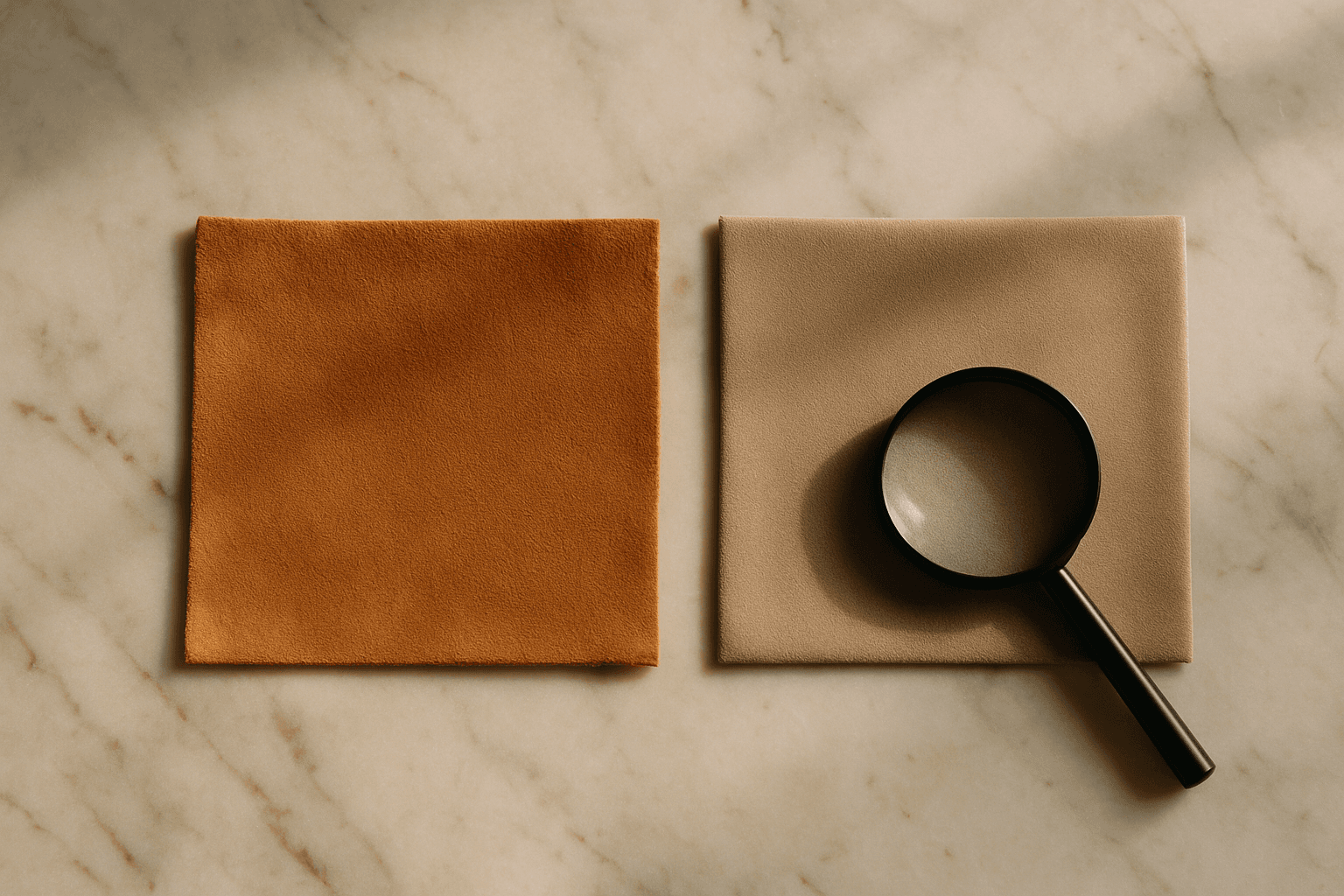
| Surface | Soft, matte, napped | Smooth, glossy or semi-matte |
| Feel | Plush and velvety | Sleek and cool |
| Weight | Lighter (goatskin especially) | Heavier (especially cowhide) |
| Warmth | Excellent insulation | Good; often needs thicker lining |
| Breathability | High - open fibre structure | Moderate |
| Water resistance | Low (without treatment) | Moderate-High |
| Durability | 10-20 years with care | 15-30 years with care |
Warmth and Comfort
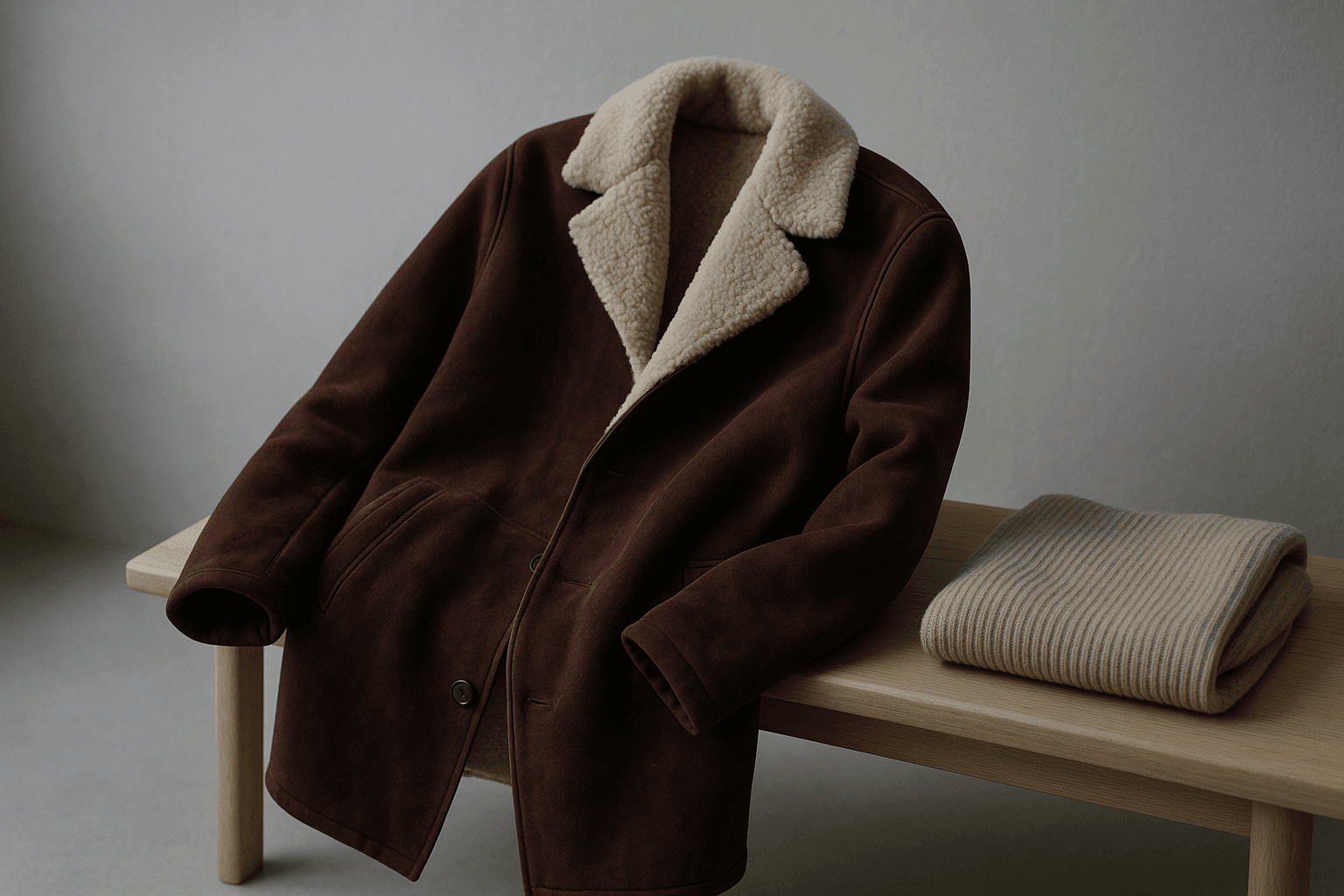
Suede’s open-fibre structure traps air more effectively than smooth leather’s dense surface, which gives suede a natural insulation advantage. In practice, this means a suede coat feels warmer at the same weight - an important consideration if you value comfort without bulk. The velvety texture also sits more comfortably against scarves, knitwear, and skin compared to smooth leather, which can feel cold until it warms up.
Aesthetic and Styling Differences
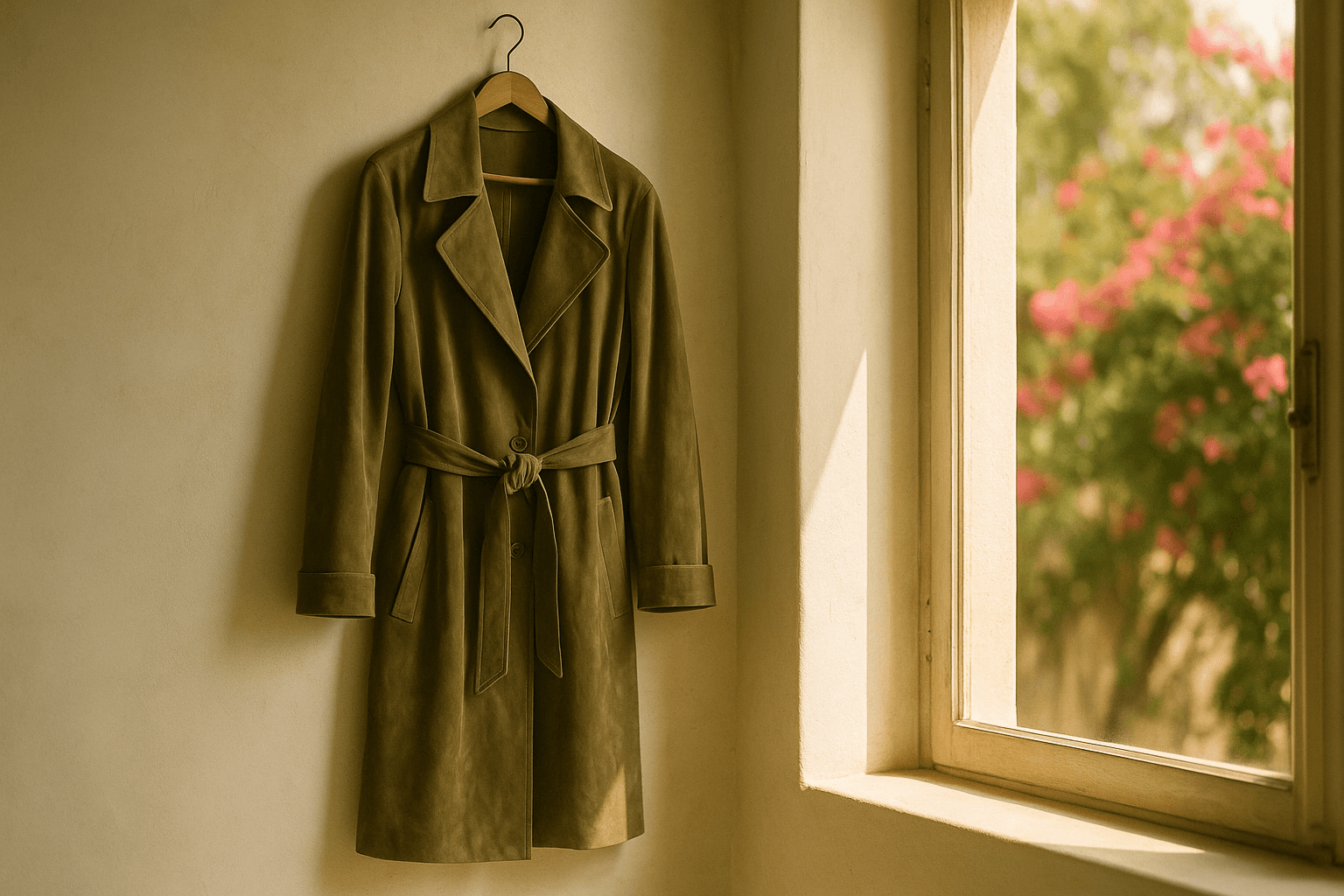
Smooth leather leans toward sleek, urban, slightly edgy territory - think biker jackets, trench coats, and minimalist moto styles. Suede, by contrast, communicates softness, warmth, and understated luxury. A suede trench coat reads as effortlessly elegant; the same silhouette in smooth leather reads as sharper and more architectural.
The colour dimension is also worth noting. Suede holds rich, saturated tones like bordeaux, olive, and cognac with a depth that smooth leather cannot quite match, because the nap diffuses light rather than reflecting it. If you are drawn to warm, earthy, or wine-toned outerwear, suede will always deliver a richer visual result.
In terms of outfit versatility, suede tends to pair more naturally with soft, textured fabrics like knitwear, cashmere, and cotton, while smooth leather pairs well with silk, denim, and tailored wool. Both materials work with jeans, but the overall mood is noticeably different - suede reads relaxed and warm, leather reads sharp and polished.
Durability and Longevity
Smooth leather wins on raw durability. Its dense, sealed surface resists scratches, water, and abrasion more effectively than suede’s open nap. A smooth leather coat can last 20-30 years with periodic conditioning.
However, suede’s longevity is widely underestimated. Premium goatskin suede, properly maintained, easily lasts 10-15 years and ages more gracefully than many people expect. The soft patina suede develops over time is considered a feature by most luxury buyers - whereas scratched smooth leather often just looks damaged.
Maintenance Comparison
Smooth leather requires periodic conditioning with leather cream or balm to prevent drying and cracking, plus occasional polishing to maintain sheen. Suede requires brushing to maintain the nap and periodic waterproofing spray. Neither material is truly zero-maintenance, but suede care is arguably simpler - brushing is quicker than conditioning, and there is no polishing step.
The critical difference is rain. Smooth leather handles occasional rain well; suede can develop water marks if not pre-treated with protective spray. This makes suede better suited to drier climates or wearers who check the forecast, while smooth leather is more forgiving for all-weather wear.
Price and Value
Quality smooth leather coats and suede coats occupy similar price brackets, typically ranging from €600 to €2,500 depending on hide quality, lining, and brand. The key difference is resale: vintage leather coats hold their value well on the secondhand market, and vintage suede is equally sought-after, particularly in rich colours like bordeaux and cognac. Both materials represent genuine long-term value compared to fabric coats.
One frequently overlooked factor is repair. Both suede and leather can be professionally restored - stain removal, re-dyeing, seam repair, and conditioning are all available through specialist leather workshops. This means a coat that develops wear after five or ten years can often be returned to near-original condition rather than replaced, extending its useful life even further.
Which Should You Choose?
Choose suede if you value warmth, softness, and a quietly luxurious aesthetic - and you are willing to apply basic protective care. Choose smooth leather if you prioritise weather resistance and low-effort durability, or if your style leans more urban and architectural.
At Lustré, we specialise in suede because we believe it offers the most compelling combination of beauty, comfort, and craftsmanship in outerwear. Our Clémence Suede Coats (available in Bordeaux and Olive, €840) showcase everything suede does best: warmth without weight, colour depth that smooth leather cannot match, and a texture that becomes more beautiful with every wear.
Continue Reading
If you have decided on suede, the next questions are which silhouette, which length, and which hide. Start with what is a suede coat for the full category definition, then explore suede coat silhouettes, suede coat lengths, and the hide comparison. For wider context, see our comparisons against wool coats and shearling coats.
Frequently Asked Questions
- Is a suede coat warmer than a leather coat?
Yes. Suede's open-fibre napped surface creates natural air pockets that trap body heat more effectively than smooth leather's flat surface. A suede coat provides noticeably more warmth at a lighter weight than a comparable smooth leather coat.
- Which is more durable, suede or leather?
Smooth leather is more resistant to water and surface scratches, but both materials have comparable overall lifespans of 10 to 20 years with proper care. Suede requires protective spray and regular brushing, while smooth leather needs conditioning to prevent cracking.
- Is suede harder to maintain than leather?
Suede requires slightly more proactive care - regular brushing and seasonal waterproofing spray - but the total time commitment is minimal, around 5 minutes per week. Smooth leather needs periodic conditioning to prevent it from drying out and cracking.
- Can you wear a suede coat in the rain?
In light rain, yes, especially if pre-treated with waterproofing spray. Avoid prolonged exposure to heavy rain. If the coat gets wet, let it dry naturally at room temperature and brush the nap once dry. Never use direct heat.
- Should I buy a suede coat or a leather coat first?
Choose suede if you value warmth, softness, and a rich tactile quality. Choose smooth leather if weather resistance and minimal upkeep are priorities. For most wardrobes, a suede coat is the more distinctive and versatile choice.
Shop the Collection
Every piece is cut from 100% genuine suede and made to be worn for years, not seasons.
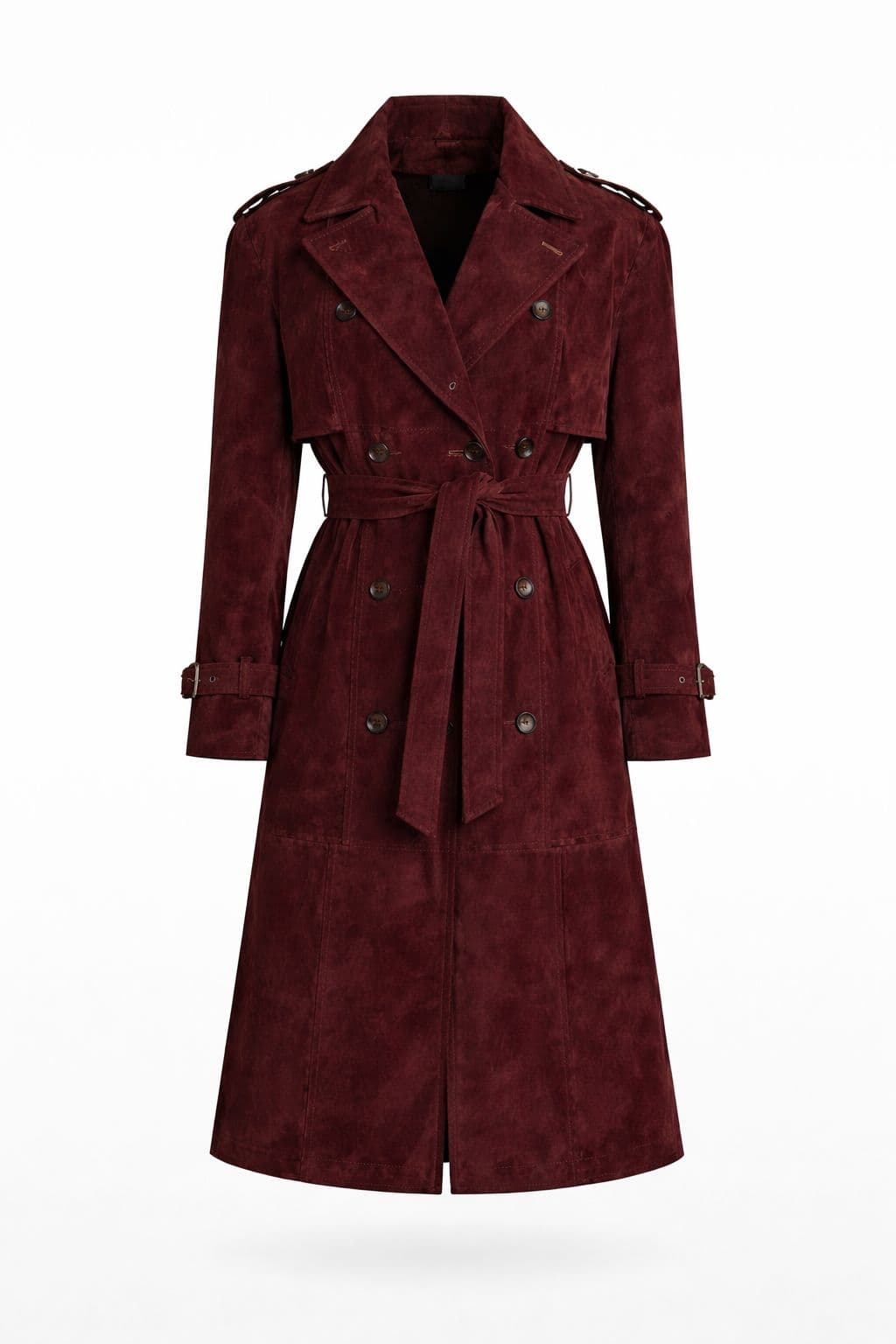
Clémence Bordeaux Suede Coat - 100% Genuine Premium Suede
$920
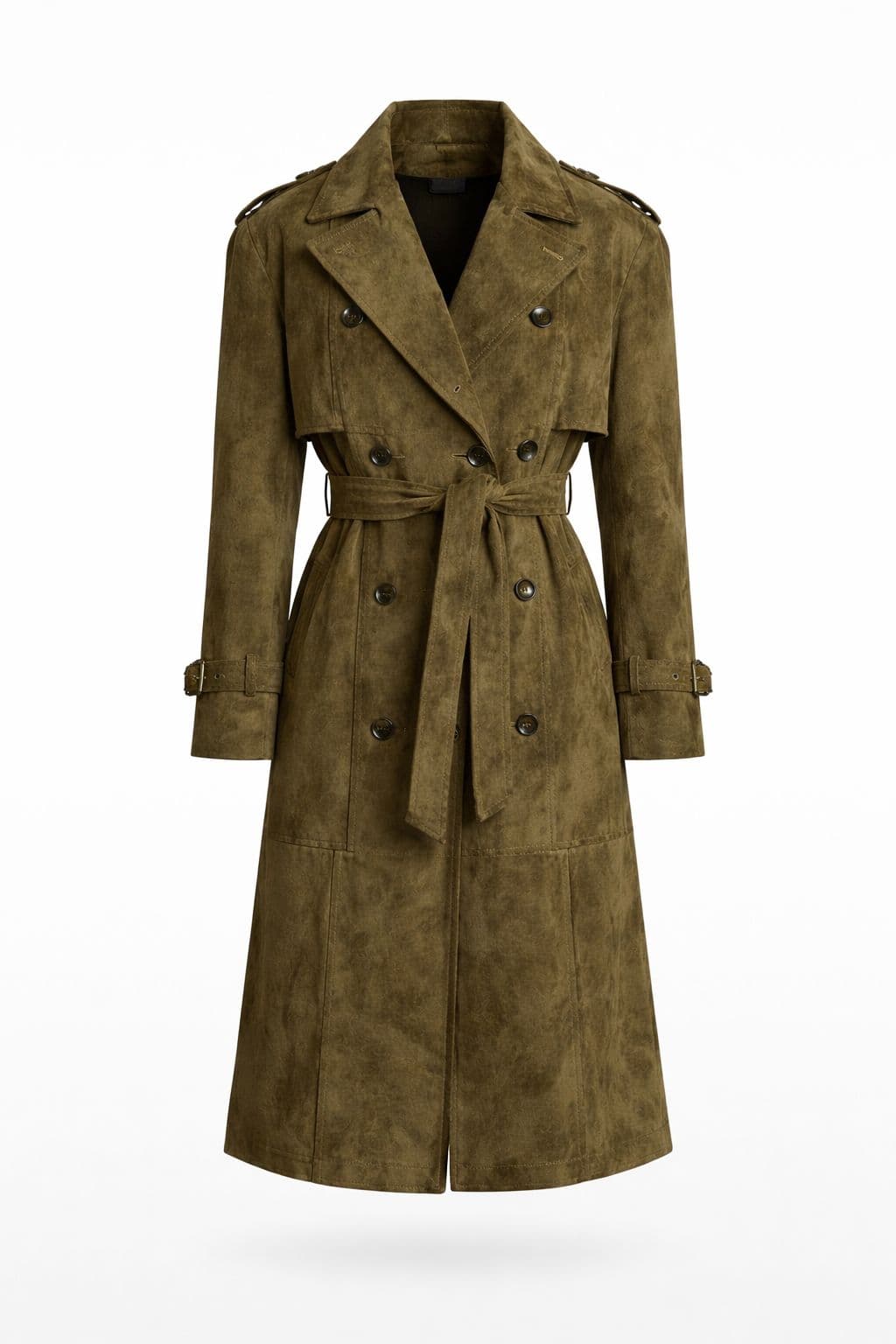
Clémence Olive Suede Coat - 100% Genuine Premium Suede
$920
Free shipping on orders above $330.