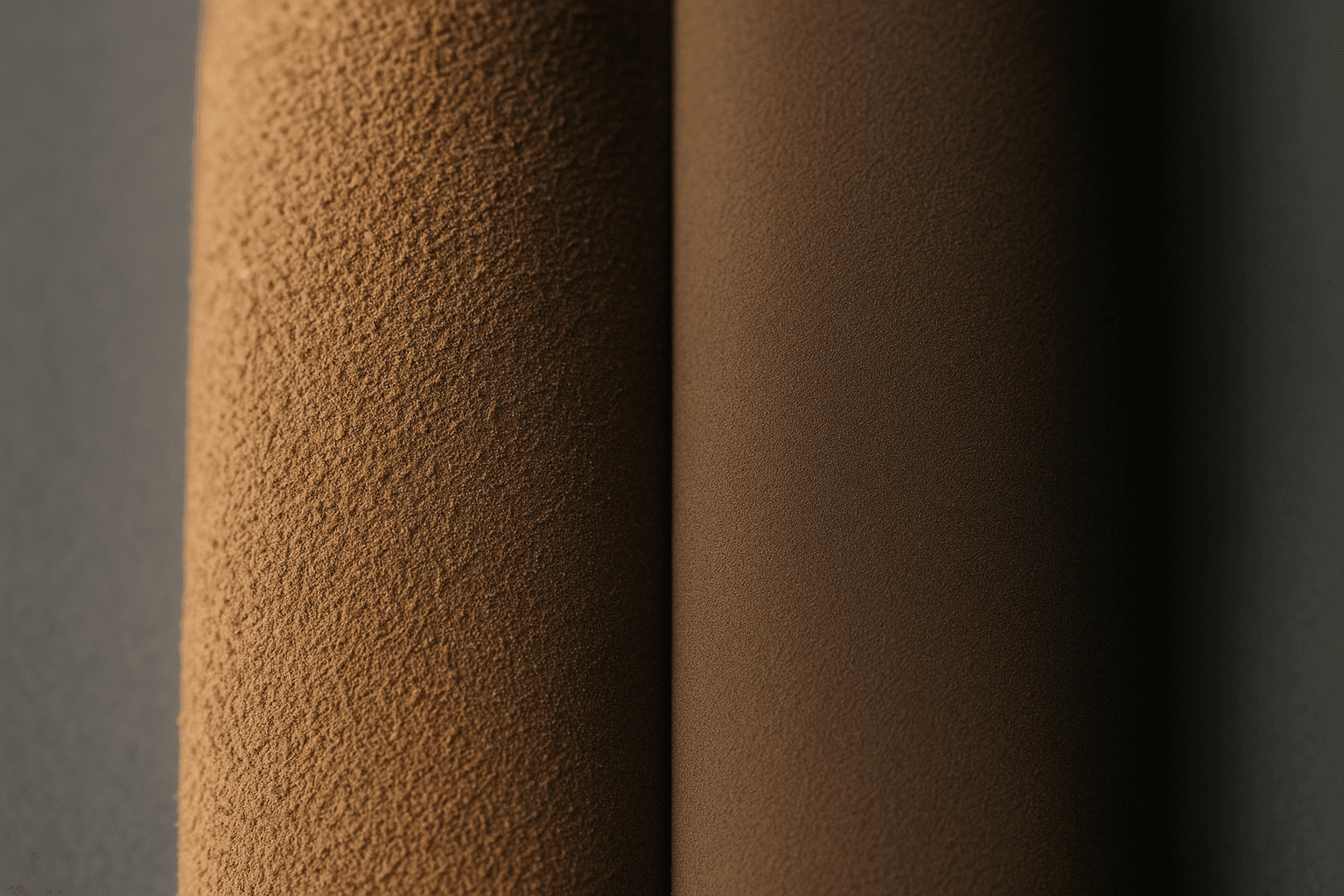
The History of Suede: From Ancient Origins to Modern Luxury

Suede’s story is one of transformation: from a practical by-product of the tanning trade to one of the most coveted textiles in modern luxury fashion. Tracing that arc reveals how craftsmanship, culture, and changing aesthetics elevated a humble material into a symbol of refinement.
Ancient Origins: The Birth of Soft Leather
Humans have been tanning hides for over ten thousand years. Early tanners discovered that the inner split of a hide-the flesh side-could be scraped, stretched, and softened into a material far more pliable than the tough outer grain. In prehistoric communities across Europe and the Middle East, this soft leather was used for pouches, wrappings, and undergarments where flexibility mattered more than ruggedness.
Archaeological finds in Scandinavia and the British Isles show that early northern European cultures refined the art of producing soft, underside leathers for gloves and light garments. These early techniques laid the groundwork for suede as we know it.
The Swedish Connection: “Gants de Suède”
The modern name “suede” comes directly from the French phrase “gants de Suède,” meaning “gloves from Sweden.” In the eighteenth century, Swedish tanners perfected a method of producing exceptionally fine, velvet-soft undressed kidskin. Their gloves became fashionable imports among the French aristocracy-so popular that the material itself became synonymous with the country of origin.
This was a pivotal moment. For the first time, soft napped leather was recognised not merely as functional but as a mark of taste and social status. The association between suede and elegance was born.
Nineteenth Century: Industrialisation and Expansion
The Industrial Revolution transformed leather production. Mechanical splitting machines, developed in the 1830s and 1840s, allowed tanners to separate the grain from the split with unprecedented precision and consistency. This made suede available in larger quantities and at lower cost, opening the material to a wider market.
By the latter half of the nineteenth century, suede was no longer limited to gloves. Shoemakers in England and France began using suede for dress shoes and boots. The material’s association with refinement held firm: suede shoes were considered appropriate only for leisure and evening wear, further cementing the “luxury” positioning of the material.
Early Twentieth Century: Hollywood and Cultural Iconography
The golden age of Hollywood brought suede into mainstream consciousness. Film stars of the 1930s and 1940s wore suede jackets and coats both on screen and off, projecting an image of effortless sophistication. The material’s matte texture photographed beautifully under studio lighting, making it a favourite of costume designers.
After the Second World War, suede entered casual menswear through the “desert boot”-a simple suede ankle boot inspired by crepe-soled shoes worn by British officers in North Africa. Nathan Clark introduced the style commercially in 1950, and it became a worldwide sensation, putting suede on millions of feet for the first time.
The 1960s and 1970s: Counterculture and Suede’s Golden Decade
Suede reached peak cultural visibility in the late 1960s and 1970s. The counterculture movement embraced suede for its natural, earthy texture-a deliberate rejection of the synthetic fabrics flooding the market. Fringed suede jackets, long suede vests, and patchwork suede coats became emblems of the era.
Simultaneously, European fashion houses began treating suede as a high-fashion material. Designers like Yves Saint Laurent and Halston elevated suede into couture territory, proving that the material could be as refined and sculptural as any woven textile. Saint Laurent’s suede safari jackets, in particular, became enduring icons of modern luxury.
Late Twentieth Century: Quiet Luxury and Technical Advances
The 1980s brought advances in suede treatment technology. New water-resistant finishes, stain repellents, and colour-fast tanning processes addressed many of suede’s traditional vulnerabilities without compromising its tactile qualities. These innovations made suede more practical for everyday wear and expanded its use in outerwear, furniture, and automotive interiors.
By the 1990s and 2000s, suede had settled into its modern identity: a material associated with quiet luxury, understated taste, and artisanal quality. It appeared regularly on the runways of Hermès, Loewe, Prada, and Bottega Veneta-brands that emphasise material quality and craftsmanship over logos.
Suede in the Twenty-First Century
Today, suede occupies a distinctive position in the luxury landscape. As fast fashion saturates the market with synthetic alternatives, genuine suede has become a statement of authenticity and intentionality. The current slow-fashion movement-with its emphasis on natural materials, expert craft, and long-lasting pieces-aligns perfectly with suede’s inherent qualities.
Modern tanning techniques are also becoming more sustainable. Vegetable-tanned and chrome-free suedes are growing in availability, and responsible sourcing practices ensure that hides are by-products of the food industry rather than primary products. These developments make suede a material that looks toward the future while honouring thousands of years of tradition.
The Lustré Perspective
At Lustré, we see ourselves as the next chapter in suede’s long story. Our coats draw on centuries of craft-selecting the finest hides, working with experienced ateliers, and designing silhouettes that honour the material’s natural drape and warmth. When you wear a Lustré suede coat, you are wearing a piece of living history: a material that has moved through cultures, centuries, and countless reinventions, and still feels as luxurious today as it did in a Swedish glovemaker’s workshop three hundred years ago.
Timeline of Suede
| Era | Region | Development |
|---|---|---|
| Prehistory | Northern Europe | First soft underside leathers for gloves and pouches |
| 1500s | Spain and Italy | Refined vegetable tanning of light hides |
| 1700s | Sweden | Velvet-soft kidskin gloves, the origin of the word suede |
| 1830s to 1840s | England and France | Mechanical splitting machines enable wider production |
| 1920s to 1950s | Hollywood | Suede shoes and jackets enter mainstream luxury |
| 1970s | United States and Europe | Suede fringe jackets and bohemian outerwear peak |
| 2020s | Paris and Milan | Suede returns as quiet luxury outerwear |
FAQ
Frequently Asked Questions
- Where does the word suede come from?
The word comes from the French phrase gants de Suede, meaning gloves from Sweden. In the eighteenth century, Swedish tanners produced exceptionally soft kidskin gloves that became fashionable across the French court, and the material took on the name of its origin.
- How old is suede as a material?
Soft underside leathers have been produced for over ten thousand years, since early humans first scraped and softened hides for gloves and pouches. The modern, brushed nap finish we recognise as suede dates to roughly the eighteenth century.
- When did suede become a luxury material?
Suede shifted from functional to fashionable in the eighteenth century, when Swedish gloves became status symbols at the French court. Industrialisation in the nineteenth century made suede shoes and gloves widely available, and Hollywood in the early twentieth century cemented its luxury association.
- Why was suede associated with Western fashion?
Suede took on a Western association in mid-twentieth century America, when fringe jackets and frontier-style coats became part of cinematic and rock styling. That era left a strong visual imprint, but suede itself predates the Western aesthetic by centuries.
- Is modern suede made the same way as historical suede?
The principle is identical: split the hide, brush the inner side, raise the nap. Modern tanneries use chrome and chrome-free chemistries that are faster and more consistent than historical vegetable tanning. The hand feel of fine modern lambskin suede is comparable to historical Swedish kidskin.
Shop the Collection
Every piece is cut from 100% genuine suede and made to be worn for years, not seasons.
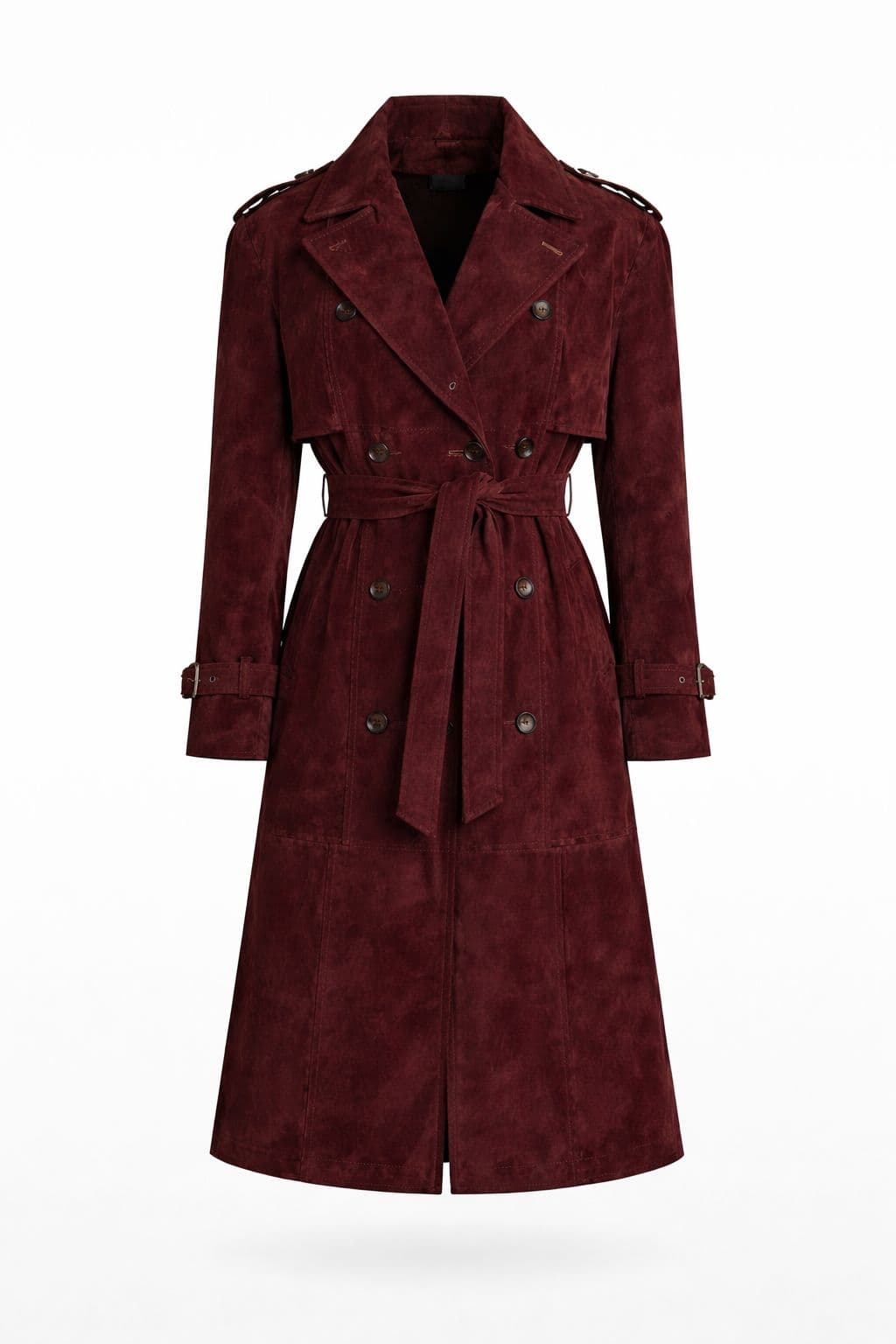
Clémence Bordeaux Suede Coat - 100% Genuine Premium Suede
$920
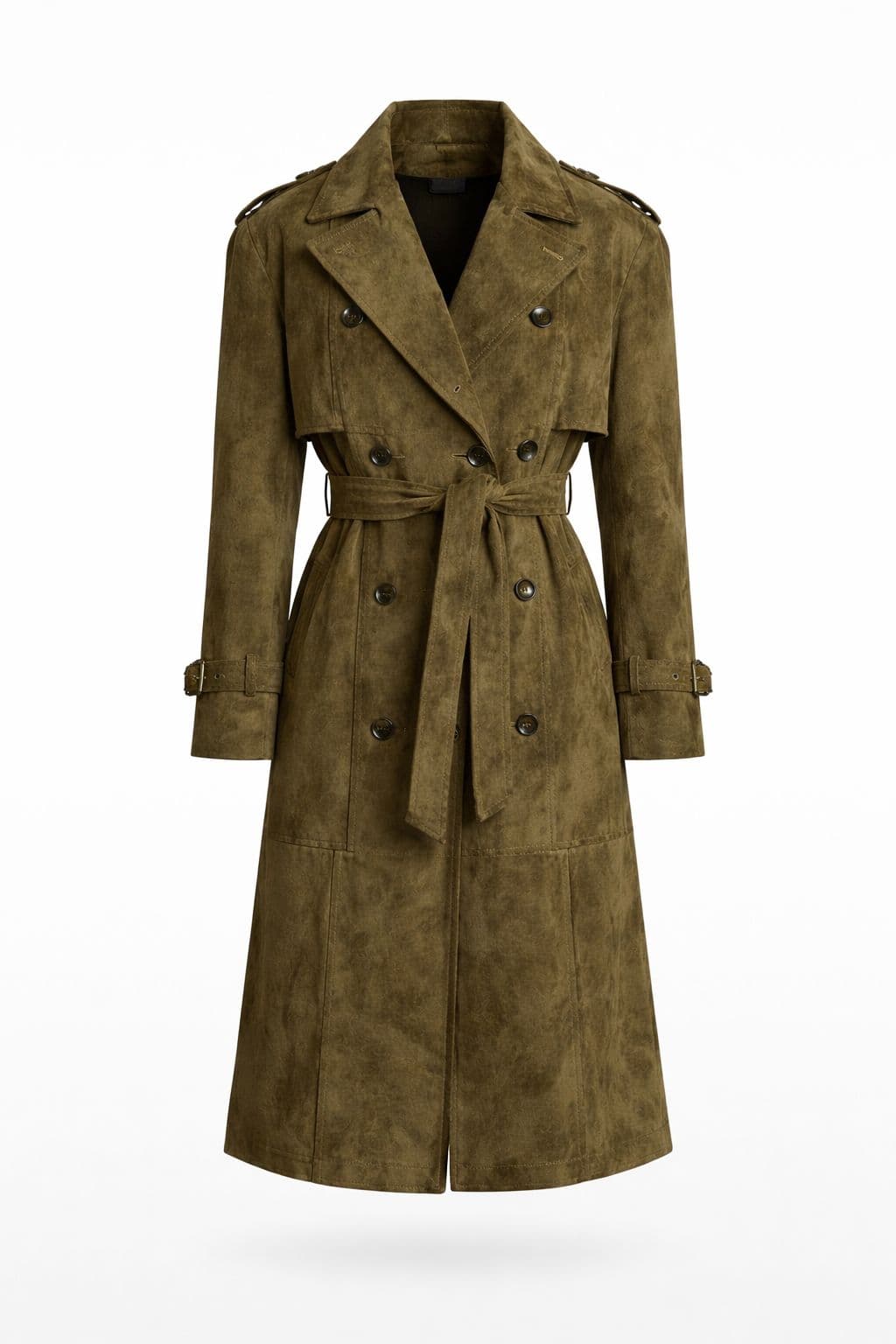
Clémence Olive Suede Coat - 100% Genuine Premium Suede
$920
Free shipping on orders above $330.