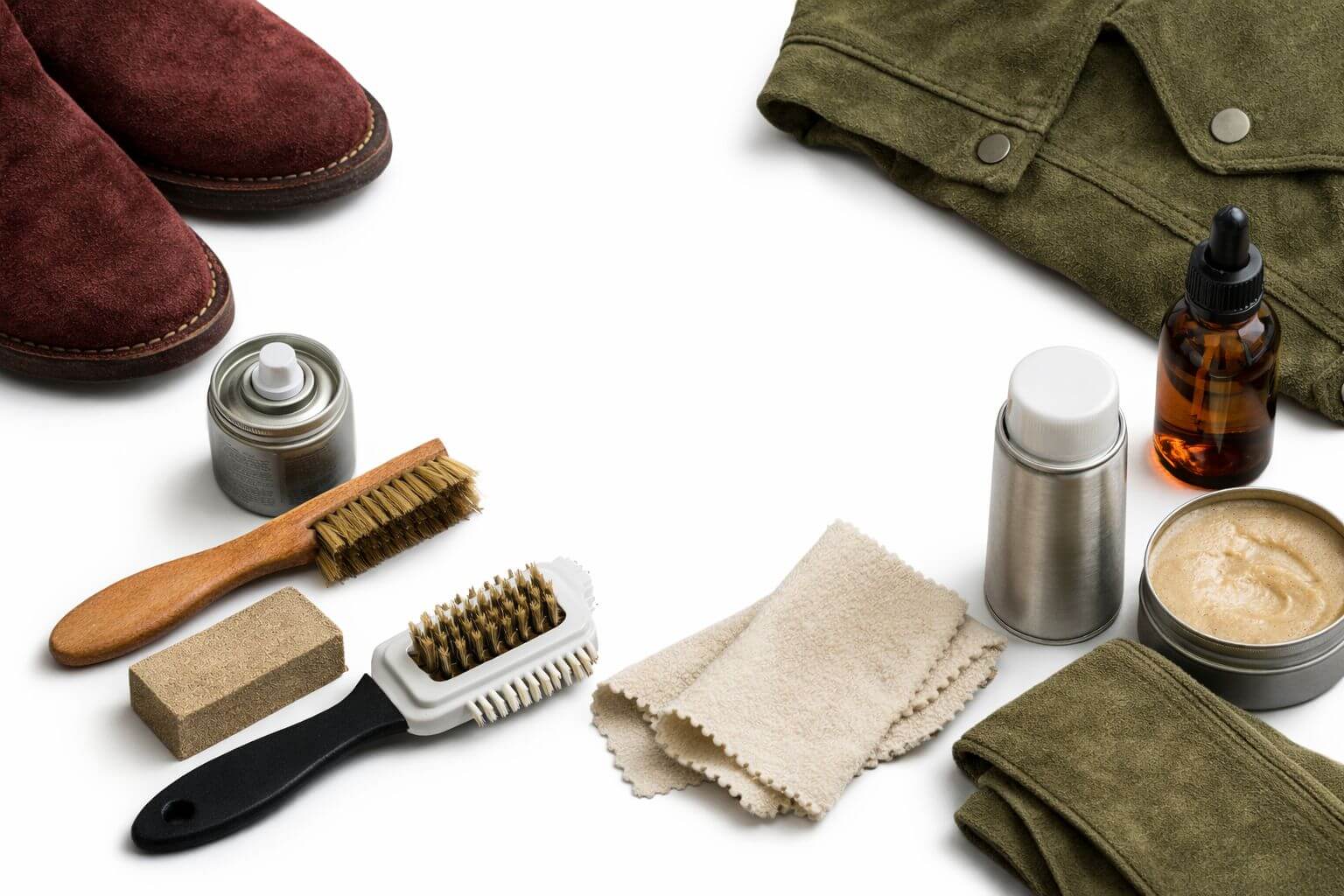
Kann man einen Wildledermantel im Regen tragen? Die ehrliche Antwort
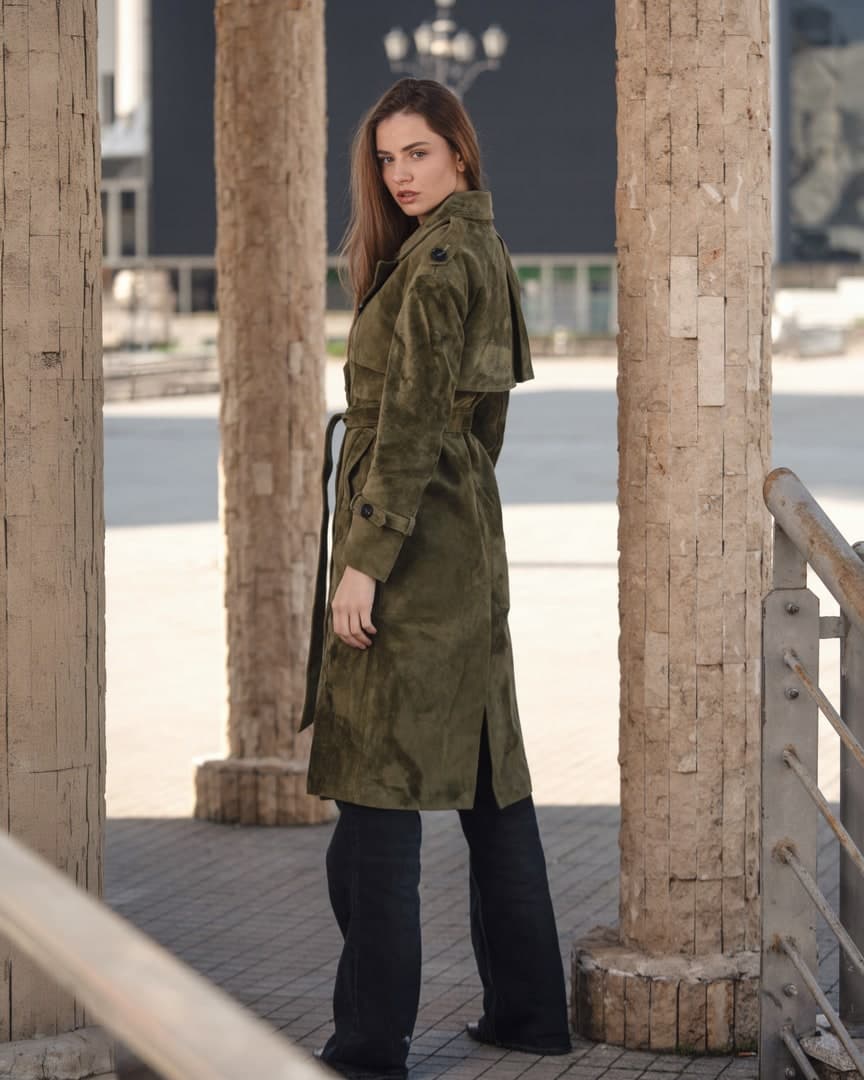
Die häufigste Frage zu Wildledermänteln ist immer dieselbe: Kann man sie im Regen tragen? Die ehrliche Antwort ist nuancierter als ja oder nein. Wildleder kann Regen überstehen - viele traditionsreiche Wildledermäntel haben Jahrzehnte europäischen Wetters überlebt -, doch nur mit der richtigen Vorbereitung, der richtigen Reaktion im Moment und der richtigen Nachsorge danach.
Was Regen tatsächlich mit Wildleder anstellt
Wildleder ist Haut, deren oberflächliche Fasern aufgebürstet sind, um den samtigen Flor zu erzeugen. Diese Fasern sind offen und saugfähig - das macht Wildleder weich und atmungsaktiv und zugleich anfällig für Wasser. Wenn Wasser auf Wildleder trifft, geschehen drei Dinge:
- Das Wasser zieht in die Fasern ein und verdunkelt das Wildleder als sichtbarer Fleck (der 'Wasserfleck').
- Trocknet das Wasser ungleichmäßig, trocknet der Fleck mit harter Kante - der berühmte 'Tide-Mark', der das eigentliche Problem darstellt, mit dem die meisten Menschen konfrontiert sind.
- Wiederholtes Durchnässen kann das Wildleder versteifen, den Flor flach drücken und die weiche Haptik der Oberfläche allmählich mindern.
Hinweis: Wasser an sich beschädigt Wildleder nicht. Schaden richten ungleichmäßiges Trocknen, Reibung im nassen Zustand und exponierter Schmutz, der in die Fasern getrieben wird.
Leichter Regen vs. starker Regen vs. Schnee
| Bedingung | Risikograd | Maßnahme |
|---|---|---|
| Leichter Nieselregen, kurze Exposition | Niedrig | Mit Vertrauen tragen, sofern mit Schutzspray behandelt. Trocken bürsten. |
| Mäßiger Regen, 5-10 Minuten | Mittel | Mit Schirm abdecken. Langsam an der Luft trocknen. Nach vollständiger Trocknung bürsten. |
| Starker Regen, Durchnässung | Hoch | Tragen vermeiden. Wenn unvermeidbar, vollständig an der Luft trocknen abseits von Hitze, professionelle Restaurierung kann nötig sein. |
| Schnee (trocken, pulvrig) | Niedrig bis mittel | Zügig abbürsten, bevor er schmilzt. Nasse Stellen mit Sorgfalt behandeln. |
| Schnee (nass, matschig) | Hoch | Gleiches Risiko wie starker Regen. Vermeiden. |
| Gischt, Salzwasser | Sehr hoch | Vollständig vermeiden. Salzrückstände lassen sich aus Wildleder extrem schwer entfernen. |
Was Wildleder-Schutzspray leisten kann und was nicht
Ein gutes silikonbasiertes Wildleder-Schutzspray erzeugt einen hydrophoben Film um jede Faser, sodass Wasser abperlt, statt einzuziehen. Korrekt auf einen sauberen Mantel aufgetragen, kann dies 5-15 Minuten leichten Regen mit minimaler Aufnahme verschaffen.
Was Schutzspray nicht kann: Wildleder wasserdicht machen. Die Barriere baut sich mit dem Tragen ab (die am stärksten beanspruchten Bereiche - Manschetten, Revers, Taschen - verlieren den Schutz zuerst), und sie hält längeren oder starken Wassereinwirkungen nicht stand. Betrachten Sie Schutzspray als zusätzliche Versicherung, nicht als Garantie.
So tragen Sie Schutzspray richtig auf
- Bürsten Sie das Wildleder zuerst mit einer weichen Wildlederbürste, um die Oberfläche zu reinigen und den Flor anzuheben. Sprühen über schmutzigem Wildleder schließt Schmutz in die Fasern ein.
- Halten Sie die Dose 20-25 cm vom Mantel entfernt. Näher als das, und das Spray sättigt die Oberfläche ungleichmäßig.
- Tragen Sie zwei leichte, gleichmäßige Schichten auf, mit 10 Minuten Trocknung dazwischen. Eine schwere Schicht ist schlechter als zwei leichte.
- Testen Sie das Schutzmittel zuerst an einer verdeckten Stelle (Innensaum, Innenseite der Manschette). Manche Sprays dunkeln helle Wildlederfarben subtil nach.
- Erneuern Sie alle 4-6 Wochen während der Tragesaison oder jedes Mal, wenn das Wildleder gründlich gebürstet oder gereinigt wurde.
Was Sie tun, wenn Ihr Wildledermantel nass wird
Innerhalb von Minuten
- Tupfen - nicht reiben - Sie stehendes Wasser mit einem weichen, trockenen Tuch ab. Reiben drückt Wasser tiefer in die Fasern und kann den Flor aufrauen.
- Sobald Sie drinnen sind, ziehen Sie den Mantel aus und schütteln ihn sanft, um Oberflächentropfen zu entfernen.
- Vermeiden Sie es, sich in einem nassen Wildledermantel hinzusetzen. Der Sitzbereich wird komprimiert, das Wildleder trocknet flach, und Sie haben Glanzstellen an Hüfte und Oberschenkel.
Innerhalb von Stunden
- Hängen Sie den Mantel auf einen breiten gepolsterten Bügel in einem raumtemperierten Raum. Geöffnete Fenster oder Luftbewegung helfen, jedoch keine direkte Hitze.
- Stopfen Sie Ärmel und Rumpf locker mit weißem Seidenpapier oder einem sauberen Baumwolltuch aus, um die Form zu erhalten und Innenfeuchtigkeit aufzunehmen.
- Verwenden Sie niemals Föhn, Heizkörper oder Sonne - hohe oder direkte Hitze versteift Wildleder dauerhaft.
- Rechnen Sie mit 12-48 Stunden bis zur vollständigen Trocknung, je nach Sättigung. Geduld an dieser Stelle verhindert 90 Prozent der Langzeitschäden.
Nach vollständiger Trocknung
- Bürsten Sie den gesamten Mantel mit einer weichen Wildlederbürste in Florrichtung, um die Fasern aufzurichten und die samtige Oberfläche wiederherzustellen.
- Sind Tide-Marks (sichtbare dunklere Kanten) geblieben, fahren Sie mit einem Wildleder-Radierer über die betroffene Stelle, um die Grenze aufzubrechen, und bürsten dann erneut.
- Bleiben die Spuren bestehen, befeuchten Sie das gesamte Panel gleichmäßig mit einem nur leicht angefeuchteten Tuch, sodass die ganze Fläche gleichmäßig trocknet. Das klingt widersinnig, funktioniert aber, weil das gleichmäßige Befeuchten die harte Kante eliminiert.
- Tragen Sie nach vollständiger Trocknung erneut Wildleder-Schutzspray auf. Die vorherige Anwendung wurde beeinträchtigt.
Wenn der Mantel stark durchnässt war und nach diesen Schritten weiterhin Tide-Marks bestehen, bringen Sie ihn zu einem Spezialisten für Leder und Wildleder. Versuchen Sie zu Hause keine intensive chemische Reinigung.
Wann Sie Wildleder einfach nicht tragen sollten
Manches Wetter ist Wildleder-Wetter. Manches nicht. Ein paar ehrliche Regeln:
- Zeigt die Vorhersage für Ihre Strecke mehr als 30 Minuten anhaltenden Regen, wählen Sie einen anderen Mantel.
- Werden Sie in Schneematsch oder schmelzendem Schnee unterwegs sein, wählen Sie einen anderen Mantel.
- Können Sie Schutz oder Schirmnutzung nicht garantieren, wählen Sie bei unbeständigem Frühlingswetter einen anderen Mantel.
- Ist der Mantel ganz neu und noch nicht mit Schutzspray behandelt, testen Sie ihn nicht im Regen.
Wildleder ist ein Schönwetter-Material. Die Garderoben, die Wildledermäntel auf zehn oder fünfzehn Jahre Lebensdauer dehnen, sind die Garderoben, die für wirklich nasse Tage eine zweite, wetterfeste Oberbekleidung besitzen.
Häufig gestellte Fragen
- Lassen sich Wildledermäntel wasserdicht machen?
Nein. Die wirksamsten Schutzsprays machen Wildleder wasserabweisend, nicht wasserdicht. Auch nach Behandlung nimmt Wildleder bei längerer oder starker Exposition Wasser auf. Planen Sie mit Wasserabweisung, nicht mit Wasserdichtigkeit.
- Was passiert, wenn ich meinen Wildledermantel weiter im Regen trage?
Wiederholtes Durchnässen drückt den Flor flach, versteift die Haut, lässt die Farbe verblassen oder ungleichmäßig nachdunkeln und reduziert die Lebensdauer des Mantels von 10-15 Jahren auf 3-5 Jahre. Der Schaden ist kumulativ.
- Wie entferne ich einen Wasserfleck von meinem Wildledermantel?
Sobald er vollständig getrocknet ist, in Florrichtung bürsten. Bleibt ein Tide-Mark, befeuchten Sie das gesamte Panel leicht und gleichmäßig mit einem nur leicht angefeuchteten Tuch und lassen es vollständig trocknen. Das gleichmäßige Befeuchten eliminiert die harte Kante. Hartnäckige Spuren erfordern eine professionelle Behandlung.
- Kann ich einen nassen Wildledermantel mit dem Föhn trocknen?
Nein. Direkte Hitze versteift Wildleder dauerhaft und kann die Haut rissig machen. Trocknen Sie immer bei Zimmertemperatur an der Luft, fern von Heizkörpern, Föhnen und direkter Sonneneinstrahlung.
- Ist eine Wildlederart regenresistenter als andere?
Geringfügig. Schwerer gewichtetes Wildleder nimmt Wasser langsamer auf, und chromgegerbtes Wildleder trocknet tendenziell schneller als pflanzlich gegerbtes. Doch kein Wildleder ist tatsächlich regenfreundlich. Mehr dazu in unseren Leitfäden zu pflanzlich gegerbten Wildledermänteln und Schwer- vs. Leichtgewicht-Wildledermänteln.
Wildledermantel im DACH-Regen
Der Regen in Hamburg, an der niederländischen Grenze und an der Schweizer Westflanke ist anders als der kurze Schauer am Mittelmeer: feiner Sprühregen über Stunden, gelegentlich tagelang. Wildleder verträgt diese Belastung nur, wenn es sehr gut imprägniert ist. Tragen Sie an solchen Tagen besser einen klassischen Trenchcoat oder ein wachsbeschichtetes Modell und reservieren Sie den Wildledermantel für trockene Tage.
Falls der Mantel doch nass wird: nicht reiben, nicht föhnen, nicht an die Heizung hängen. Stattdessen mit dem Bügel an einem belüfteten Ort aufhängen, langsam trocknen lassen, dann mit der Wildlederbürste den Flor wieder aufrichten. Diese Technik ist seit Generationen Teil der mitteleuropäischen Schuhpflege und funktioniert auch beim Mantel ausgezeichnet, sofern man Geduld mitbringt.
Die Kollektion entdecken
Jedes Stück wird aus 100 % echtem Wildleder gefertigt - gemacht für Jahre, nicht für eine Saison.
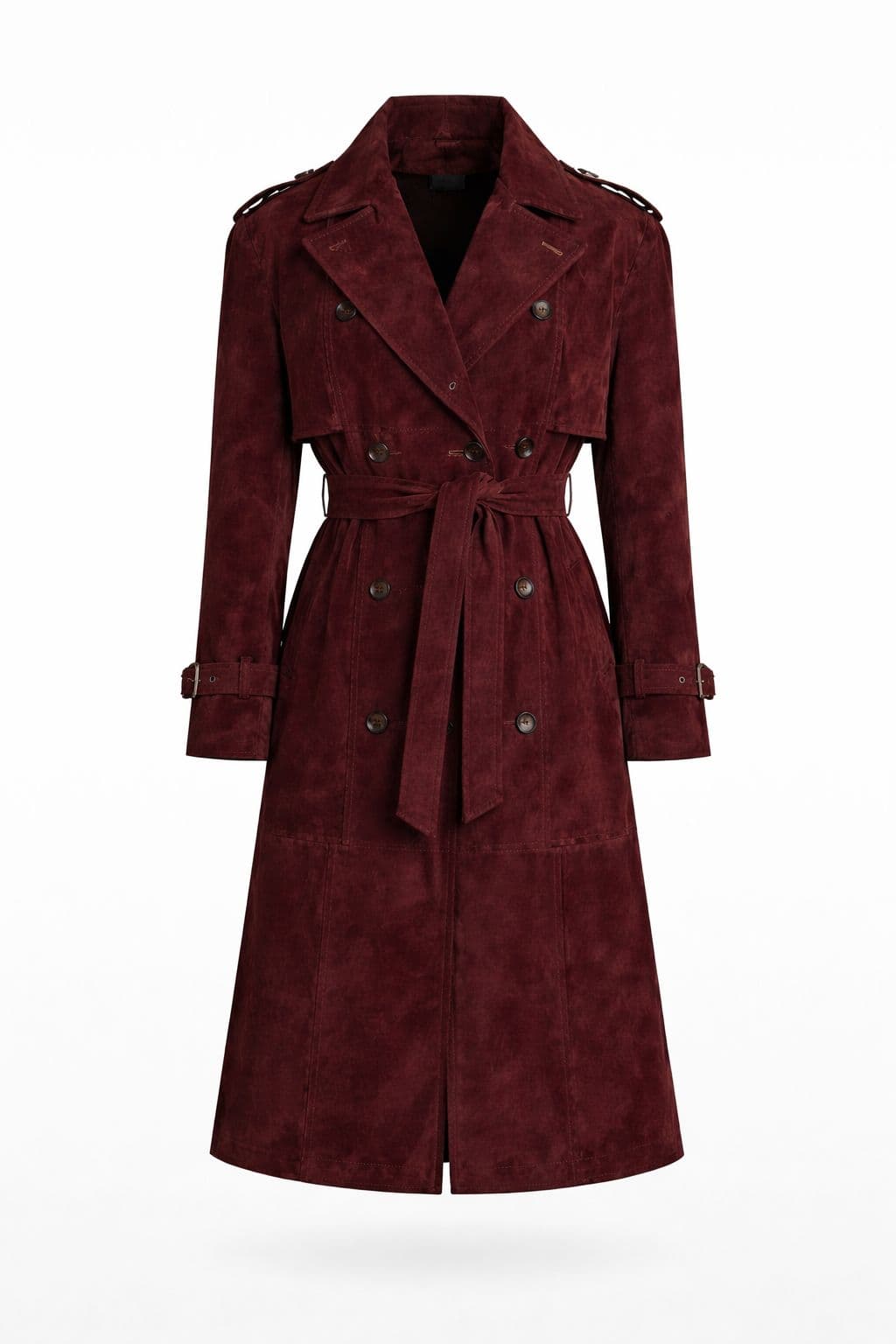
Clémence Bordeaux Suede Coat - 100% Genuine Premium Suede
840 €
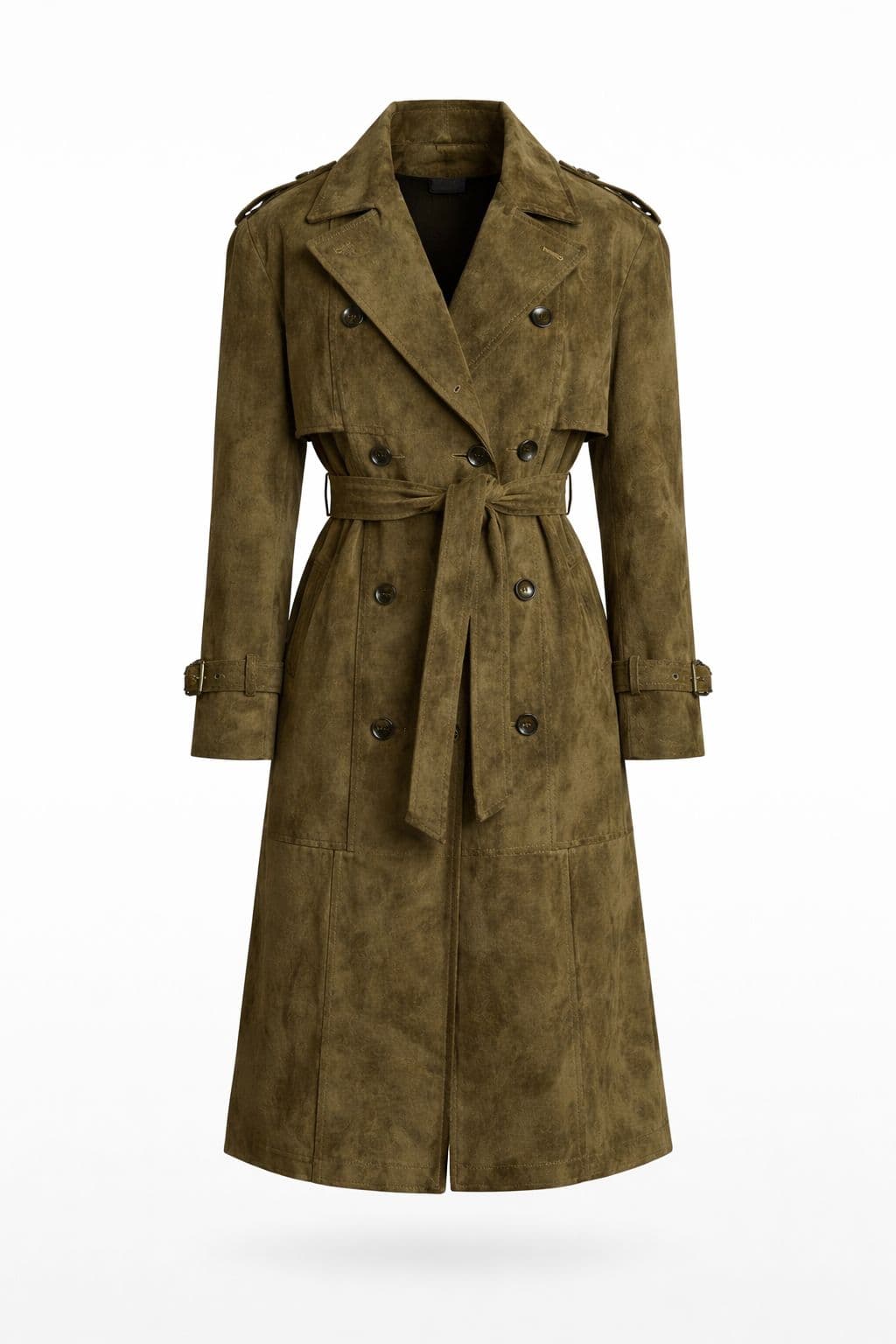
Clémence Olive Suede Coat - 100% Genuine Premium Suede
840 €
Kostenloser Versand ab 300 €.
Verwandte Artikel
- Ihr Wildledermantel ist nass geworden: was in den ersten 30 Minuten zu tun ist
- Wie man eine Wildlederjacke imprägniert, ohne die Farbe zu verdunkeln
- Pflege und Aufbewahrung von Wildledermänteln: der komplette Ganzjahresleitfaden
- Wildledermäntel für kalte Klimazonen
- Wildledermäntel für milde Klimazonen
- Schwere vs. leichte Wildledermäntel