How a Suede Coat Should Fit: Shoulder, Sleeve, Hem, and Layering
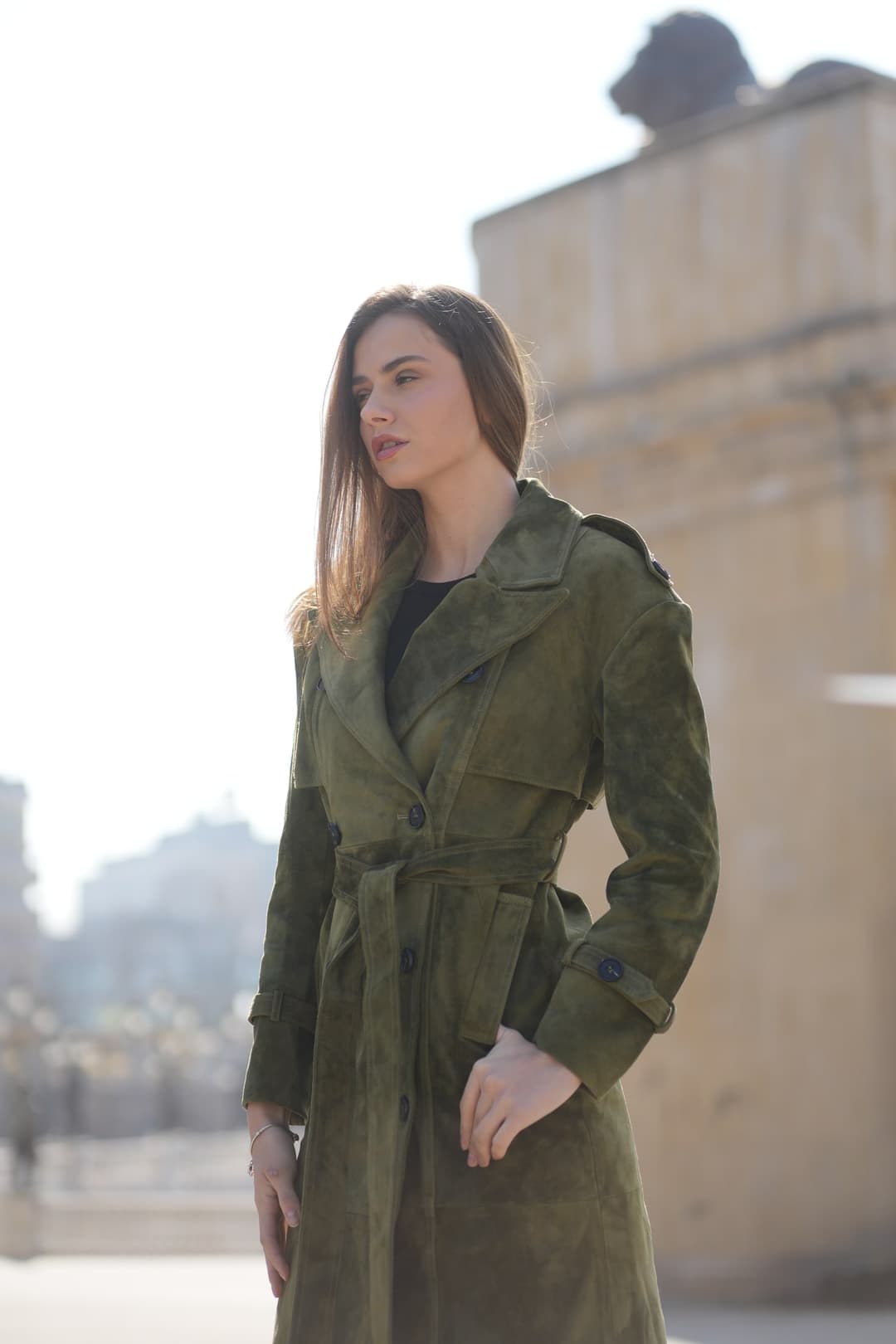
A suede coat that fits properly looks like it was made for the wearer. One that does not looks borrowed, no matter how beautiful the suede or how high the price tag. Fit is the single biggest determinant of whether a suede coat earns daily wear or stays in the wardrobe.
This guide covers the precise fit framework for suede coats: the five measurements that matter, how suede behaves differently from fabric coats, and how to size correctly for your typical layering.
The Five Fit Points That Determine a Suede Coat's Fit
1. The Shoulder Seam
The shoulder seam should sit at the natural shoulder joint - the point where your arm bone meets the shoulder. If the seam falls outside this point, the coat is oversized. If it sits inside, the coat is too small (and will pull at the back). Suede has limited give in the shoulder, so a poorly-fitting shoulder will not relax with wear. This is the most important measurement to get right.
2. The Chest / Bust Width
Closed at the front, the coat should sit smoothly across the chest with no pulling, gaping, or visible strain at the buttons. With one to two layers underneath (a knit, a shirt), there should still be 4-6 cm of ease across the chest. Less than 4 cm and the coat will feel constrictive when sitting; more than 8 cm and it will look slouchy.
3. The Sleeve Length
The sleeve should end at the wrist bone, with about 1-2 cm of cuff visible if you are wearing a long-sleeved layer underneath. Suede sleeves rarely lengthen with wear, so check this measurement carefully. Sleeves that ride up to mid-forearm or hang past the knuckles are alteration territory - and suede alterations are expensive.
4. The Hem
The hem should sit at the length intended for that silhouette - knee for a knee-length coat, mid-calf for a midi, and so on. More importantly, the hem should hang straight without pulling forward at the front (which indicates the coat is too tight across the hips) or kicking out at the back (which indicates too tight across the seat).
5. The Layering Room
A suede coat should accommodate the layers you actually wear underneath in cold weather without distorting the silhouette. Test by trying on with: a fitted shirt, a fine-gauge knit, and a chunky knit. The chunky knit should fit without tightness; the fitted shirt should not leave the coat looking empty.
How Suede Differs from Fabric Coats in Fit
- Suede has limited stretch. Unlike wool or cashmere coats which can ease into the body over weeks, suede holds its cut shape. Buy the size that fits today, not a size you hope to ease into.
- Suede drapes from the shoulder. The shoulder line determines how the entire coat hangs. A perfect shoulder fit can make a slightly loose chest look intentional; a wrong shoulder fit cannot be saved by any other measurement.
- Suede shows tension. Areas under strain (tight buttons, pulled seat, narrow shoulders) develop visible shine and stretch marks within months. Fit slightly loose rather than slightly tight.
- Suede settles, it does not stretch. Over a season of wear, suede will soften and conform to your body shape - but it will not gain measurable size. The fit you buy is the fit you keep.
Sizing Up vs Sizing Down
When between sizes, the rule for suede coats is: size up for layering, size down for slim silhouettes worn over thin layers. The default recommendation for most buyers is to size up by half if you regularly wear knitwear underneath. Suede that runs slightly loose looks intentional; suede that runs slightly tight looks ill-fitting.
How to Measure Yourself for a Suede Coat
- Shoulder width: measure from the natural shoulder point on one side, straight across the upper back, to the same point on the other side. Use a soft tape measure and have someone help.
- Bust / chest: measure around the fullest part of your bust or chest, with arms relaxed at your sides. Keep the tape parallel to the floor.
- Sleeve length: measure from the natural shoulder point, down the outside of a slightly bent arm, to the wrist bone.
- Coat length: stand straight and measure from the highest point of your shoulder, straight down the front of the body, to the length where you want the hem to fall.
- Hip: measure around the fullest part of your hips (usually 18-22 cm below the natural waist).
Cross-reference these measurements against the size chart on the product page rather than relying on a generic size like S/M/L. Most premium suede coats list shoulder, bust, sleeve, and length in centimetres for each size. The Lustré suede coat sizing guide has the full measurement framework.
Common Fit Mistakes to Avoid
- Buying for an aspirational size. Suede does not stretch to a smaller body, and a too-large coat looks borrowed.
- Ignoring the shoulder. A coat that fits in the chest but pulls at the shoulders cannot be fixed by any tailor without rebuilding the entire shoulder line.
- Trying on without typical layers. The coat that fits over a t-shirt in summer may be too tight over a winter knit.
- Buying based on hanger drape. A coat that looks beautiful on the hanger may sit badly on the body. Always try on.
- Choosing length without checking proportion. Mid-thigh on a 5'2" wearer reads differently than mid-thigh on a 5'9" wearer. See our suede coat lengths guide for length-by-height recommendations.
Frequently Asked Questions
- Should a suede coat fit tight or loose?
Slightly loose, with enough room to layer a knit underneath without strain. Suede looks worst when it pulls or strains at any seam, and it does not relax with wear the way wool does. A well-cut suede coat that fits with 4-6 cm of ease across the chest looks intentional and ages better.
- Will my suede coat stretch with wear?
Suede softens and conforms to your body shape over time, but it does not gain measurable size. A coat that is too small today will still be too small in a year. A coat that fits well today will fit even better in a year as it moulds to your body.
- Can a suede coat be altered if it is too big?
Yes, but expensively. Suede must be altered by a leather specialist, not a standard tailor, and not all alterations are possible (shortening sleeves and hemming are common; taking in shoulders is rarely worth the cost). Buy as close to your size as possible to minimise alterations.
- How much layering room does a suede coat need?
Enough to comfortably wear a long-sleeved fine knit and shirt underneath, with arms moving freely. For winter coats expected to layer over chunky knits, add another half size up.
- Why does my suede coat pull at the back of the shoulders?
Either the coat is too small in the shoulder width, or the back panel is cut too narrow for your shoulder blade range. Check the shoulder seam position - if it sits inside your natural shoulder joint, the coat is undersized.
Five Fit Checkpoints
| Area | Measurement Rule | Common Error |
|---|---|---|
| Shoulder | Seam sits on the bone, not below | Drop shoulder mistaken for tailored |
| Chest | 6 to 10 cm of ease over a fine knit | Too tight when buttoned, pulling at seams |
| Sleeve | Ends at the wrist bone, not the knuckle | Sleeves too long, bunching at the cuff |
| Hem | Falls cleanly without flaring | Hem riding up at the back when arms move |
| Layering room | Closes over a knit without strain | Coat sized for shirt only, no winter layering |
Shop the Collection
Every piece is cut from 100% genuine suede and made to be worn for years, not seasons.
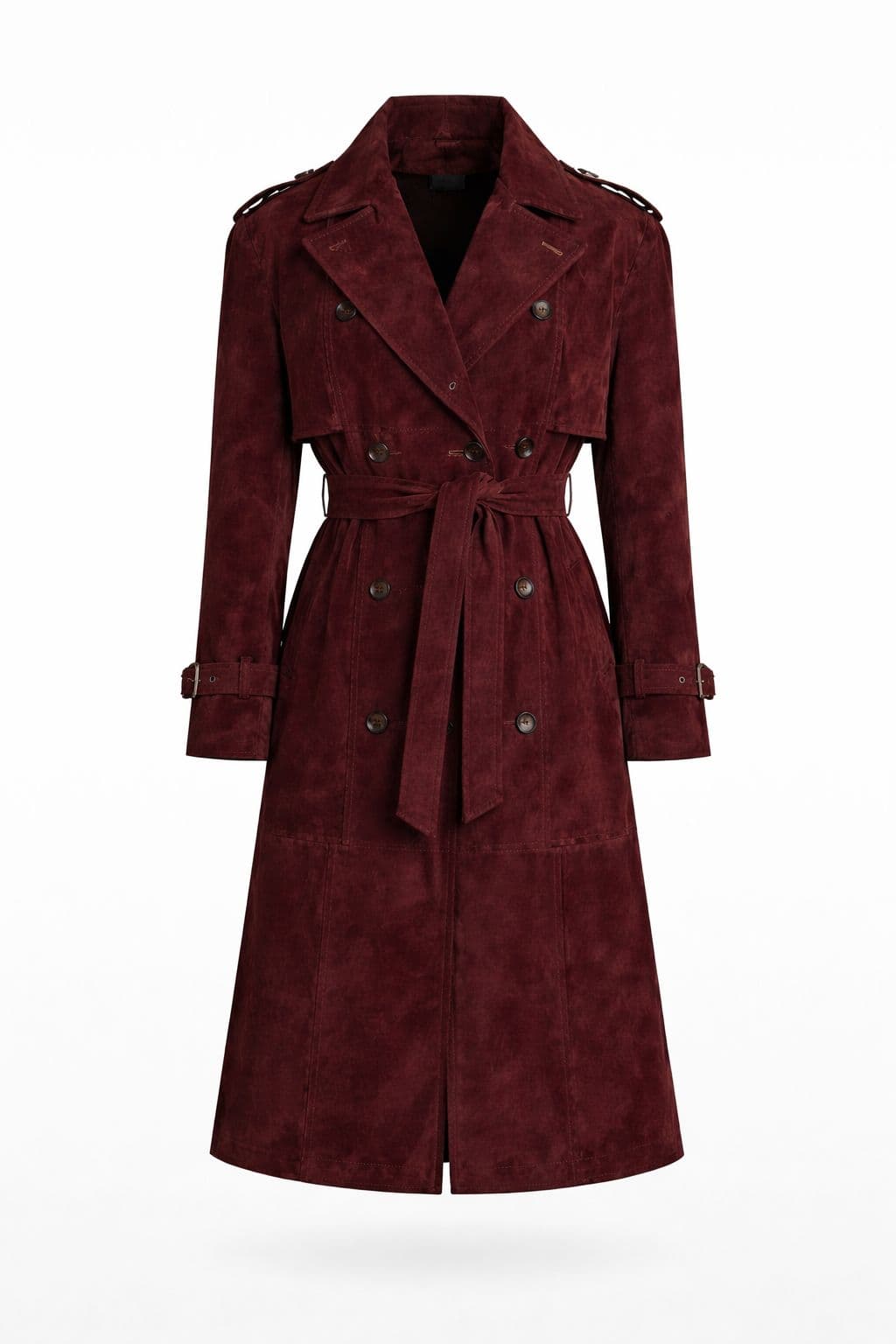
Clémence Bordeaux Suede Coat - 100% Genuine Premium Suede
$920
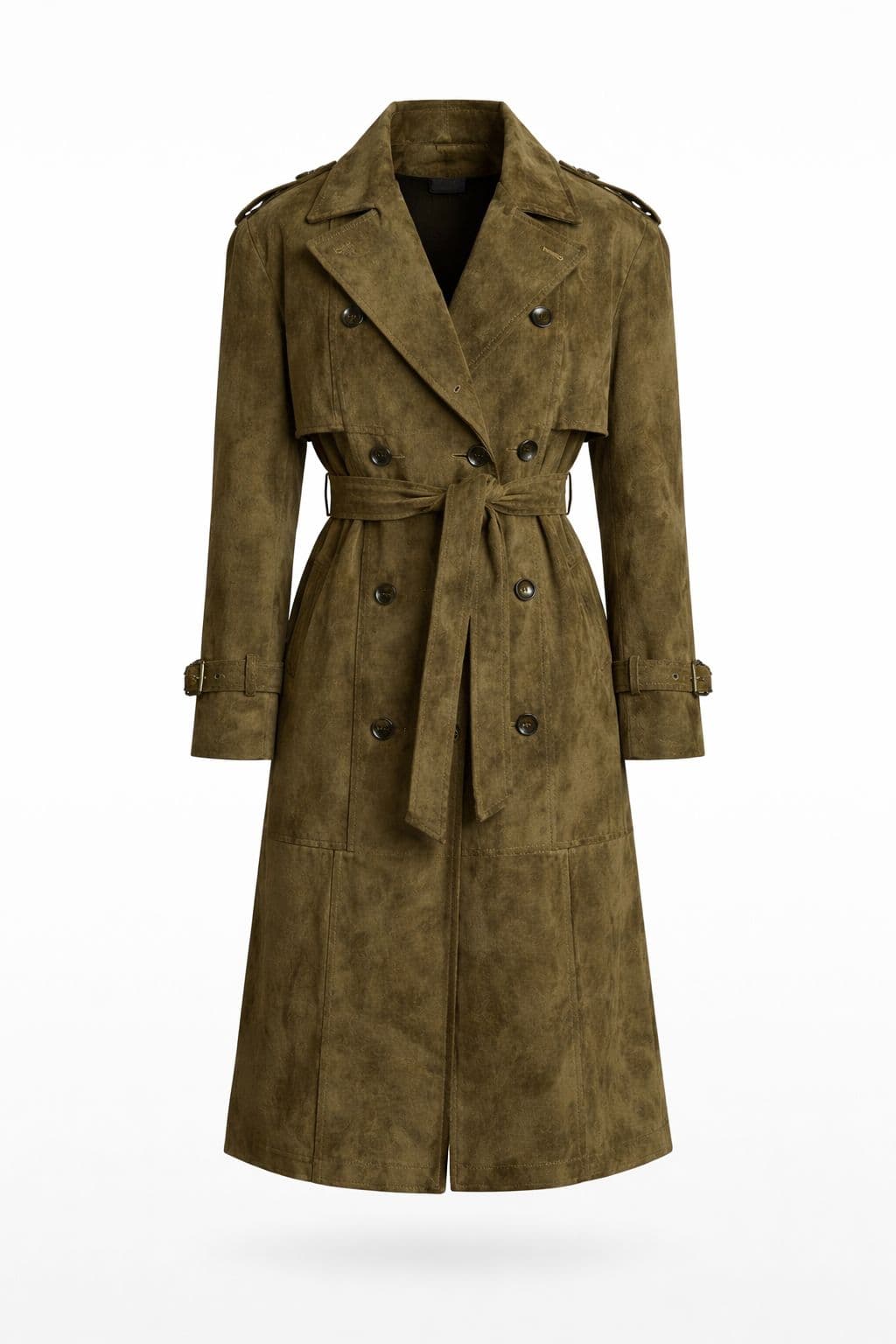
Clémence Olive Suede Coat - 100% Genuine Premium Suede
$920
Free shipping on orders above $330.