Lambskin vs Goatskin vs Calfskin Suede Coats: Which Hide Should You Choose?

Suede is suede only at the surface. The hide a suede coat is cut from changes everything beneath the nap: how the coat feels in hand, how it drapes on the body, how it ages, how it survives wear, and how much it costs. The three premium hides used in luxury suede outerwear are lambskin, goatskin, and calfskin. Each one solves a different problem.
This guide compares them side by side so you can choose based on how you actually wear coats - not on marketing copy.
Quick Comparison
| Property | Lambskin | Goatskin | Calfskin |
|---|---|---|---|
| Softness | Highest | High | Medium-high |
| Durability | Lower | High | Highest |
| Weight | Lightest | Medium | Heaviest |
| Drape | Most fluid | Balanced | Most structured |
| Patina development | Subtle | Excellent | Excellent |
| Typical price tier | Mid to high | High | Highest |
| Best use | Spring/autumn, drape-led silhouettes | All-season, versatile | Structured silhouettes, cold climates |
Lambskin Suede Coats
Lambskin suede is the softest of the three hides. The fibres are fine and short, which produces an unusually plush nap and a buttery hand that is hard to confuse with anything else. Lambskin drapes more fluidly than goatskin or calfskin - it follows the body rather than holding its own shape.
Strengths
- Unmatched softness against the skin and to the touch.
- Lightweight, so a knee-length lambskin coat feels like a hip-length goatskin one.
- Drapes beautifully on the body - particularly suited to wrap, swing, and duster silhouettes.
- Warmer than its weight suggests because of the fine, dense fibre structure.
Limitations
- Less abrasion-resistant - shows wear faster at high-friction points (cuffs, pocket edges, lapels).
- More vulnerable to scuffing and snags than tougher hides.
- Tends to develop a more subtle patina rather than the rich darkening of goatskin or calfskin.
- Best paired with careful daily handling - not the choice for someone hard on coats.
Who lambskin is right for
Wearers who prioritise feel and drape over rugged longevity. Those who already own a heavyweight outerwear option and want a luxurious second coat. Climates where the coat will not face daily abuse from weather, public transport, or backpacks.
Goatskin Suede Coats
Goatskin suede is the most balanced of the three hides and the most common in premium suede outerwear. Goatskin fibres are slightly coarser and longer than lambskin, which produces a nap with more visible texture and a hand that is soft but more substantial. Goatskin drapes well without sagging and holds structure without feeling stiff.
The Lustré Clémence suede coat range uses goatskin for exactly this reason - it sits at the intersection of softness and durability that makes a coat genuinely wearable across years and seasons.
Strengths
- Excellent abrasion resistance - the most durable of the three hides over 5+ years of regular wear.
- Develops the richest patina of any suede - colour deepens at hand-touch points, surface softens with wear.
- Drapes well in any silhouette from trench to swing.
- Lighter than calfskin, more durable than lambskin - the genuine all-rounder.
- Holds dye saturation evenly, particularly in deep colours like bordeaux, chocolate, and olive.
Limitations
- Slightly less buttery than lambskin to the touch.
- More expensive than split cowhide but generally less expensive than full-grain calfskin.
- Premium goatskin is increasingly hard to source - some 'goatskin' on the market is actually lower-grade hide labelled aspirationally.
Who goatskin is right for
Most buyers most of the time. If you are choosing your first or second premium suede coat and you want it to last 10-15 years, goatskin is the safest choice across silhouettes, colours, and use cases.
Calfskin Suede Coats
Calfskin suede is cut from young cow hide. The fibres are dense, even, and longer than lamb or goat - which produces a more uniform nap, a more substantial hand, and the most structured drape of the three. Calfskin holds shoulder lines, lapels, and trench structures better than lighter hides.
Strengths
- Most durable of the three hides - calfskin suede coats from heritage makers regularly outlast their owners.
- Holds tailored structure - the right choice for sharply-cut trenches, cocoon coats, or anything with built shoulders.
- Develops deep, even patina over decades.
- Naturally more weather-resistant than lighter hides because of the denser fibre structure.
Limitations
- Heaviest of the three - a knee-length calfskin coat can weigh 2-3 kg, noticeable on a long day.
- Stiffer initial hand - calfskin needs a season of wear to soften to its full potential.
- Most expensive of the three hides at premium grades.
- Less drape-led - looks beautiful but does not flow on the body the way lambskin does.
Who calfskin is right for
Wearers who prioritise longevity and structure. Cold climates where weight is welcome. Tailored silhouettes (trench, structured car coat, cocoon) where drape is less important than form. Buyers willing to invest at the highest tier and wear for decades.
Other Hides You May See
- Pigskin: lower price, recognisable by visible hair-follicle pattern (small dimpled triplets across the surface). Less luxurious feel, less even nap. Common in mid-market suede.
- Deerskin: rare in modern outerwear, exceptional softness, more difficult to source ethically.
- Split cowhide: the cheapest option, made from the lower (split) layer of cow hide rather than the full-grain top layer. The nap is less consistent and the surface less durable. Common in fast-fashion 'suede' coats.
- Microfibre / faux suede: not real suede at all - synthetic fabric engineered to mimic the feel. Easier to clean, but lacks the drape, breathability, and ageing of genuine suede.
How to Identify the Hide on a Coat
Reputable brands list the hide explicitly on the product page or care label. If the description says only 'suede' without naming the source animal, the hide is most likely split cowhide or pigskin. Premium brands always specify lambskin, goatskin, or calfskin because the distinction adds value.
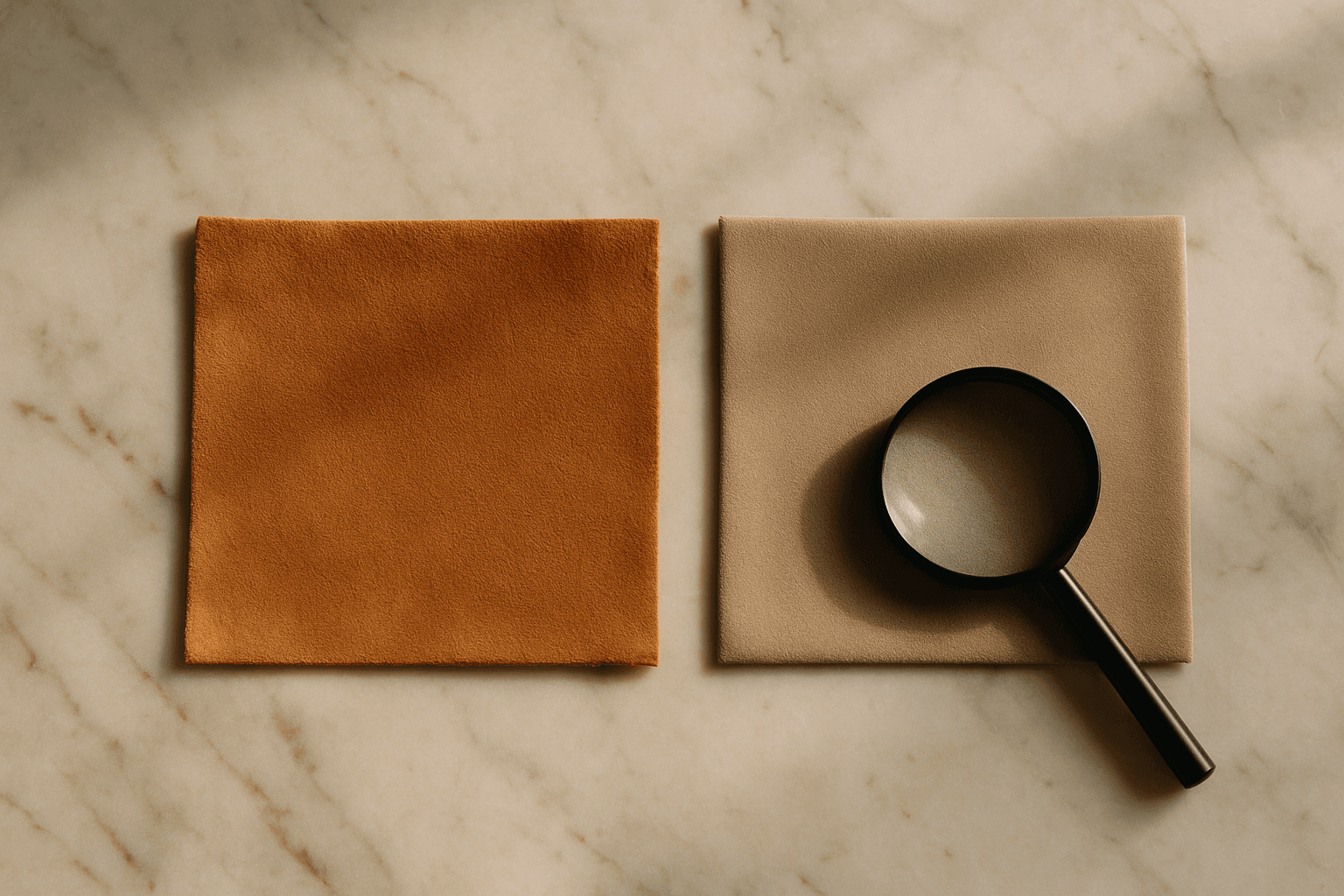
By touch: lambskin feels almost weightless and unusually soft. Goatskin has visible texture in the nap and a substantial but soft hand. Calfskin feels dense and slightly stiff at first touch. Pigskin shows visible follicle dots if you look closely. Synthetic feels uniform but lifeless - it lacks the natural variation of real hide.
Frequently Asked Questions
- Which suede hide is the highest quality?
Quality is context-dependent. Lambskin is the softest. Calfskin is the most durable. Goatskin is the most balanced. There is no universal 'best' - the right hide depends on what you need the coat to do.
- Is goatskin suede warmer than lambskin?
Slightly. Goatskin is denser and slightly heavier per square centimetre, which provides marginally better insulation. The difference is small enough that lining choice matters more than hide choice for warmth. See our suede coat lining guide.
- Why does lambskin suede cost less than calfskin?
Lambs reach hide-harvest size faster than calves, and the hides are smaller, so production cycles are shorter. Premium calfskin requires longer-aged hides and more material per coat, both of which raise the price.
- Can I tell what hide a suede coat is by looking at it?
Sometimes. Pigskin shows visible follicle dots. Lambskin has the finest, most uniform nap. Goatskin shows slightly more visible fibre direction. Calfskin has a denser, more even nap and a heavier hand. Reading product descriptions is more reliable than visual inspection.
- Is split cowhide really suede?
Technically yes - any hide split from the underside and brushed counts as suede. But split cowhide suede is significantly less durable, less soft, and shorter-lived than full-grain hide suedes from goat, lamb, or calf. For an investment piece, premium hides are worth the price difference.
Shop the Collection
Every piece is cut from 100% genuine suede and made to be worn for years, not seasons.
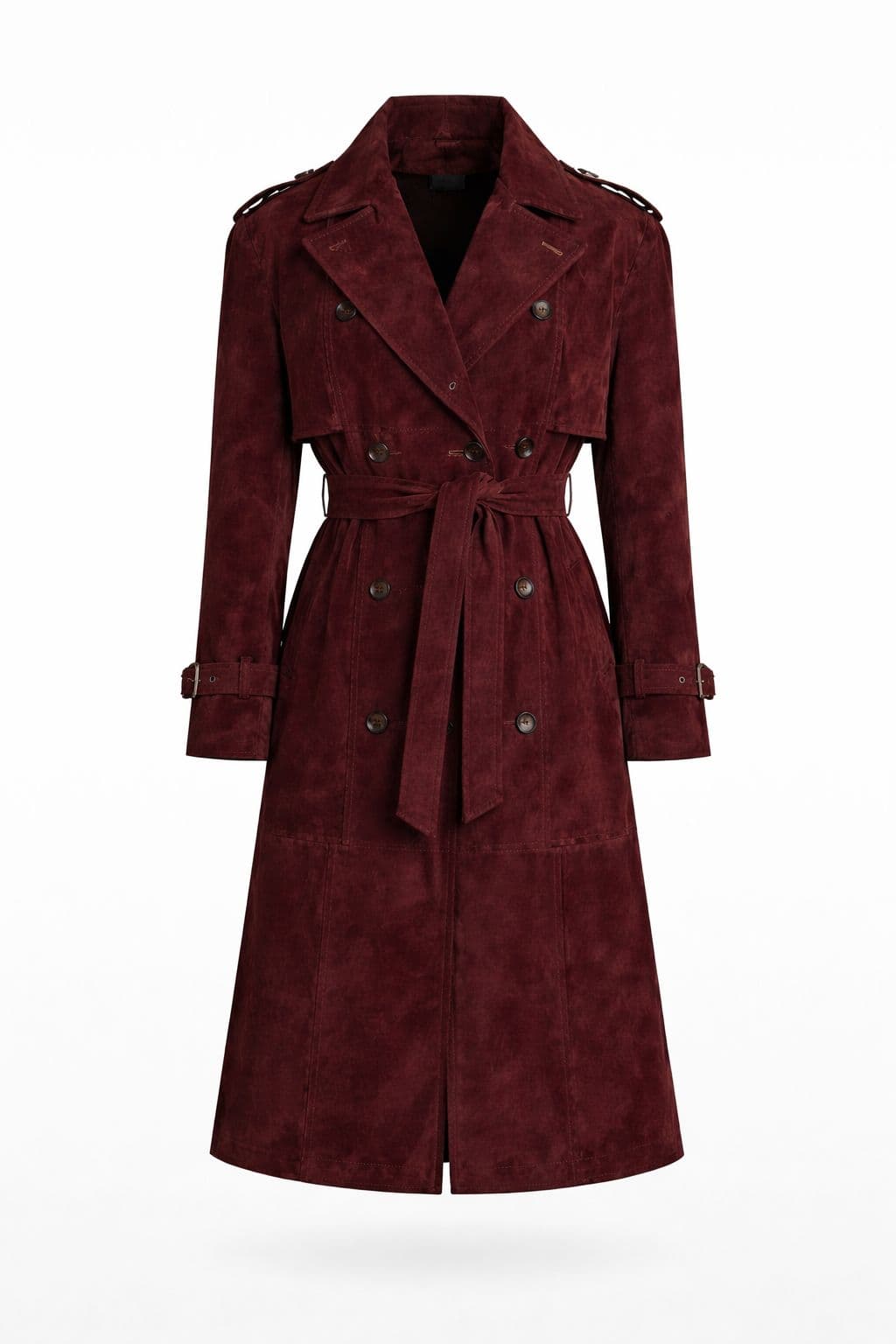
Clémence Bordeaux Suede Coat - 100% Genuine Premium Suede
$920
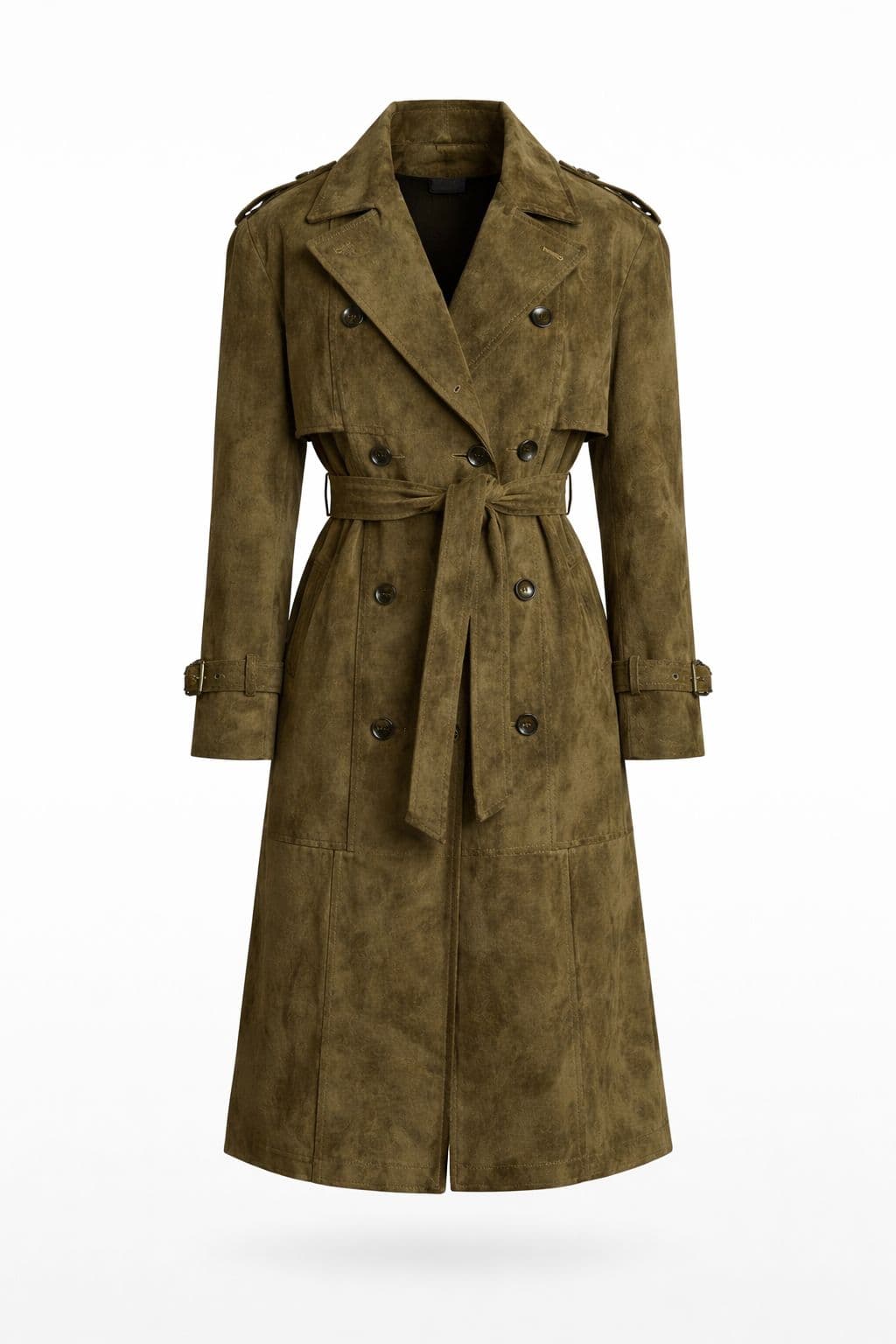
Clémence Olive Suede Coat - 100% Genuine Premium Suede
$920
Free shipping on orders above $330.