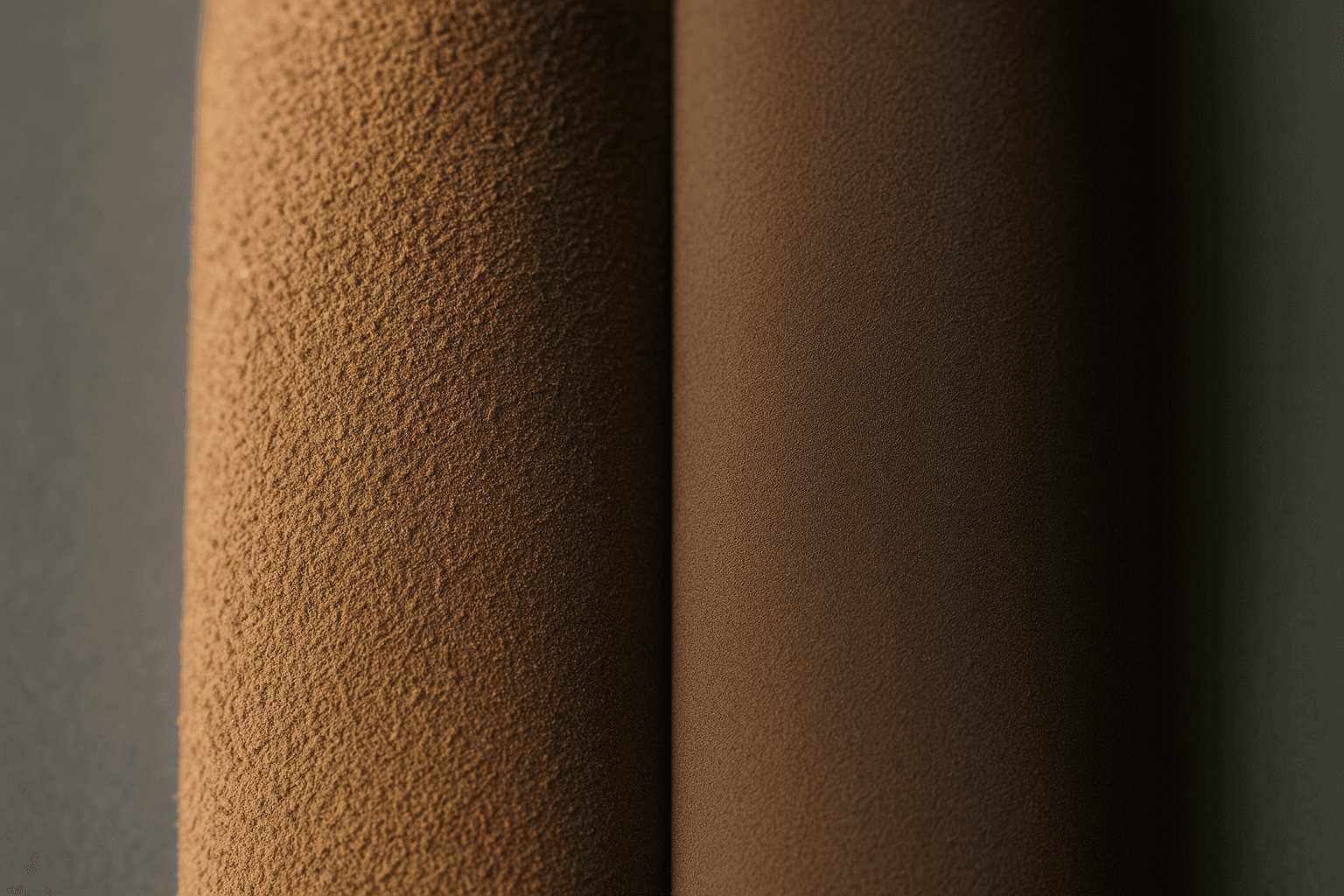
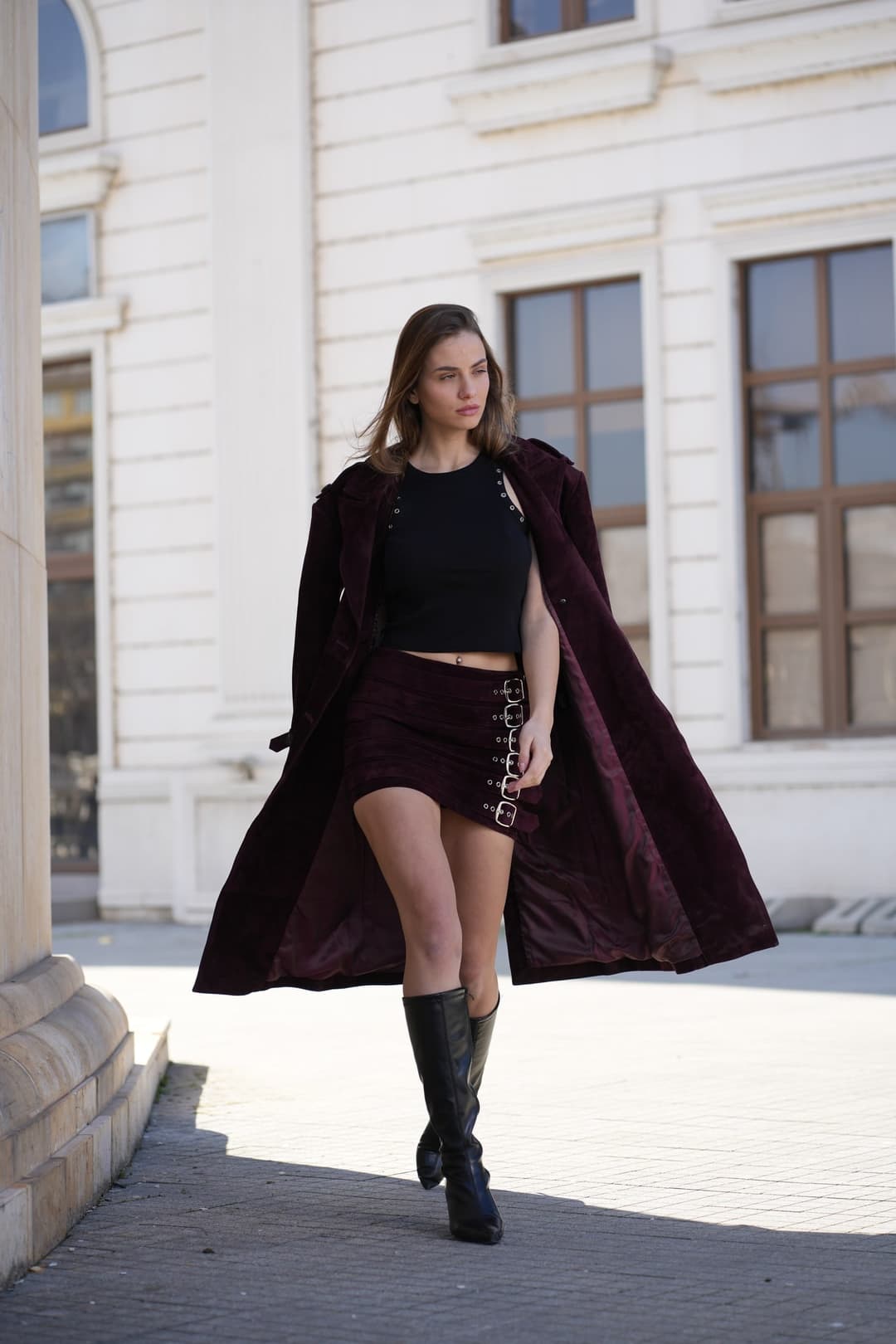
Suede Coat Types: A Complete Silhouette Guide (Trench, Car Coat, Duster, and More)
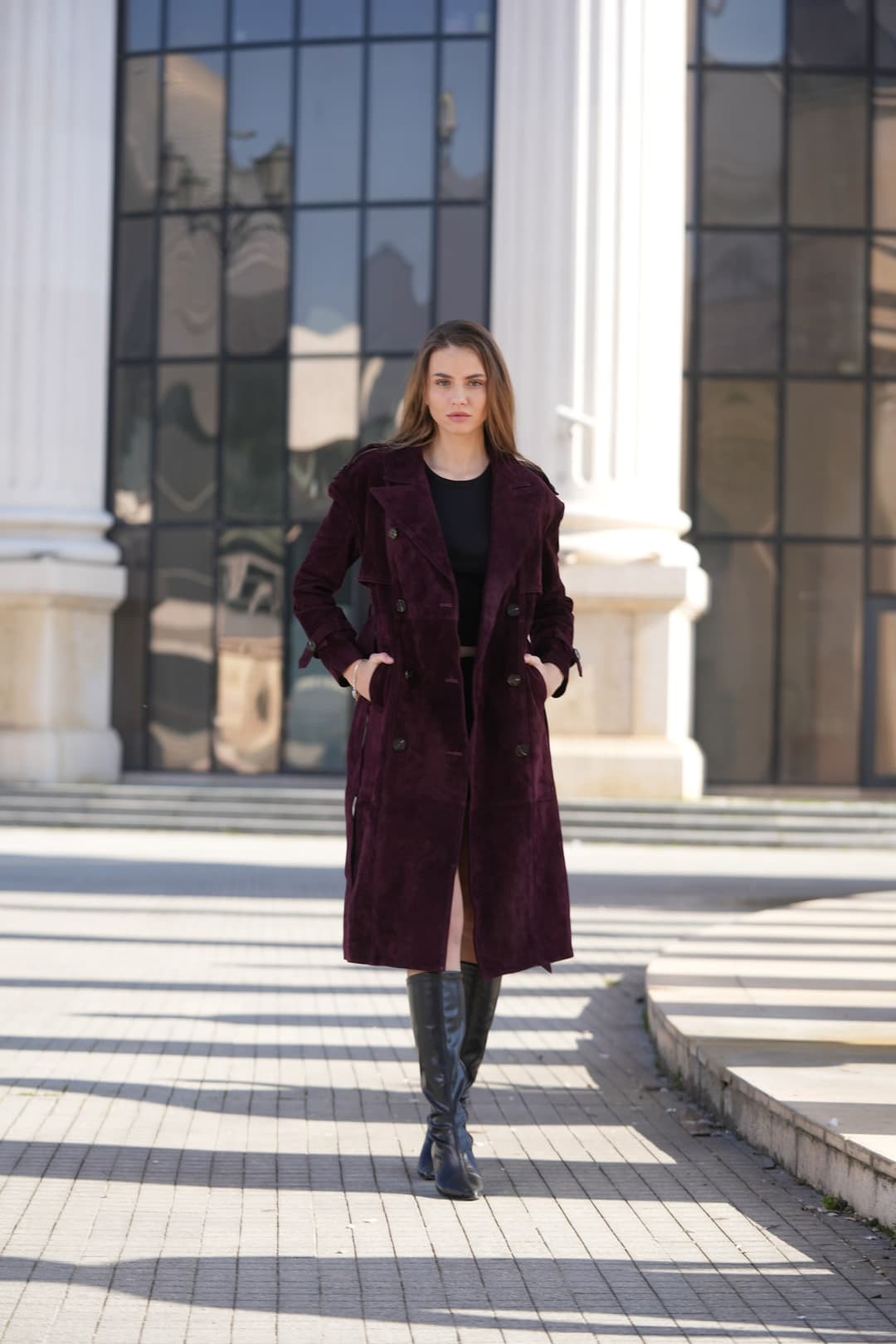
Suede coat is a material descriptor, not a silhouette. Two coats can both be made from genuine suede and look completely different on the body. Understanding the silhouette taxonomy is what lets you choose a suede coat that genuinely suits your wardrobe rather than one that simply looks beautiful on the hanger.
This guide covers the eight core suede coat silhouettes you will see across luxury outerwear, what each one does for the figure, when each one belongs in a wardrobe, and how to combine them with a thoughtful capsule.
The Eight Core Suede Coat Silhouettes
1. The Suede Trench Coat
The trench is the most structured suede silhouette. Inherited from the gabardine military trench, the suede version keeps the double-breasted front, the storm flap, the epaulettes (sometimes simplified), and the belted waist. Length typically falls below the knee. A suede trench is the most formal suede coat in the canon - it works for office, smart-casual evenings, and city travel. The Lustré Clémence Bordeaux suede coat is a refined trench-influenced silhouette.
2. The Car Coat
Originally designed in the early 20th century for driving, the car coat is hip- to mid-thigh length, single-breasted, and has minimal structure. It is the easiest silhouette to layer under because it ends above the hip break. A suede car coat is the most versatile shorter coat - it works over jeans, dresses, or tailoring with equal ease.
3. The Duster
Long, lean, and unstructured, the duster falls to mid-calf or ankle. Originally a riding garment, the modern suede duster is essentially a long, soft cardigan in coat form. It flatters tall figures and creates the illusion of height on shorter ones. Best worn open over a fitted base layer.
4. The Swing Coat
A 1950s silhouette with a fitted shoulder and a wide A-line flare from the bust down. Length varies from hip to knee. The swing coat is the most forgiving silhouette for hip-conscious or pregnant wearers and the best at transforming a simple base outfit into a complete look. Suede works particularly well here because the natural drape softens the structure.
5. The Wrap Coat
No buttons, no zip - just a tie belt closing the front overlap. Wrap coats are the easiest to size because the belt creates the fit. They are best in mid-weight suede that drapes without sagging. Length is usually knee or mid-calf.
6. The Penny Lane (Shearling-Collared) Coat
A 1970s silhouette with a shearling or fur collar, often with matching cuff trim. Mid-thigh to knee length. The collar draws the eye up and frames the face. See our full Penny Lane coat guide for the complete history and styling.
7. The Cocoon Coat
Rounded shoulders, no defined waist, and a tapered hem create an egg-shaped silhouette. The cocoon is the most minimalist and most architectural suede silhouette. It needs a clean, fitted base layer to work - oversized over oversized turns into a wearable blanket.
8. The Cape Coat
No sleeves in the conventional sense - the body and the arm are cut as one wide panel. Suede capes have a strong fashion presence but limited functional range. They are statement pieces, not everyday outerwear.
Silhouette by Body Type
| Body type | Best silhouettes | Silhouettes to be careful with |
|---|---|---|
| Petite (under 5'4") | Car coat, cropped trench, hip-length wrap | Maxi duster, long cocoon |
| Tall (over 5'8") | Duster, long trench, maxi wrap | Cropped car coat (looks accidental) |
| Pear / hip-conscious | Swing coat, A-line wrap, Penny Lane | Tapered cocoon, slim trench |
| Apple / waist-conscious | Duster, cocoon, open-front car coat | Belted trench, tight wrap |
| Hourglass | Belted trench, fitted wrap, Penny Lane | Cocoon (hides the waist) |
| Athletic / straight | Swing coat, Penny Lane, soft trench | Cape (overwhelms shoulders) |
Silhouette by Occasion
- Office and formal: trench, car coat, fitted wrap.
- Weekend casual: Penny Lane, car coat, swing coat.
- Travel: car coat (easiest to pack), wrap coat (easiest to layer).
- Evening: duster, cocoon, fitted wrap in a deeper colour like bordeaux or chocolate.
- Statement / editorial: cape, cocoon, oversized swing.
Building a Two-Coat Suede Wardrobe by Silhouette
If you only buy two suede coats, choose two silhouettes that do different jobs. The most useful pairing for most wardrobes:
- A car coat or trench in a versatile neutral (camel, brown, bordeaux, olive) for daily wear, layering, and smart-casual occasions.
- A Penny Lane or swing coat in a complementary tone for cold weather, weekend wear, and statement moments.
This pairing covers roughly 90 percent of suede-coat occasions across three seasons. For a deeper wardrobe planning framework, see our guide on building a capsule wardrobe with suede.
Frequently Asked Questions
- What is the most versatile suede coat silhouette?
The car coat. Hip- to mid-thigh length, single-breasted, minimal structure. It layers over almost any base outfit and works for casual, smart-casual, and travel without ever feeling out of place.
- Is a suede trench coat formal enough for office wear?
Yes. A well-cut suede trench in a deep neutral (chocolate, bordeaux, charcoal) reads as professional and elevated. Pair with tailored trousers and a knit or shirt for full office wear.
- What is the difference between a duster and a maxi coat?
A duster is unstructured, often unlined or lightly lined, and designed to be worn open. A maxi coat is structured, fully lined, and designed to be worn closed for warmth. Both can be ankle length, but the duster is a layering piece while the maxi is primary outerwear.
- Are suede swing coats only for casual wear?
No. A suede swing coat in a refined colour (bordeaux, charcoal, deep tan) and a structured weight reads as smart-casual to elevated. It is more relaxed than a trench but more polished than a Penny Lane coat.
- Which suede coat silhouette is best for layering over knitwear?
Car coats and swing coats give the most layering room without distorting the silhouette. Trench coats and fitted wraps are best worn over thinner base layers (shirts, fine knits) to preserve the line.
Shop the Collection
Every piece is cut from 100% genuine suede and made to be worn for years, not seasons.
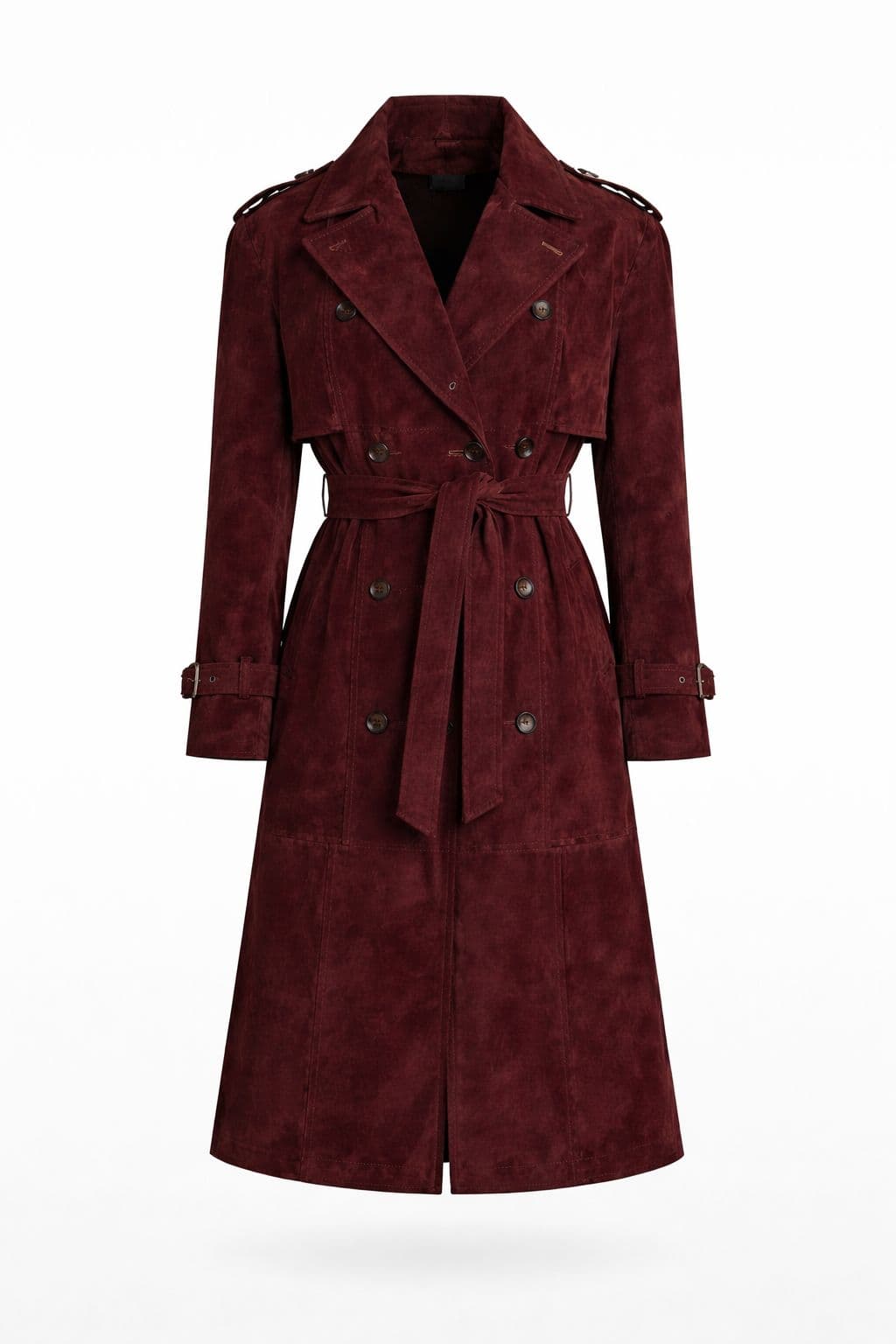
Clémence Bordeaux Suede Coat - 100% Genuine Premium Suede
$920
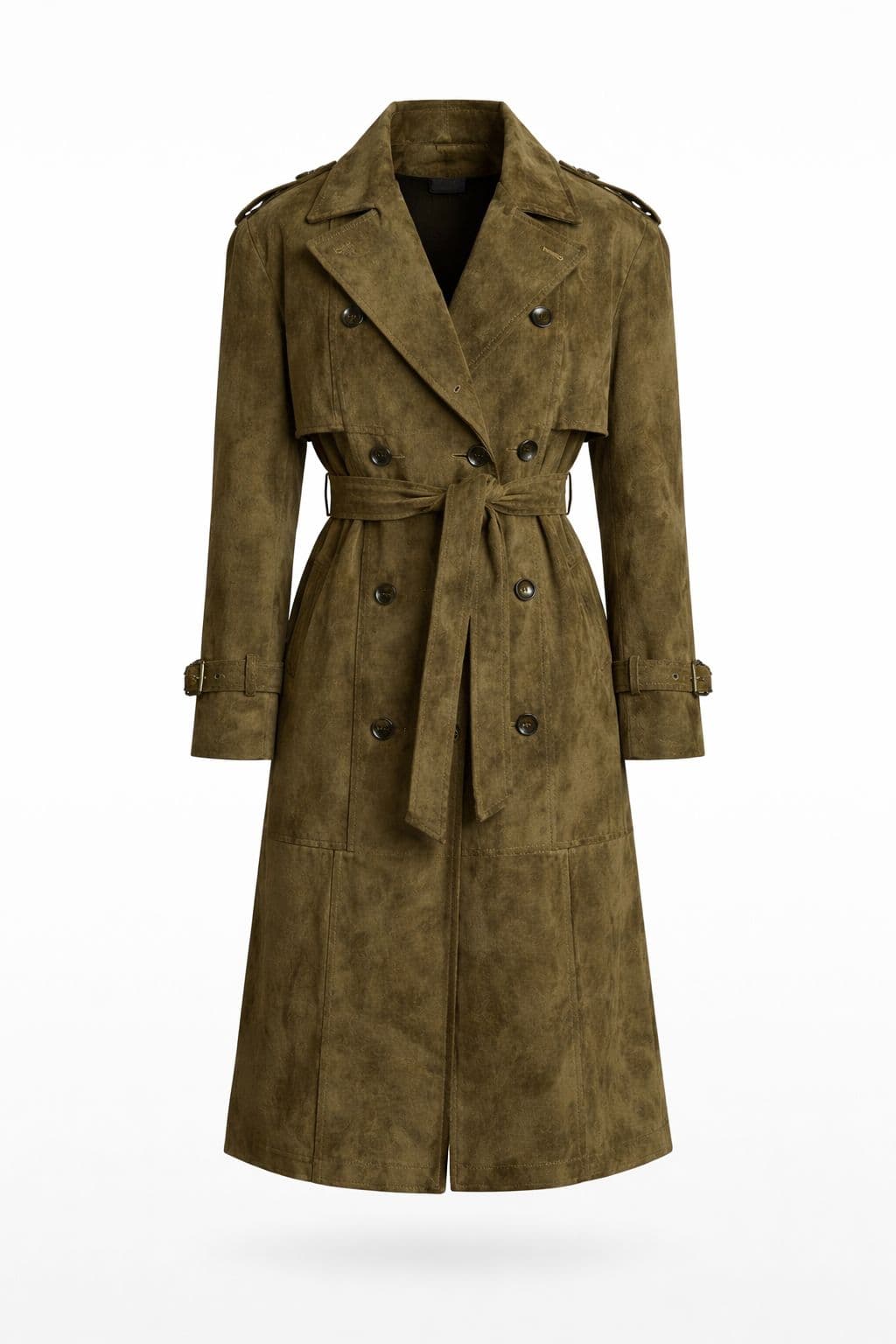
Clémence Olive Suede Coat - 100% Genuine Premium Suede
$920
Free shipping on orders above $330.