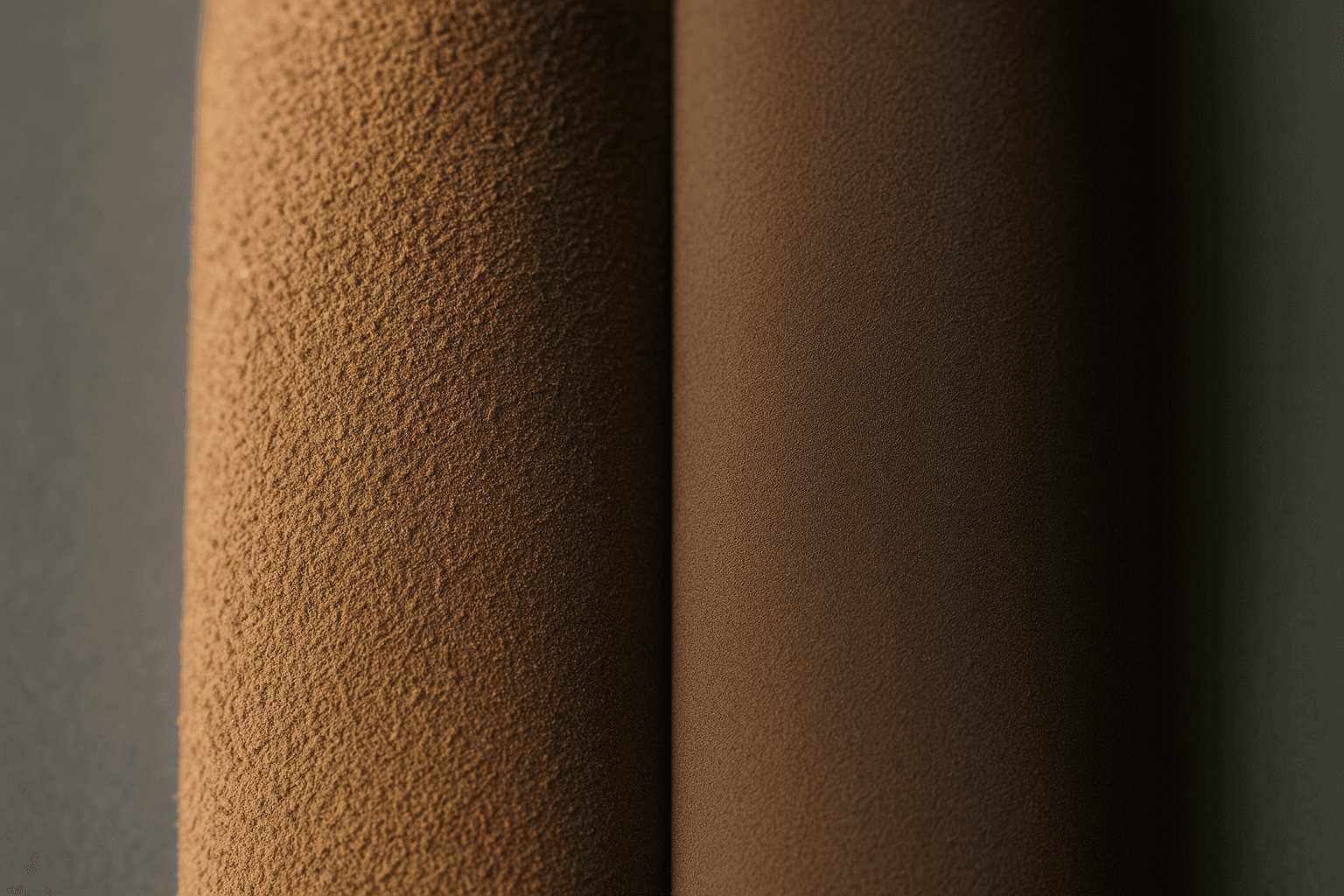
Heavyweight vs Lightweight Suede Coats: Which Weight Fits Your Climate?
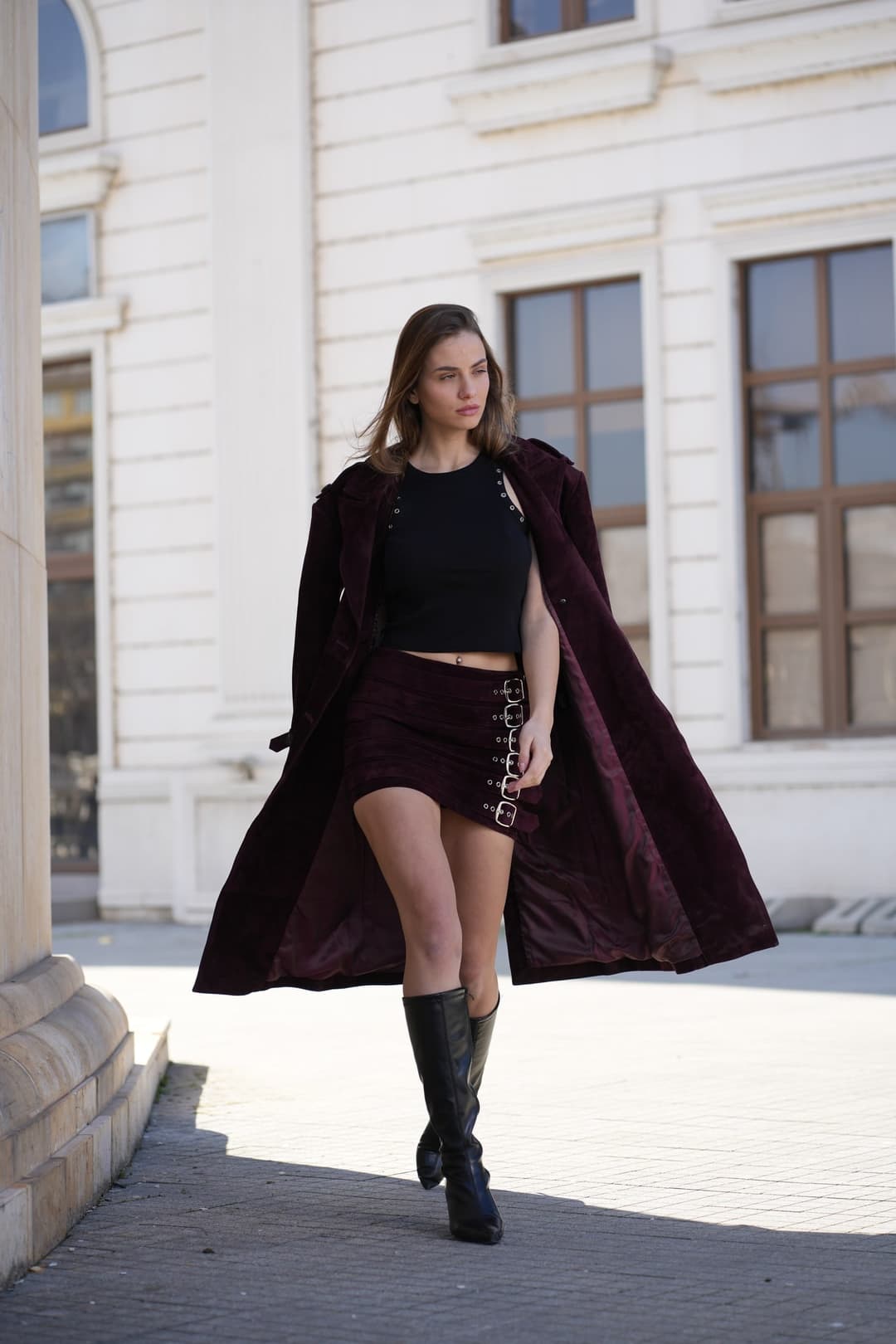
Suede comes in a wider range of weights than most buyers realise. The same hide can be split to anywhere from 0.6mm thick (garment-weight, drapey, almost shirt-like) to 1.4mm thick (substantial, structured, true outerwear-weight). Choosing the right weight is what determines whether a suede coat works for your climate, your silhouette, and your daily life.
How Suede Weight Is Measured
Suede weight is measured in two ways:
- Thickness in millimetres (0.6mm to 1.4mm typical for outerwear). This is the most precise measurement.
- Ounces per square foot (1.5 oz/ft² to 3.5 oz/ft² typical). This is more common in American specifications. As a rough conversion, 1 oz/ft² ≈ 0.4mm thickness.
The premium ranges:
| Category | Thickness | Approximate ounces | Typical use |
|---|---|---|---|
| Lightweight (garment) | 0.6-0.8mm | 1.5-2.0 oz | Shirts, dresses, lightweight unlined coats |
| Medium-light | 0.8-1.0mm | 2.0-2.5 oz | Spring/autumn coats, jackets, drapey silhouettes |
| Medium | 1.0-1.2mm | 2.5-3.0 oz | Versatile all-season coats, the most common premium weight |
| Heavyweight | 1.2-1.4mm | 3.0-3.5 oz | Winter coats, structured silhouettes, cold-climate use |
What Each Weight Does for the Coat
Lightweight (0.6-0.8mm)
Drapes like a heavy fabric. Best in unlined silhouettes (dusters, soft wraps) or in warm climates where structure would overheat. Lightweight suede shows the body line clearly and feels almost weightless in hand. Less abrasion-resistant than heavier weights - shows wear faster at high-friction points.
Medium-light (0.8-1.0mm)
The drape-led outerwear weight. Suitable for soft trenches, wrap coats, swing coats, and most spring/autumn silhouettes. Holds shape better than lightweight while still flowing on the body. Most common weight for higher-end European suede outerwear.
Medium (1.0-1.2mm)
The all-season versatile weight. Most premium suede coats use this range. Heavy enough to hold structure (lapels stay crisp, shoulders hold their line), light enough to remain comfortable for a full day of wear. The Lustré Clémence is in this weight range. The right choice if you want one suede coat for the broadest range of conditions.
Heavyweight (1.2-1.4mm)
True outerwear weight. Holds structured silhouettes (sharp trenches, cocoons, military-influenced shapes) without lining support. More wind-resistant and warmer than lighter weights. Heavier in hand and on the body - a knee-length heavyweight coat can weigh 2.5-3 kg. Best for cold climates and structured silhouettes.
Choosing Weight by Climate
| Climate / wear season | Recommended weight | Lining |
|---|---|---|
| Mild spring/autumn (12-20°C) | 0.8-1.0mm | Unlined or viscose |
| Cool autumn/early winter (4-15°C) | 1.0-1.2mm | Viscose or silk |
| Cold winter (below 4°C) | 1.2-1.4mm | Quilted or shearling |
| Year-round versatile | 1.0-1.2mm | Viscose |
| Warm climate (rare cold snaps) | 0.6-0.8mm | Unlined |
Choosing Weight by Silhouette
- Drape-led (duster, swing, soft wrap): lightweight or medium-light. Heavier weights distort the silhouette.
- Structured (trench, cocoon, military-influenced): medium to heavyweight. Lighter weights cannot hold the shoulder and lapel structure.
- All-purpose (car coat, soft trench, fitted wrap): medium. The most forgiving silhouette-weight pairing.
- Cropped or jacket-length: medium-light to medium. Heavyweight cropped suede can look armoured.
How to Read Weight on a Product Page
Reputable brands list either thickness in millimetres or ounces per square foot. If the product page lists only the coat's total weight (e.g., 'weight: 2 kg'), this is the finished coat weight including lining and hardware - useful for travel planning but not for understanding the suede itself.
If the page lists no weight at all, you can sometimes infer from photos: heavyweight suede shows minimal hanger sag and crisp shoulder lines; lightweight suede drapes off the hanger and shows the silhouette of the form underneath. Touching the coat is the most reliable test - heavyweight feels substantial, lightweight feels almost hollow.
Common Weight-Related Mistakes
- Buying a heavyweight suede coat for a mild climate. The coat will be too warm half the time and stay in the closet.
- Buying a lightweight suede coat for cold weather. Even with quilted lining, lightweight suede does not block wind well and can feel cold below 5°C.
- Choosing weight based on price. Heavyweight is not automatically more expensive - lightweight premium suede can cost more than heavyweight mid-market suede. Weight indicates intended use, not quality.
- Forgetting layering. A medium suede coat over a chunky knit feels significantly heavier than the same coat over a t-shirt. Account for typical layering when choosing weight.
Lining and Weight Together
Weight and lining work together to determine warmth. A medium-weight suede coat with quilted lining is warmer than a heavyweight suede coat with viscose lining. For the full lining picture, see our suede coat lining guide. The combined choice of weight + lining is what determines the season range of the coat.
Frequently Asked Questions
- What is the best suede weight for an all-season coat?
Medium weight (1.0-1.2mm) with viscose or silk lining. This combination handles spring, autumn, and mild winters comfortably and works across the broadest range of silhouettes.
- Is heavier suede always higher quality?
No. Weight indicates intended use, not quality. A premium lightweight goatskin suede coat can be significantly higher quality than a heavyweight split cowhide coat. Always check hide source and tanning method alongside weight.
- Does suede weight affect price?
Slightly - heavier hides require more material per coat - but the price differential is small compared to differences in hide source, tanning method, and brand. A premium lightweight suede coat from a heritage brand can cost more than a heavyweight suede coat from a mass-market brand.
- Can I tell suede weight from the product photos?
Sometimes. Heavyweight suede shows crisp lapels, no hanger sag, and structured shoulder lines. Lightweight suede drapes softly off the hanger and shows the underlying form. The most reliable check is the product specification or trying the coat in person.
- Are heavyweight suede coats more durable?
Slightly. Heavier suede has more material at high-friction points and is more resistant to abrasion. The difference is marginal compared to hide source and tanning method, which are bigger determinants of lifespan.
Shop the Collection
Every piece is cut from 100% genuine suede and made to be worn for years, not seasons.
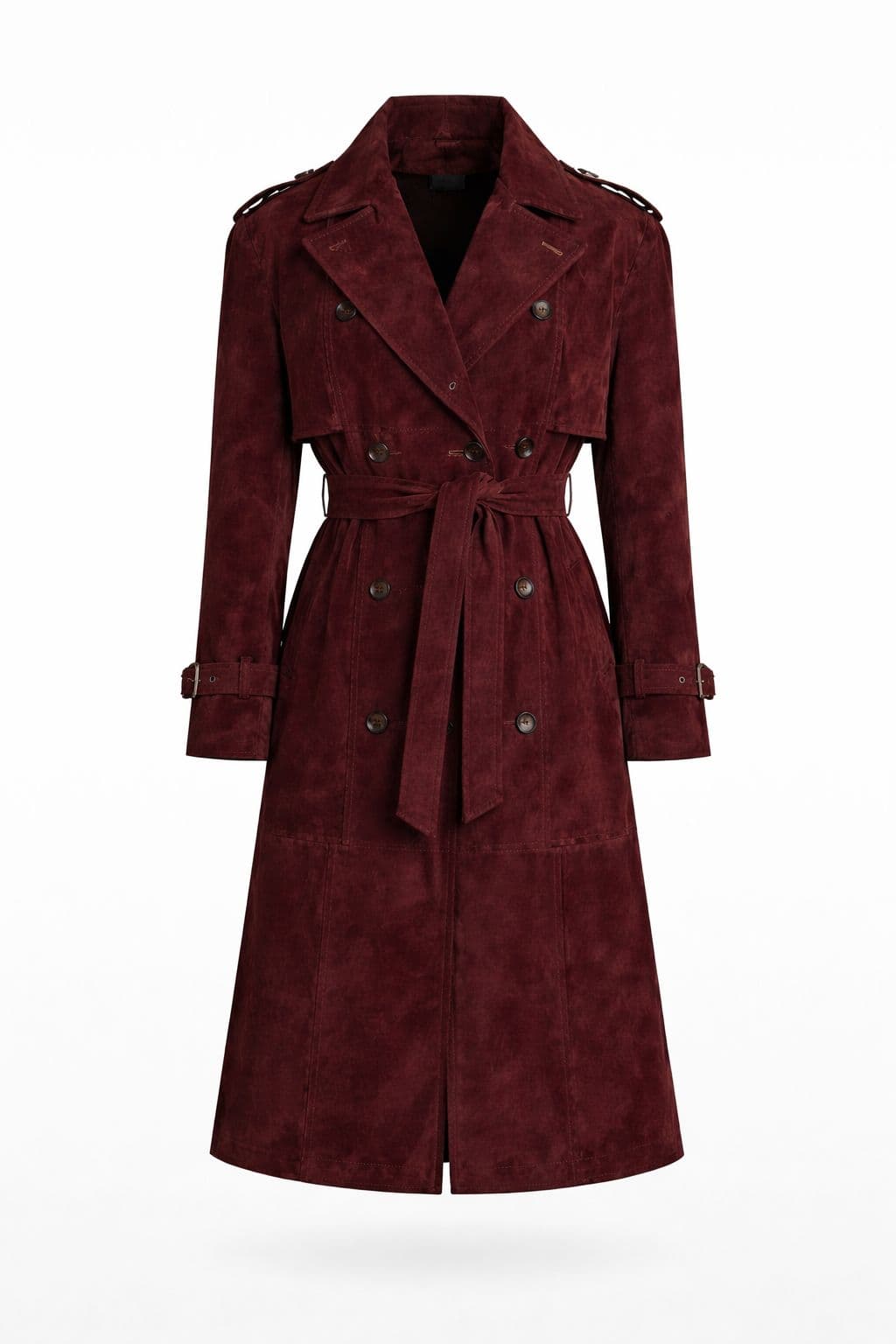
Clémence Bordeaux Suede Coat - 100% Genuine Premium Suede
$920
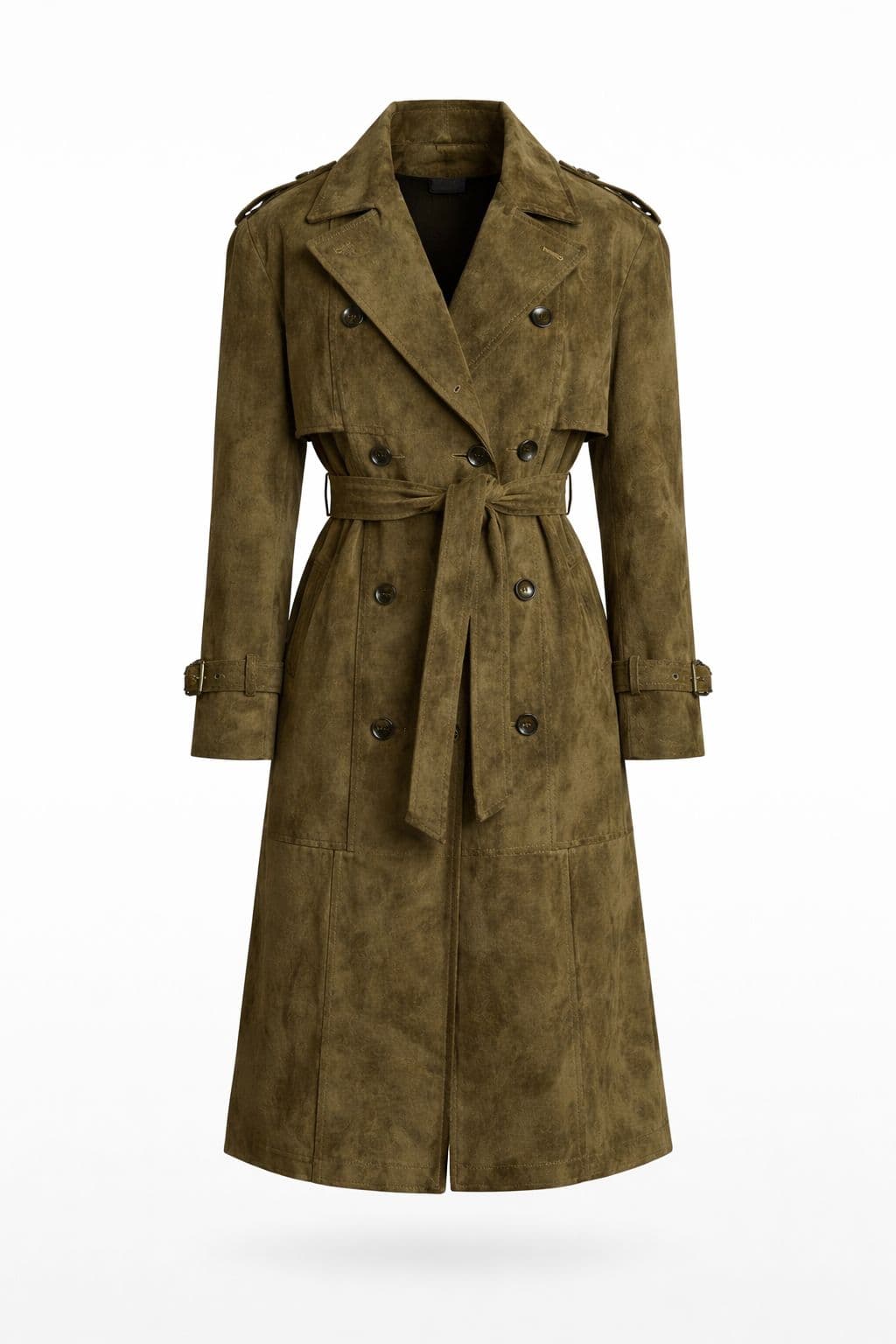
Clémence Olive Suede Coat - 100% Genuine Premium Suede
$920
Free shipping on orders above $330.