Suede Coats for Mild Climates: The Best Weight, Lining, and Length for 10 to 18 Degrees C
Most suede outerwear advice is written for cold winters, which is unhelpful if you live somewhere that rarely drops below 10 degrees. Lisbon, Marseille, Barcelona, the southern UK shoulder seasons, and most of coastal California sit in a band of 10 to 18 degrees C for half the year. In that range, a heavyweight shearling-lined suede coat is too warm, but a thin unlined jacket is not enough. The right answer is a specific weight, lining, and length combination that most buyers do not ask about.
Why Most Suede Coats Are Wrong for Mild Climates
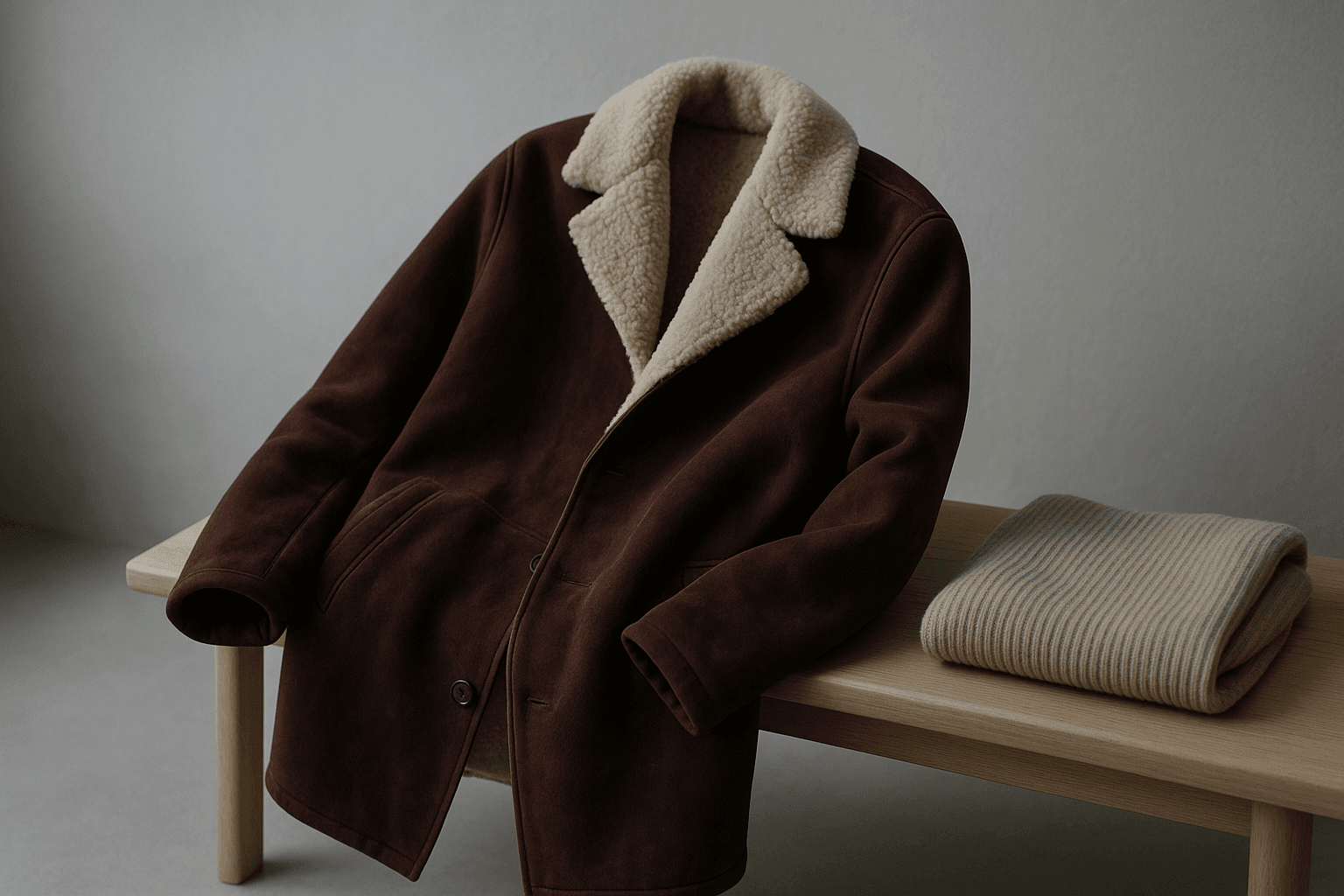
Premium suede coats sold in Europe are typically built around an 800 to 1000 g/m² hide weight with a wool or shearling lining. That construction makes sense for Paris in January, but in Lisbon in March it produces overheating within an hour of wear. The result is a coat that hangs in the wardrobe nine months of the year because it only works at the bottom of the temperature range.
For 10 to 18 degrees C, the goal is a coat that handles wind, light damp, and a brisk walk without becoming a sauna. That means a lighter hide, a slip lining rather than a thermal one, and a length that does not trap heat below the hip.
Target Hide Weight and Lining
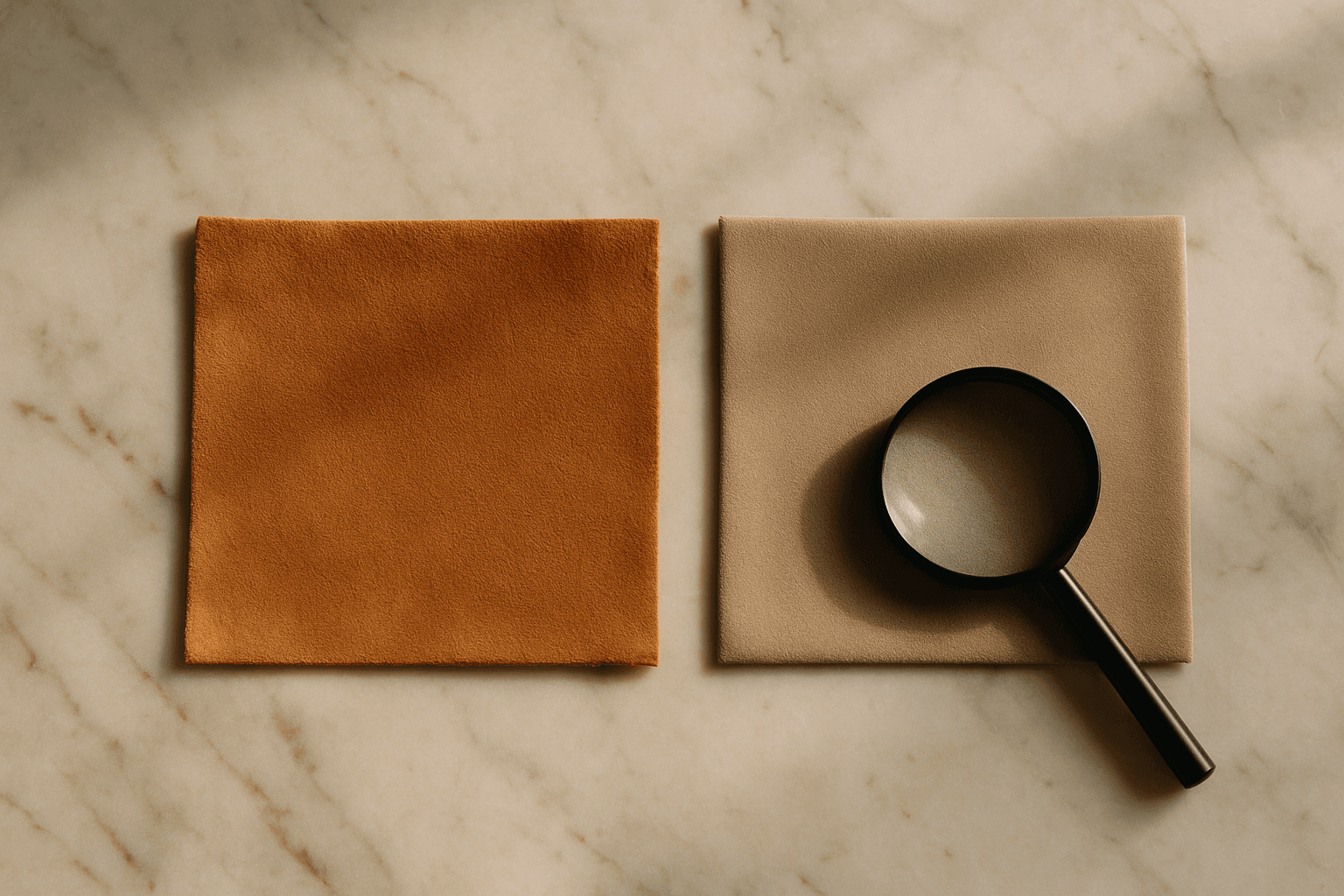
Hide weight is the single most useful number when shopping for a mild-climate suede coat. It is rarely listed on the product page, but a polite request to the brand will usually surface it.
- 500 to 650 g/m²: ideal for 14 to 18 degrees C. Sits like a heavy shirt jacket.
- 650 to 800 g/m²: ideal for 10 to 14 degrees C. The sweet spot for Mediterranean spring and autumn.
- 800 to 1000 g/m²: too warm above 10 degrees C in still air. Reserve for transitional winter.
- Above 1000 g/m²: cold-climate territory. Avoid for mild climates entirely.
Lining matters almost as much. A bemberg or cupro slip lining adds drape and protects the suede from body oils without trapping heat. A wool flannel lining adds 4 to 6 degrees of perceived warmth, which is exactly what you do not want at 15 degrees. Avoid quilted, shearling, or thermal linings for this climate band. The Lustré Clémence Coat at 840 EUR ships with a cupro lining for this reason: it adds structure and longevity without converting the coat into winter-only wear.
The Best Length for Mild Climates
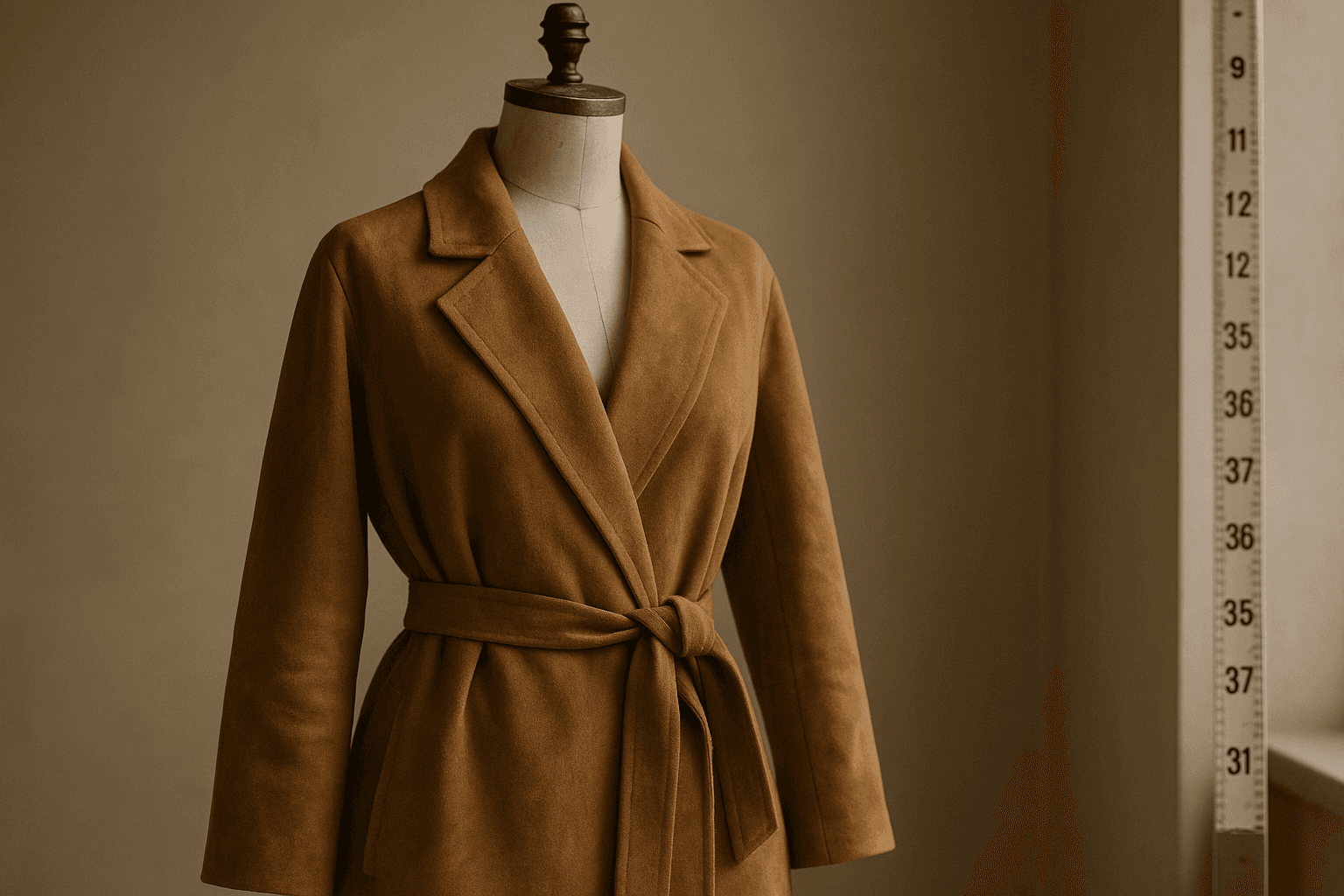
Length controls heat retention more than most buyers realise. A coat that ends mid-thigh allows airflow at the hip, which is the difference between comfortable and overheated at 16 degrees. A full-length coat to the calf traps a column of warm air against the legs, which only feels good below about 8 degrees.
For mild climates, consider three lengths in this order of usefulness: short jacket (around 60 to 70 cm), mid-thigh coat (around 85 to 95 cm), and just-above-the-knee coat (around 95 to 100 cm). Anything longer becomes situational. For a deeper breakdown of how length changes the silhouette, see the suede coat lengths guide.
Colour and Mild Climate Light
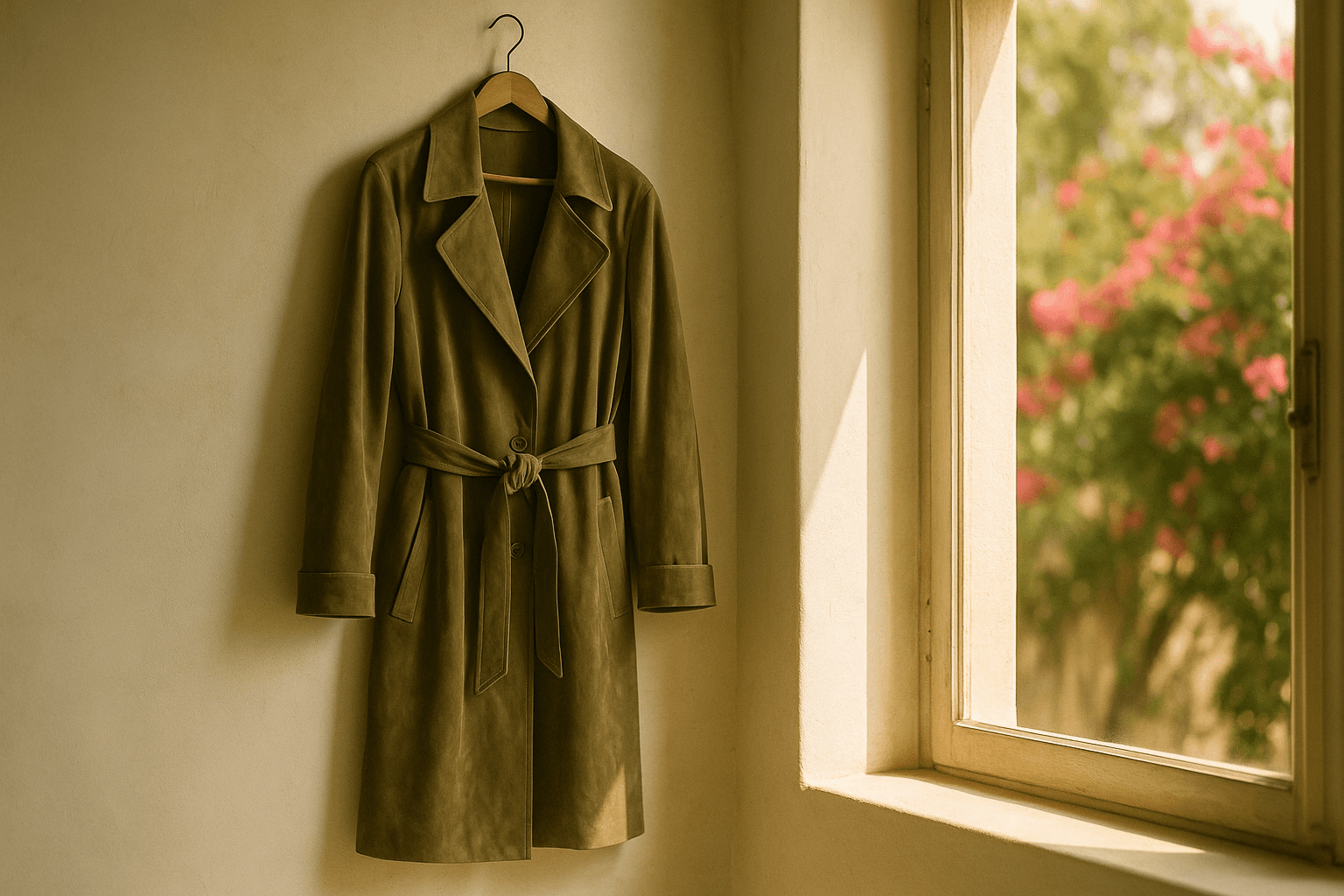
Mild climates tend to come with bright, low-angle light: Mediterranean coastlines, Californian winters, Lisbon in October. Strong sunlight reads colour differently than overcast Northern European light. Pale stone, soft taupe, and muted olive flatter that light better than the deep bordeaux or chocolate that dominate cold-climate suede ranges. For full colour pairing logic, the suede coat colour guide covers which tones hold up best across light conditions.
Rain, Sea Air, and Practical Care
Mild climates often mean coastal weather: light rain, salt air, and frequent humidity shifts. Suede handles all three with the right preparation. Apply a fluorocarbon-free water repellent twice a year, brush the nap weekly with a brass-bristle brush, and never store the coat damp. Salt air specifically dries out the fibres faster than inland weather, so a yearly conditioning treatment matters more than for a Paris-based wearer. The suede coat care and storage guide covers the full routine, and suede coat in the rain addresses what to do when you do get caught out.
| Climate band | Hide weight (g/m²) | Lining | Best length | Example regions |
|---|---|---|---|---|
| 16 to 20 degrees C | 450 to 600 | Cupro or unlined | Short jacket, 60 to 70 cm | Lisbon Sept, LA Jan, Sydney May |
| 12 to 16 degrees C | 600 to 750 | Cupro or silk | Mid-thigh, 85 to 95 cm | Marseille Mar, London May, Auckland June |
| 10 to 14 degrees C | 700 to 850 | Cupro with chest panel | Above-knee, 95 to 105 cm | Barcelona Nov, Dublin May, San Francisco year-round |
| 6 to 10 degrees C | 850 to 1000 | Light wool or quilted | Knee or below, 105 to 115 cm | Paris Mar, Milan Apr, Vancouver autumn |
| Below 6 degrees C | 1000 plus | Wool or shearling | Below knee, 115 cm plus | Stockholm winter, Berlin Jan, Boston Feb |
Buying Logic for Mild-Climate Wearers
If your year sits mostly between 10 and 18 degrees, prioritise a mid-weight coat with a slip lining and a mid-thigh to above-knee length. You will get 200 plus wears a year out of it rather than the 30 a heavy coat manages in the same climate. For more on how cost-per-wear changes when a coat actually fits the climate, the suede coat as an investment piece breakdown is worth reading before you spend.
Frequently Asked Questions
- Can I wear a heavyweight suede coat in a mild climate if I just leave it open?
Wearing a heavy coat open at 15 degrees works for short walks but fails on transit, windy days, and any sustained activity. The hide weight still adds shoulder load and traps heat at the back. Buying for the actual temperature band you live in is more comfortable and extends the life of the coat through more wears.
- What hide weight should I ask the brand to confirm?
For 10 to 18 degrees C, ask for hides in the 500 to 800 g/m² range. Anything above 1000 g/m² will be too warm. If the brand cannot confirm hide weight, ask whether the coat is described as a transitional or three-season piece, which usually maps to the same range.
- Is unlined suede appropriate for a mild climate?
Fully unlined suede looks beautiful but pulls at the shoulders, picks up body oils, and loses shape faster. A cupro or bemberg slip lining adds almost no warmth and dramatically extends the life of the coat. Avoid fully unlined unless the piece is intended as a summer-evening jacket.
- Do I need waterproofing in a Mediterranean climate?
Yes. Mild does not mean dry. Mediterranean autumn brings sudden showers and salt air year-round. A twice-yearly fluorocarbon-free protector keeps the nap from absorbing moisture and salt, which is the main cause of stiffening in coastal-worn suede.
- Will a mid-weight suede coat feel cheap compared to a heavy one?
No, if the hide quality is right. Weight alone is not a quality marker. A 700 g/m² lambskin from a top tannery feels and ages better than a 1100 g/m² mid-grade hide. Ask about origin (Spanish, Italian, French entre-fin) rather than weight alone.
Shop the Collection
Every piece is cut from 100% genuine suede and made to be worn for years, not seasons.
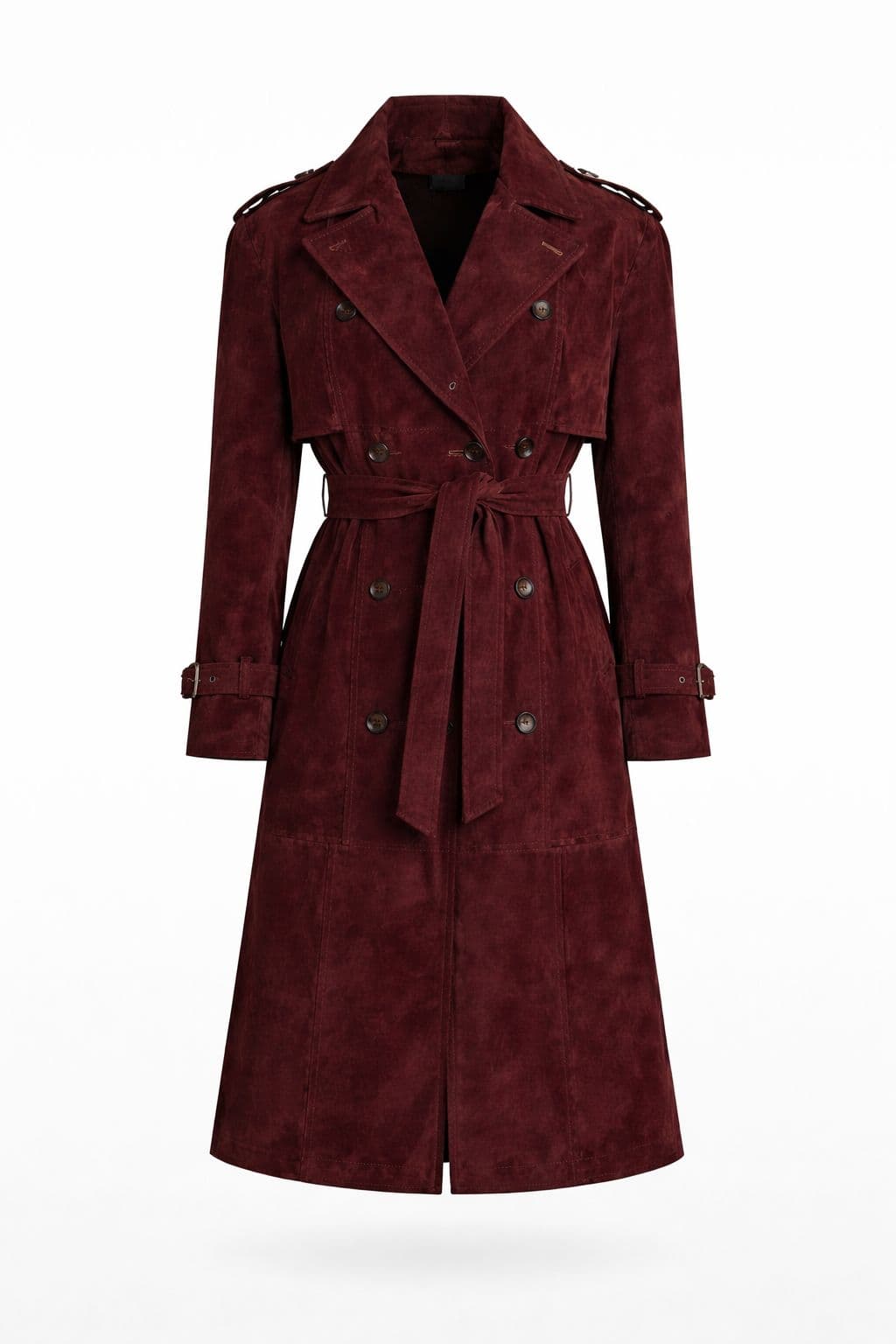
Clémence Bordeaux Suede Coat - 100% Genuine Premium Suede
$920
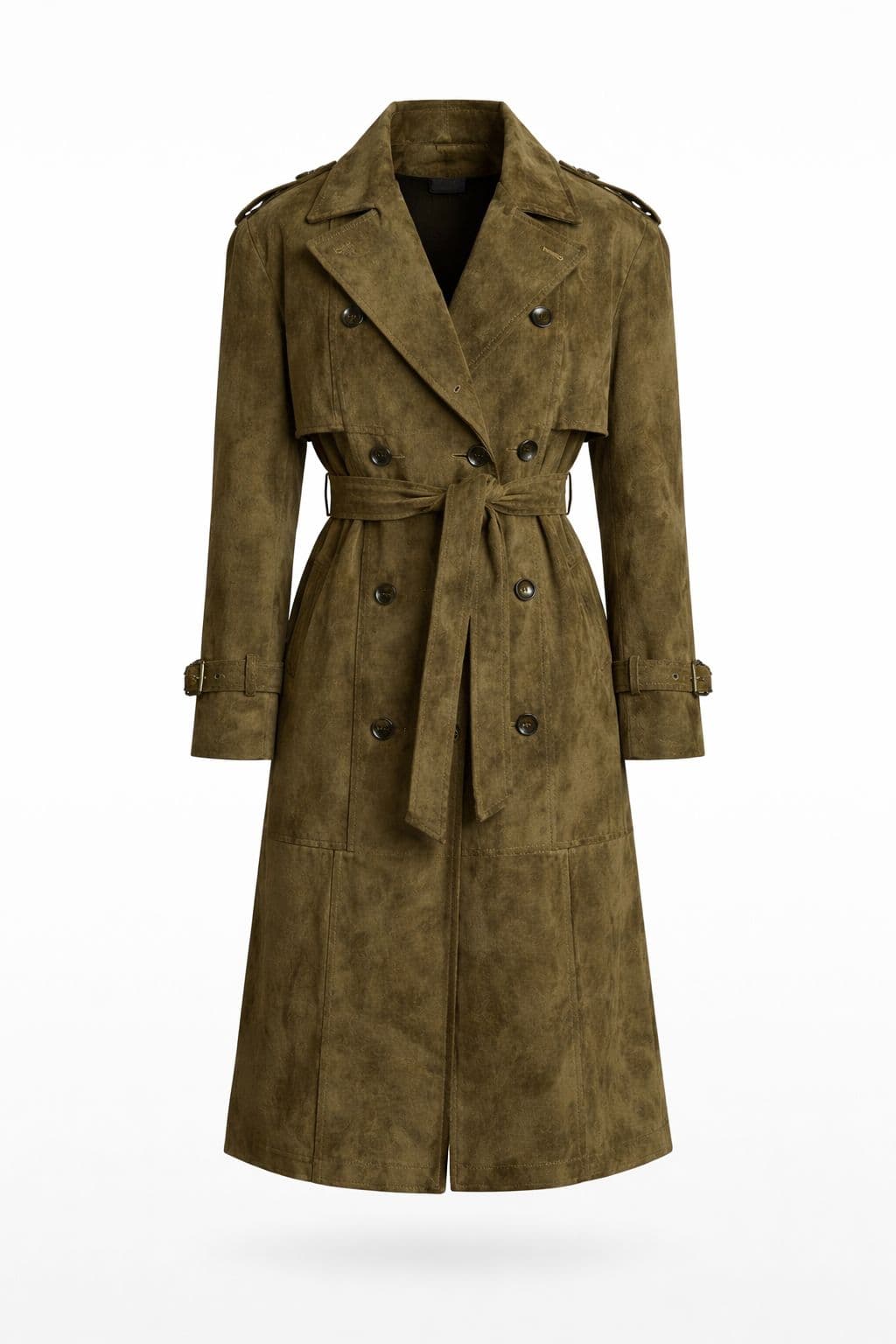
Clémence Olive Suede Coat - 100% Genuine Premium Suede
$920
Free shipping on orders above $330.