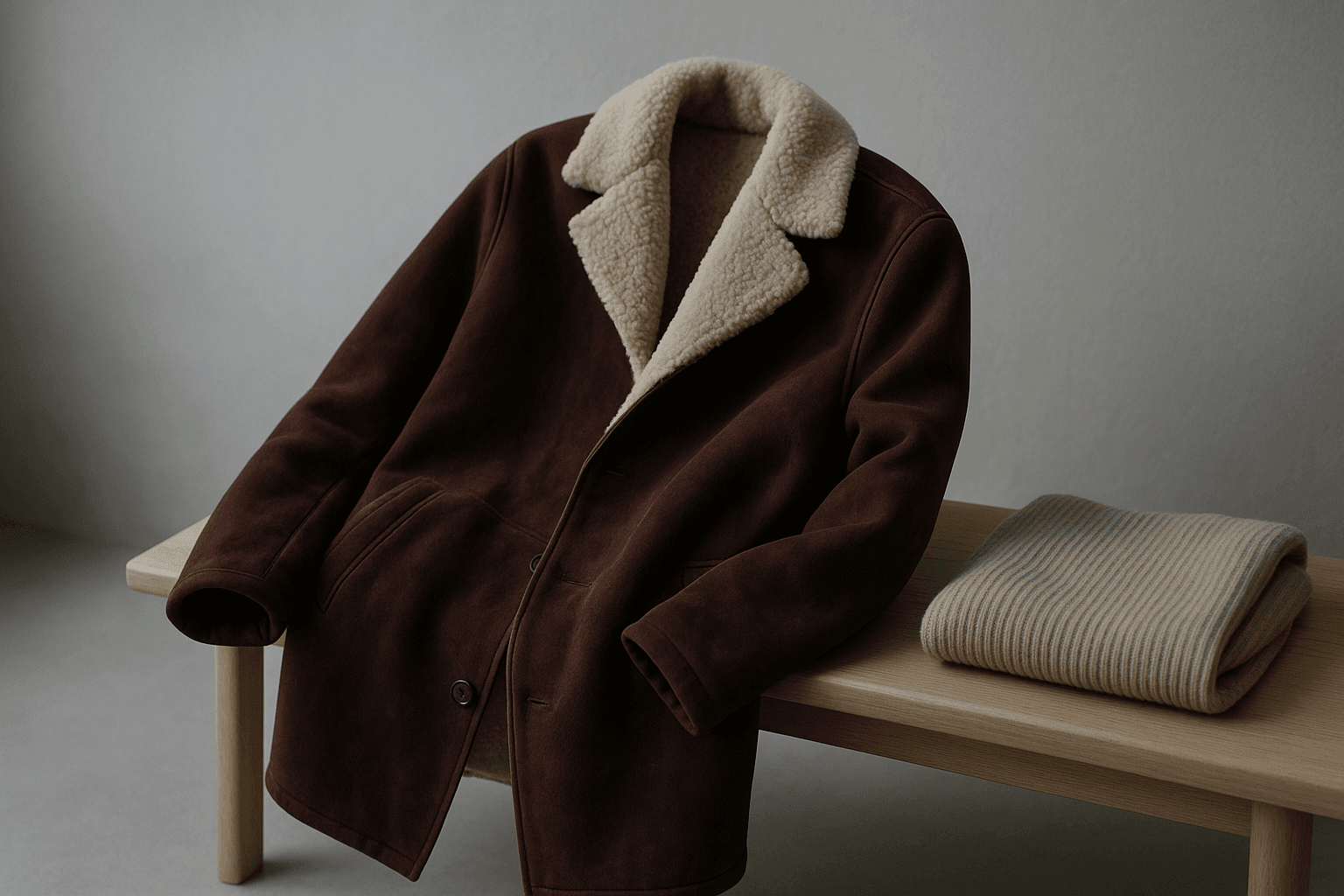
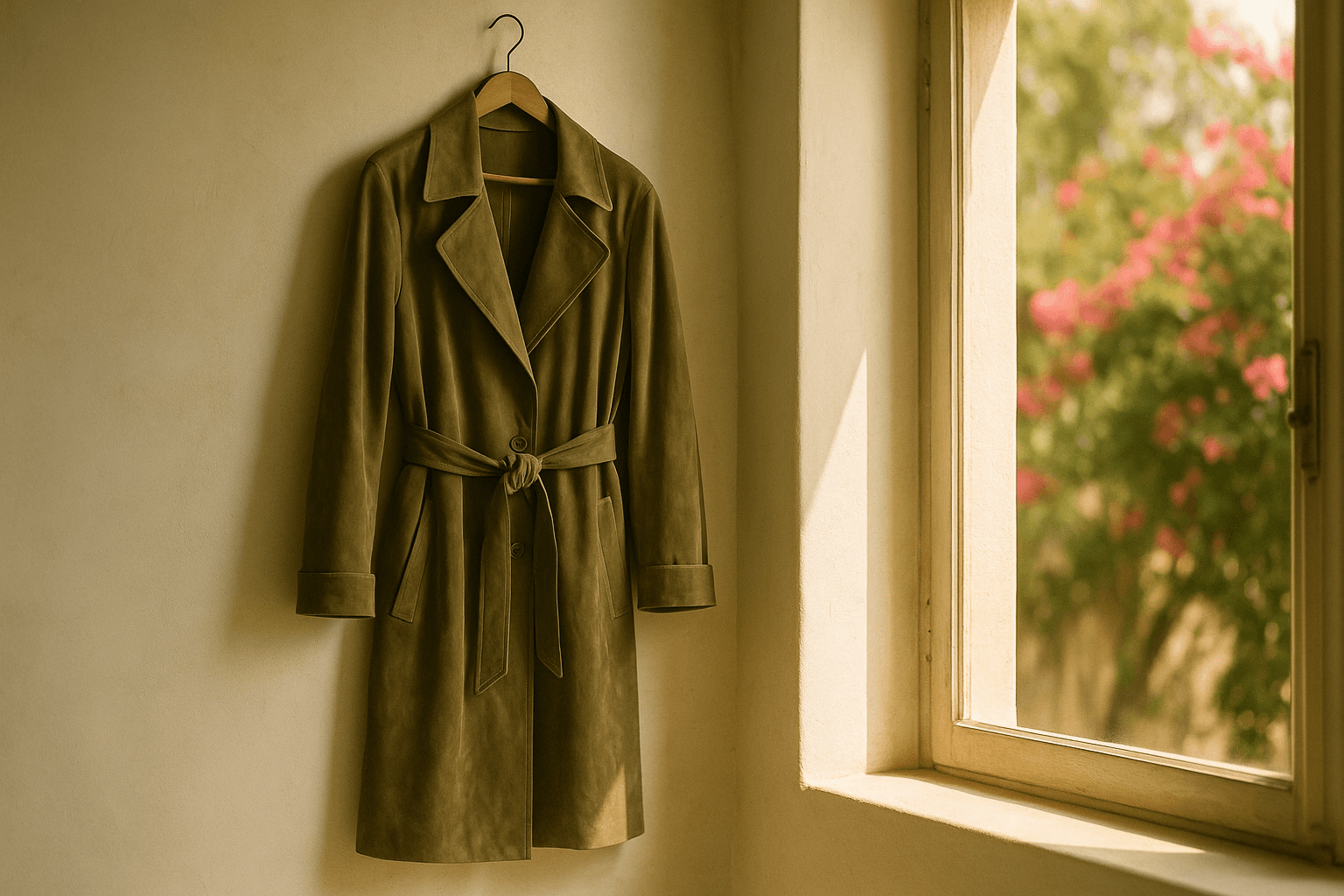
Suede vs Faux Suede: Cost, Lifespan, and Why the Difference Matters
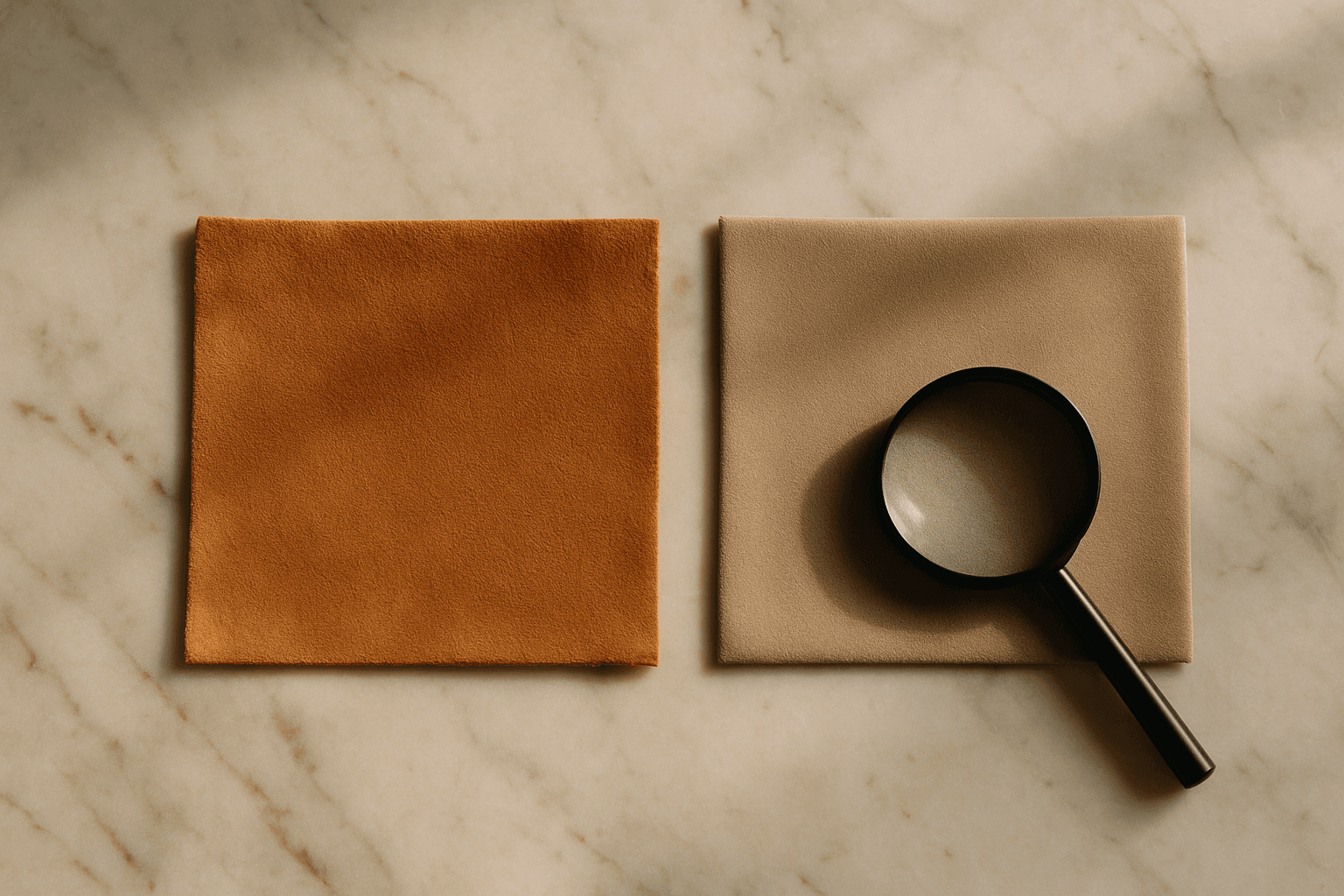
Faux suede has improved enormously in the last decade, but it still solves a different problem than real suede. The microfibre versions made in Italy and Japan look convincing in photographs and feel pleasant to the touch. Where they diverge is in lifespan, breathability, and how the material responds to wear over five to fifteen years. This guide compares the two on cost, performance, and ethics so you can decide where each belongs in your wardrobe.
What Each Material Actually Is
Real suede is the underside of an animal hide (most commonly lamb, goat, or calf) split and buffed to raise a soft nap. The fibres are collagen, which is breathable, durable, and naturally insulating. Faux suede is a synthetic textile, usually polyester or polyamide microfibre bonded to a polyurethane backing, then brushed mechanically to mimic the nap. The visual similarity is real, but the materials behave differently the moment you wear them.
For a deeper breakdown of natural hide types, see the lambskin vs goatskin vs calfskin guide and the microsuede comparison.
Cost: Upfront Versus Per Wear
Faux suede coats typically retail between 80 and 350 euros. Real suede starts around 450 euros for entry-level lamb and rises to 1,400 euros for vegetable-tanned goatskin from a recognised tannery. The Lustré Clemence Coat at 840 euros sits in the upper-mid bracket of European suede outerwear.
Per-wear maths tells the more useful story. A 250 euro faux suede coat worn 30 times a season for two seasons before pilling and surface cracking sets in costs roughly 4.20 euros per wear. A 840 euro real suede coat worn 40 times a season for ten years works out to 2.10 euros per wear, and that is before resale value. The investment piece analysis walks through the calculation in more detail.
Lifespan and Wear Patterns
The biggest gap between the two materials is how they age. Real suede develops a personal patina, softening at the cuffs and elbows where the fibres compress. Faux suede pills, then the polyurethane backing delaminates from the microfibre face, creating visible cracks along stress lines. Once that delamination begins, there is no professional restoration available.
- Real suede lifespan with normal wear and proper care: 10 to 20 years.
- Faux suede lifespan with the same wear pattern: 2 to 4 years.
- Real suede can be re-napped, re-dyed, and conditioned by a specialist for 60 to 180 euros.
- Faux suede cannot be restored once the polyurethane layer fails.
- Real suede gains value as a vintage piece; faux suede has near-zero resale value.
Breathability and Comfort
Collagen fibres breathe. A real suede coat regulates temperature between roughly 5 and 18 degrees Celsius, which is why a single Lustré Clemence Coat works from October through April in most of Europe. Faux suede traps moisture against the body because the polyurethane backing is non-porous. In practical terms, you sweat in faux suede sooner, and that moisture has nowhere to go.
Environmental and Ethical Considerations
Both materials carry costs. Real suede is a by-product of the meat industry, and the tanning process can be water-intensive, though vegetable-tanned suede avoids the chromium load of conventional tanning. Faux suede is petroleum-derived, sheds microplastics during washing, and ends up in landfill at the end of its short life. There is no clean answer; there is only the more durable answer, which over a 15-year horizon is almost always real suede.
Where Faux Suede Still Makes Sense
Faux suede is the right choice for trend pieces you expect to wear for one or two seasons, for vegan wardrobes by principle, for high-rain climates where real suede struggles, and for very low budgets where the alternative is no coat at all. For a piece you want to keep, real suede is the better economic and aesthetic choice.
| Attribute | Real suede (lamb/goat) | Faux suede (microfibre) |
|---|---|---|
| Typical retail | 450 to 1,400 euros | 80 to 350 euros |
| Lifespan with care | 10 to 20 years | 2 to 4 years |
| Cost per wear (10 yr) | 1.80 to 3.50 euros | 3.50 to 6.00 euros |
| Breathability | High (collagen fibre) | Low (PU backing) |
| Weight per square metre | 180 to 280 g/m2 | 220 to 340 g/m2 |
| Restorable? | Yes, by specialist | No |
| Resale value at 5 yr | 40 to 60 percent | Near zero |
| Microplastic shedding | None | Yes, with washing |
Frequently Asked Questions
- Is high-end faux suede really indistinguishable from real suede?
Visually, the best Italian and Japanese microfibres are very close at first glance. Up close, the nap is more uniform than real suede, the back of the fabric reveals a synthetic weave, and the drape is stiffer because the polyurethane backing limits flow. After six months of wear, the difference becomes obvious.
- Can faux suede be cleaned at home?
Yes, gently. Most faux suedes tolerate a damp cloth and mild detergent. They cannot, however, be restored once they pill or delaminate, which is why long-term care is less rewarding than with real suede.
- Which is better in rain?
Faux suede handles light rain slightly better in the short term because water beads on the polyurethane backing. Both materials suffer in heavy rain. Treated real suede with a fluorocarbon-free protector handles drizzle well and dries without damage if blotted promptly.
- Is faux suede vegan?
Most faux suede is vegan, but it is petroleum-derived. If your concern is animal welfare, faux suede meets that standard. If your concern is environmental impact across a 15-year horizon, real suede from a responsible tannery often outperforms it.
- Does real suede smell different from faux?
Yes. Real suede has a faint leather and earth scent that fades within weeks of regular wear. Faux suede is odourless when new but can develop a plastic-y smell when warm or damp.
Shop the Collection
Every piece is cut from 100% genuine suede and made to be worn for years, not seasons.
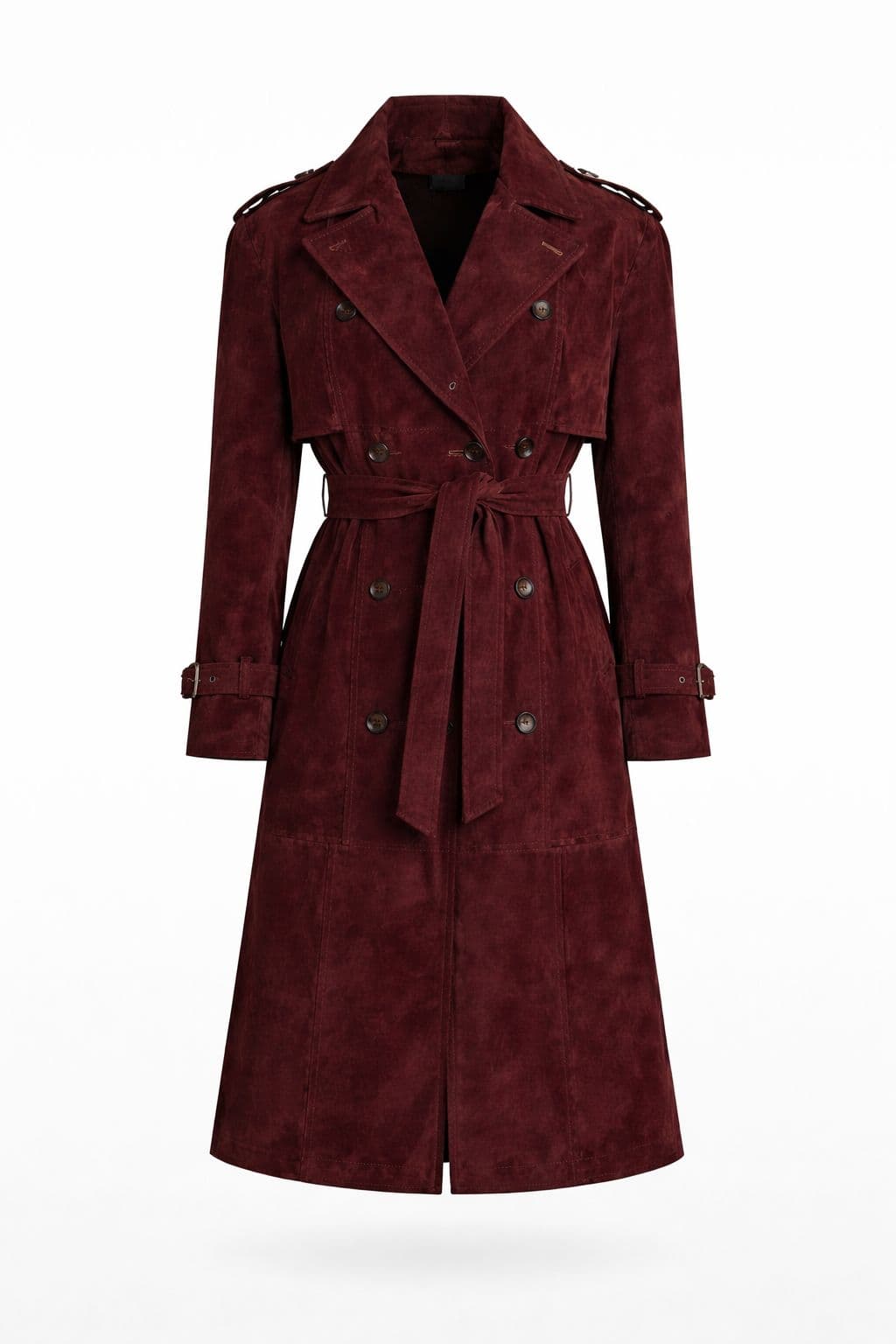
Clémence Bordeaux Suede Coat - 100% Genuine Premium Suede
$920
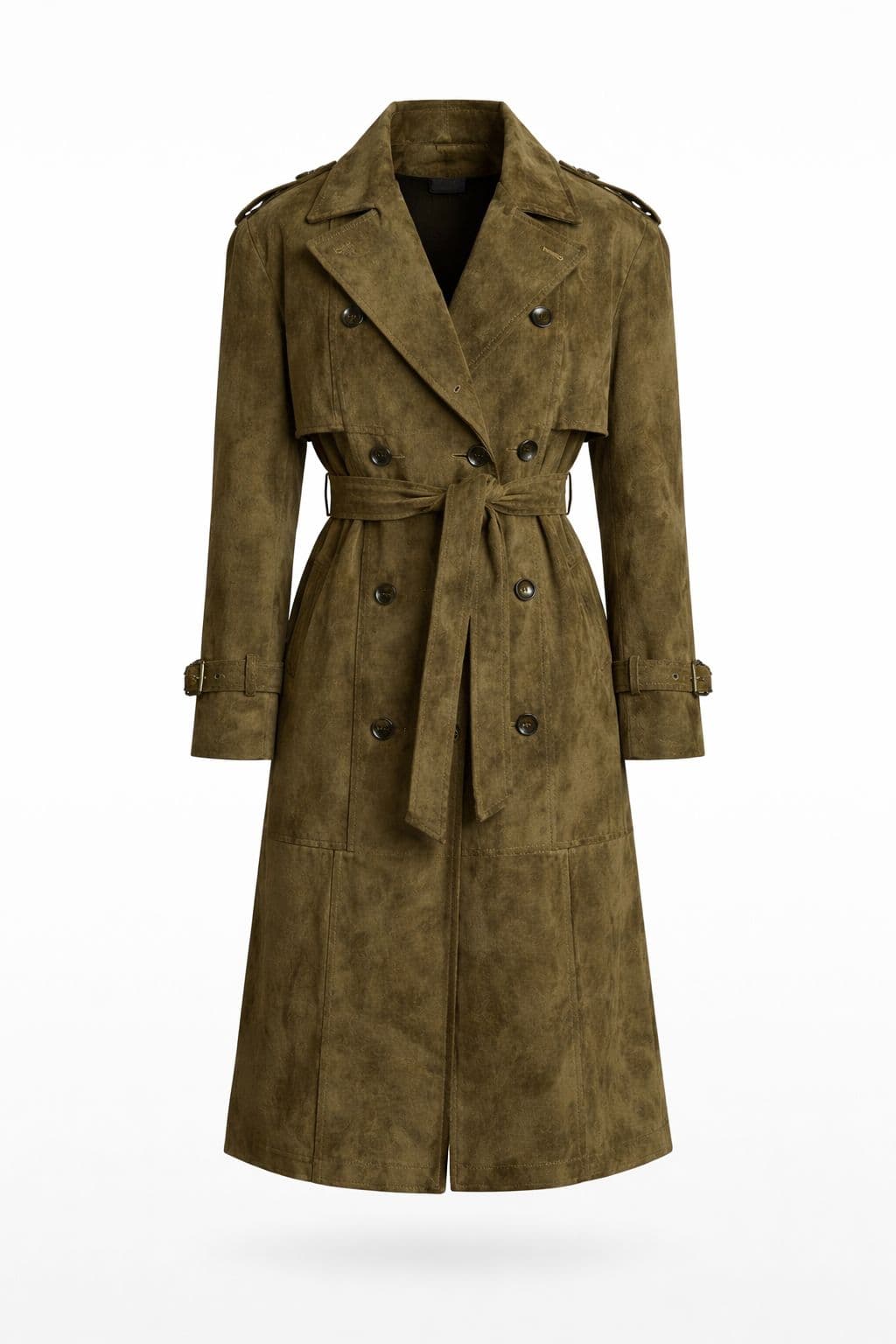
Clémence Olive Suede Coat - 100% Genuine Premium Suede
$920
Free shipping on orders above $330.