Suede vs Nubuck: The Subtle but Important Difference Every Buyer Should Know
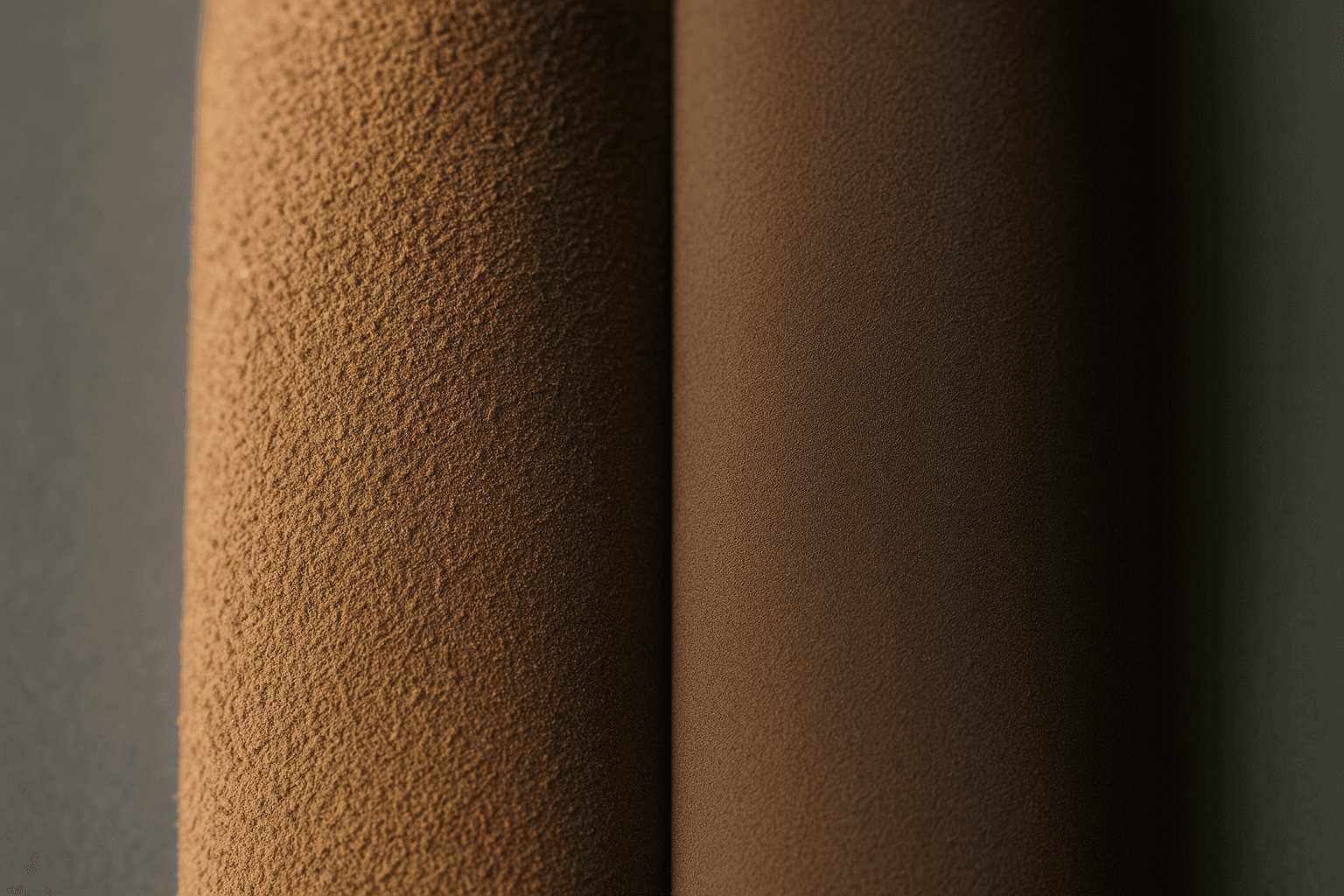
Suede and nubuck look similar enough that even experienced buyers confuse them. Both have a soft napped surface, both are made from animal hides, and both share most of their care routine. But the structural difference between them affects durability, ageing, and the kind of coat each one makes. Knowing which is which protects you from paying premium prices for the wrong material.
The Core Difference
Suede is made from the inner layer of a hide. After splitting the hide, the underside is sanded to raise a soft, fibrous nap. Nubuck is made from the outer layer (the grain side) of the hide, lightly buffed to raise a much finer, denser nap. Suede is softer and more open. Nubuck is firmer and tighter, with more body and more resistance to wear.
The single most useful way to tell them apart by touch: suede feels like soft brushed velvet with visible fibres. Nubuck feels like ultra-fine velvet with a smoother, almost peach-skin surface. Under a magnifier, suede shows long fibres in random directions, while nubuck shows a uniform short pile.
What Goes Into Each
The animal source matters. Most luxury suede coats use lambskin or goatskin, which produces an open, soft nap. Most nubuck (especially from European tanneries) uses calfskin or cowhide because the outer grain layer of those animals is dense enough to support buffing without tearing.
- Lamb suede: softest, most drape, most delicate. Common in luxury jackets and dresses.
- Goat suede: slightly firmer, dense pile, very durable. Common in mid-luxury coats.
- Calf suede (split): firmer, dense, often used in shoes and structured coats.
- Calf nubuck: dense, fine pile, more weather-resistant, used in premium coats and boots.
- Cow nubuck: thickest, most resilient, used in workwear and rugged outerwear.
How Each Wears Over Time
Suede ages by softening. The nap flattens slightly with wear, the colour deepens at high-friction points (cuffs, collar, hem), and the surface develops a patina. With brushing and occasional conditioning, this ageing reads as character. Without care, suede mats and develops shiny patches.
Nubuck ages by burnishing. The fine grain layer takes on a slight sheen at friction points rather than going matte. It resists creasing better than suede, but creases that do form are sharper and harder to remove. Nubuck holds colour more uniformly across years of wear.
Water, Stains, and Repair
Both materials are vulnerable to water without treatment. Untreated suede absorbs water deep into the nap and can stiffen or stain as it dries. Untreated nubuck handles light moisture better because the grain layer is denser, but it shows water marks more visibly because the buffing makes the surface respond to liquid like a fine velvet would.
With a fluorocarbon-free water repellent, both materials handle light rain well. The full rain protocol applies to both equally and is covered in suede coat in the rain. For stains, suede is more forgivable because the open fibres can be brushed and lifted. Nubuck stains are harder to remove without affecting surface uniformity.
Which One You Are Actually Buying
Brand product pages often use the term suede loosely. A coat described as suede may legitimately be either suede or nubuck. Three signals tell you which:
- Touch: clear long-fibre nap with visible direction = suede. Fine, dense, peach-skin surface = nubuck.
- Visual depth of nap: suede has a visible 1 to 2 mm pile when brushed. Nubuck pile is barely visible to the eye.
- Origin description: 'split lambskin' or 'split goatskin' is suede. 'Top-grain calf' or 'full-grain calf, buffed' is nubuck.
The Lustré Clémence Coat is full-grain lamb suede, with a deeper nap than nubuck would produce. The Violette jacket follows the same lamb suede construction. Both materials suit different wearers - if you live somewhere damp and want maximum durability, nubuck has advantages; if you want softness and drape, suede wins.
| Property | Suede | Nubuck |
|---|---|---|
| Hide layer | Inner (split or flesh side) | Outer (grain side, buffed) |
| Nap depth | 1 to 2 mm visible | Sub-millimetre, peach skin |
| Feel | Soft, fibrous, open | Dense, fine, tight |
| Common animal | Lamb, goat, calf split | Calf, cow |
| Durability | Lower, softer wear | Higher, more abrasion resistant |
| Water resistance untreated | Lower, absorbs deeply | Slightly higher, marks more visibly |
| Drape | Excellent, soft fall | Firmer, holds shape |
| Best use in coats | Soft jackets, drape coats | Structured coats, weather-leaning pieces |
| Typical price band | Variable, lamb premium | Mid to high, calf premium |
Buying Guidance
If you want a coat that drapes softly and feels like an extension of knitwear, suede is the right choice. If you want a coat that holds its shape, resists weather better, and ages with a controlled patina, nubuck is the better answer. Neither is inherently more luxurious - the quality of the hide and the tannery matters far more than the suede-vs-nubuck distinction. For broader value logic, the suede coat investment piece breakdown applies equally to both materials. And for context on what suede actually is at a more general level, what is a suede coat covers the basics.
Frequently Asked Questions
- Is nubuck more expensive than suede?
Not necessarily. Price depends more on the animal, tannery, and finishing than on the suede-vs-nubuck distinction. A high-grade Italian lamb suede often costs more than a mid-grade calf nubuck. Look at hide origin and tannery name rather than the material category alone.
- Can I tell suede from nubuck without touching it?
It is harder visually, but possible. Nubuck has a uniform, almost matte sheen and a much shorter pile. Suede shows directional brushing more obviously and has a visibly longer fibre when light hits it from the side.
- Does nubuck need different care than suede?
The routine is nearly identical: brush in one direction, treat with a water repellent twice a year, store on a wide hanger in a breathable bag. Nubuck benefits from a slightly finer brush because its short pile is easier to flatten or polish accidentally with a stiff brush.
- Which is better for a winter coat?
Nubuck is marginally more weather-resistant and holds shape better in cold-weather wear, especially under a heavy bag strap or scarf. Suede wins on softness and drape. Both work for winter with proper waterproofing.
- Are 'sueded leather' and suede the same thing?
No. Sueded leather is a marketing term that can mean either suede or a buffed top-grain (i.e. nubuck) or even a synthetic. Always ask the brand for the specific hide layer (split or top-grain) and animal source to know what you are paying for.
Shop the Collection
Every piece is cut from 100% genuine suede and made to be worn for years, not seasons.
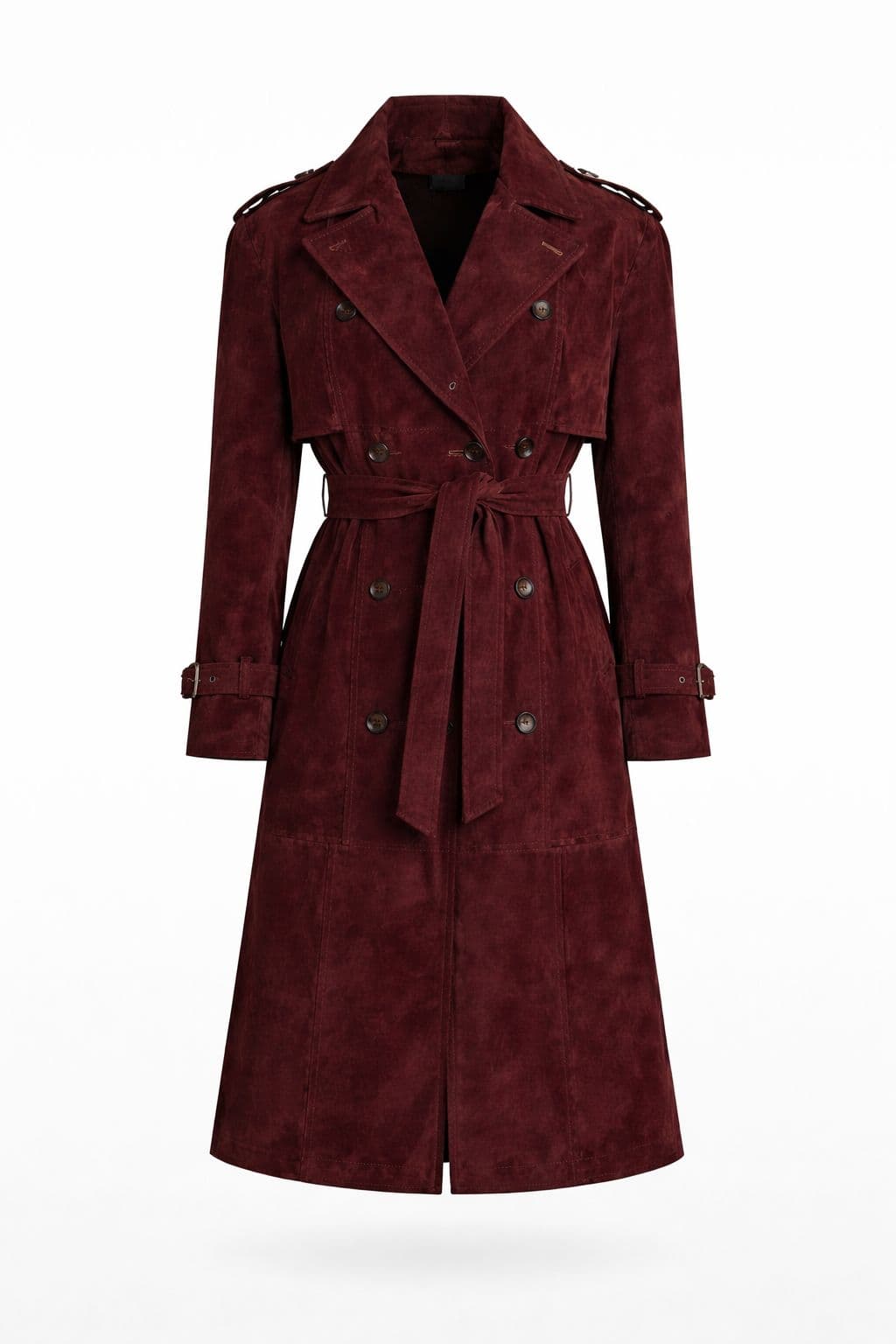
Clémence Bordeaux Suede Coat - 100% Genuine Premium Suede
$920
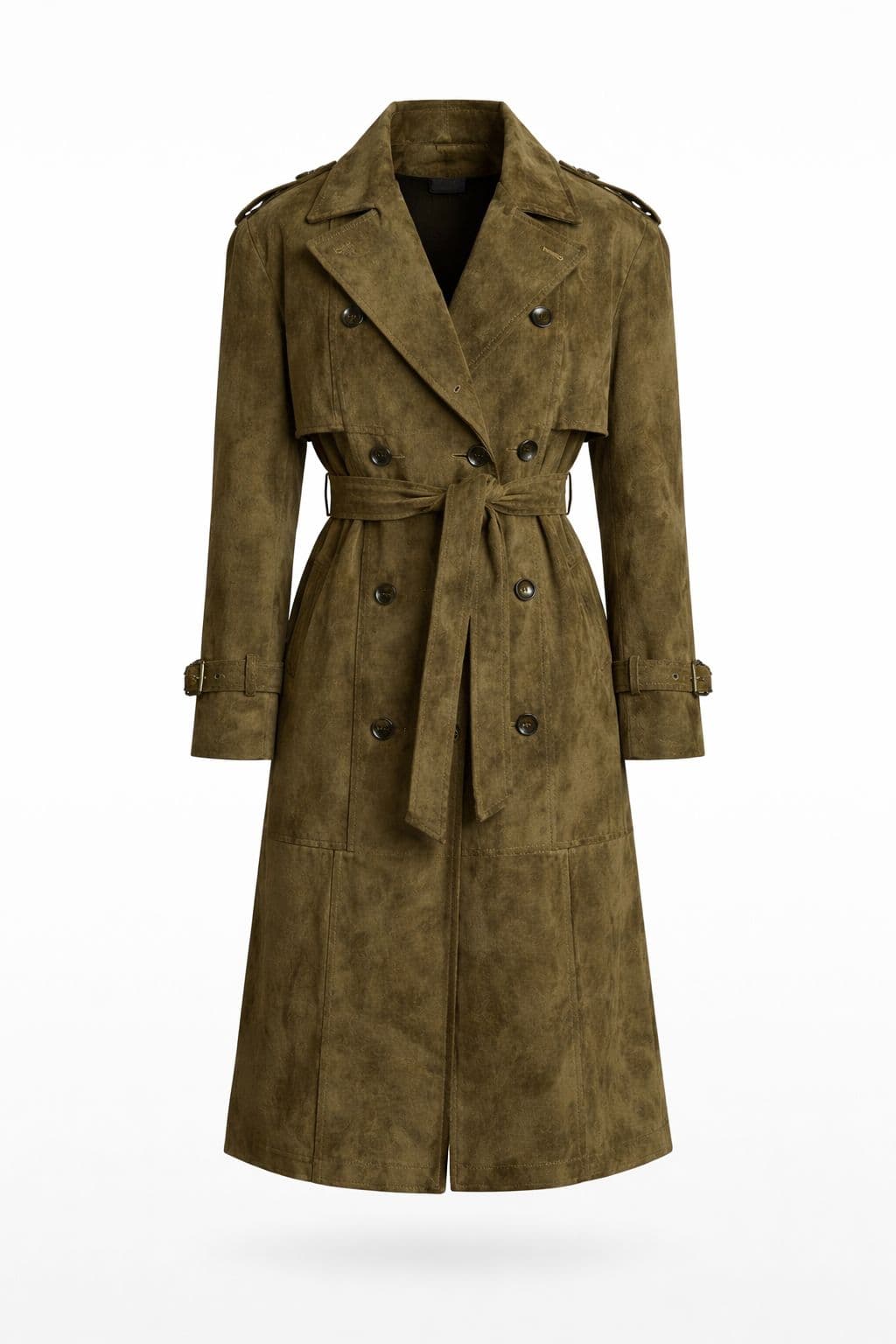
Clémence Olive Suede Coat - 100% Genuine Premium Suede
$920
Free shipping on orders above $330.