Suede Coats for Cold Climates: Layering, Lining, and Real Warmth Below 0 Degrees C
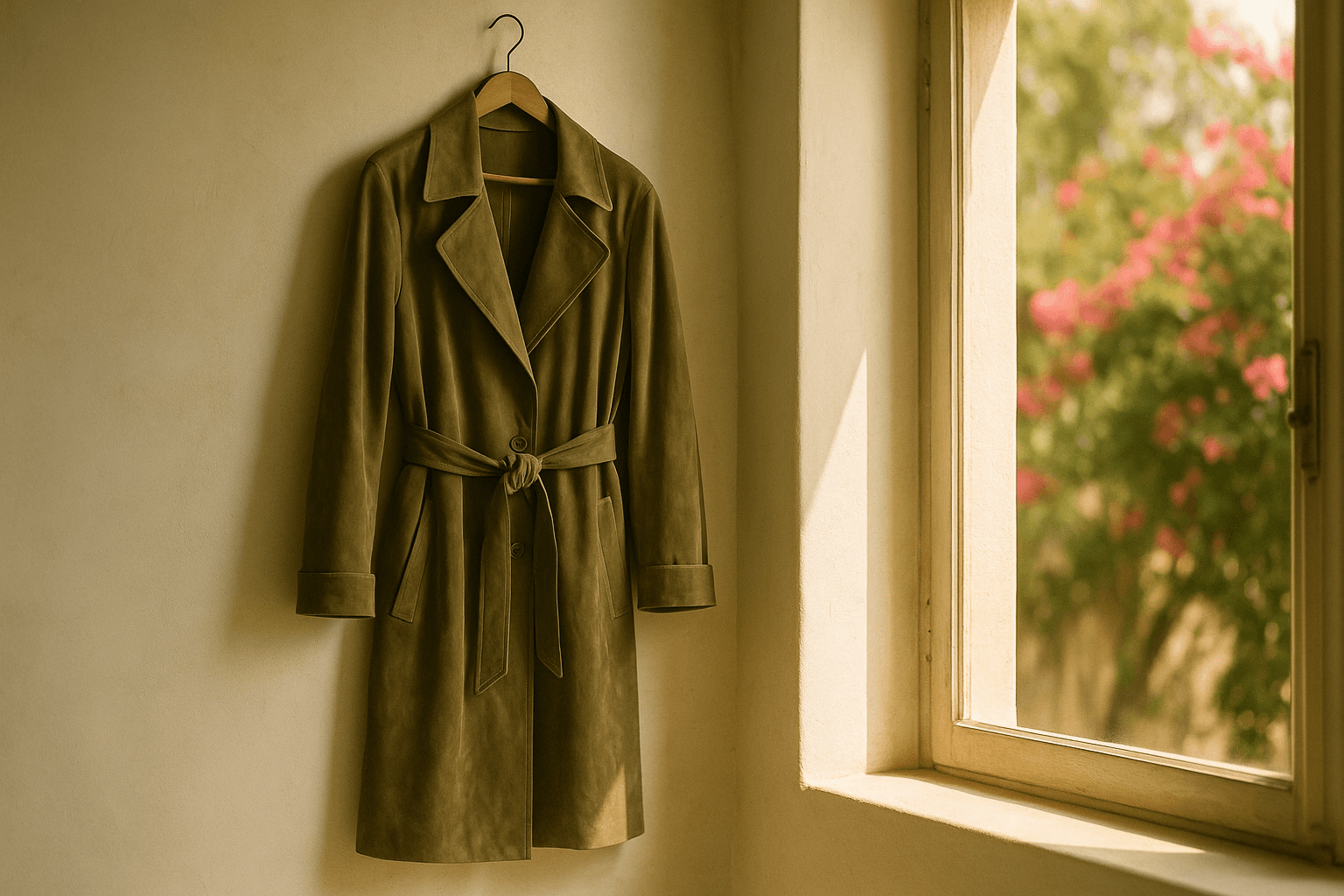
Suede has a reputation for being a transitional fabric, suited to spring and autumn but not to genuine winter. That reputation is partly correct and partly outdated. With the right hide weight, lining, and construction, a suede coat can perform comfortably below 0 degrees C and through dry snow. This guide covers the technical thresholds, the lining choices, the layering rules, and the limits beyond which suede is the wrong choice. The Lustré Clémence Coat at 840 euros, available in bordeaux, brun, and olive, is referenced where its specifications make a useful benchmark.
What Determines Suede's Cold-Weather Performance
Three variables determine whether a suede coat is genuinely warm:
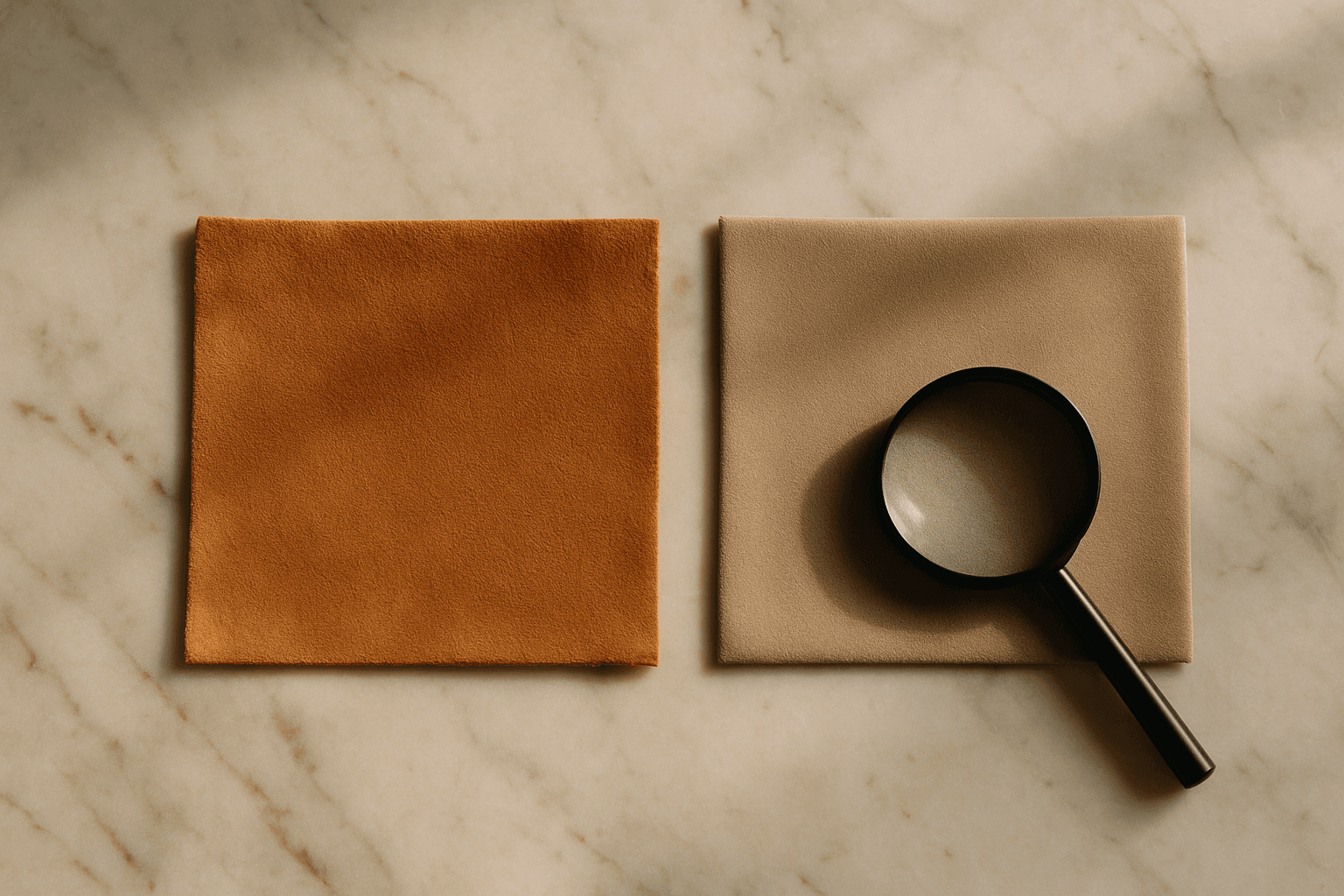
- Hide weight, measured in grams per square metre. Lightweight suede sits between 350 and 500 g/m². Heavyweight suede ranges from 700 to 900 g/m². Heavier hides hold body heat more effectively.
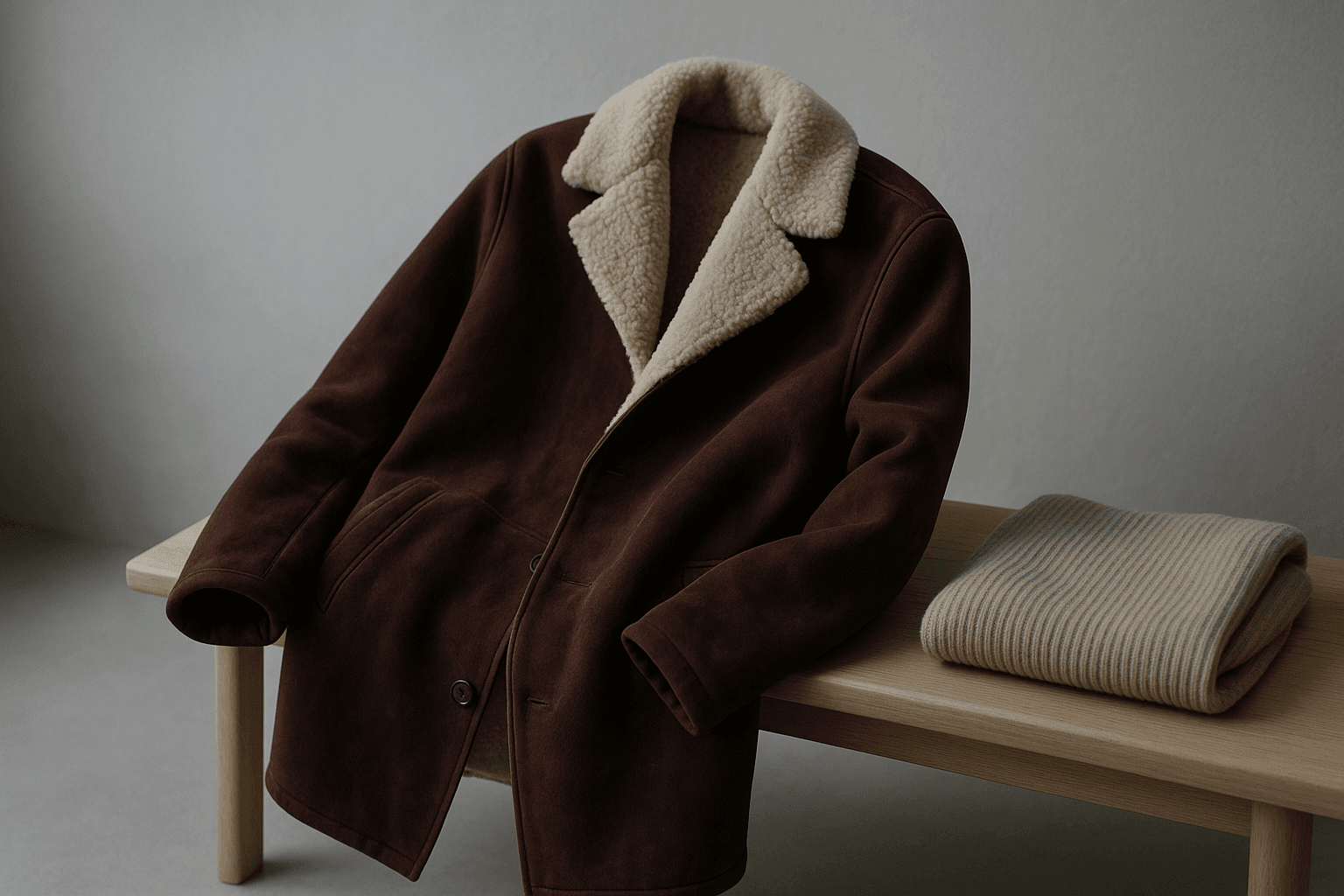
- Lining construction. A satin or viscose lining adds little thermal value. A quilted polyester lining adds modest warmth. A wool, alpaca, or shearling lining is what turns suede into genuine cold-weather outerwear.
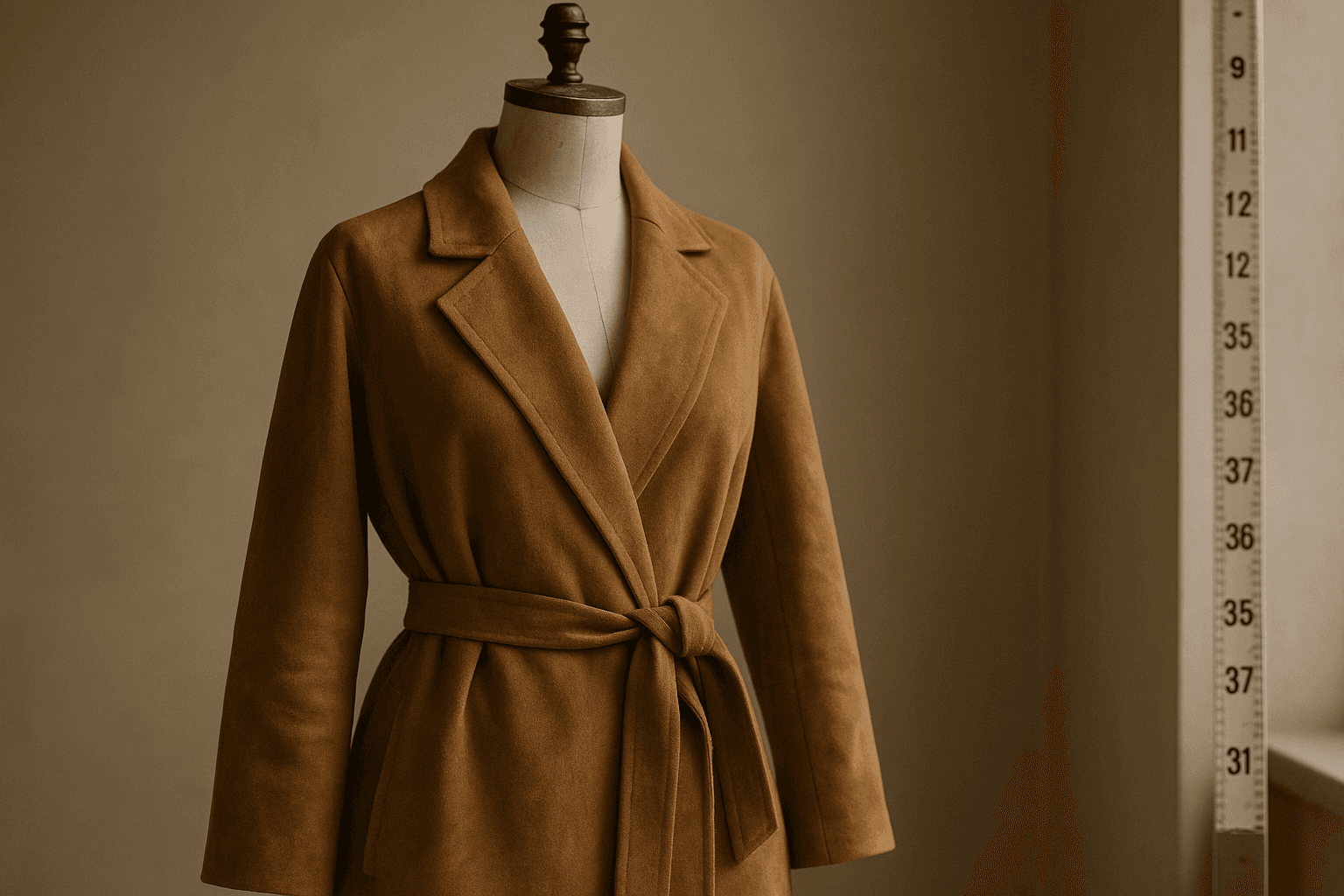
- Coat length. A coat ending mid-thigh exposes the upper legs to wind. A coat reaching just below the knee retains substantially more heat without the bulk of a full-length design.
The heavyweight versus lightweight suede guide covers weight in detail. As a quick reference, anything below 600 g/m² total panel weight including lining is unlikely to perform below 5 degrees C without aggressive layering.
Temperature Thresholds for Suede Outerwear
The following thresholds assume dry conditions, no wind chill, and a fine wool knit underneath. Wind chill, wet conditions, and synthetic base layers all shift the numbers down.
- Above 12 degrees C: any suede coat performs comfortably; lighter weights preferred.
- 5 to 12 degrees C: medium-weight suede with viscose lining is sufficient.
- 0 to 5 degrees C: heavyweight suede (700 g/m² or above) with quilted lining or wool insulation required.
- -5 to 0 degrees C: heavyweight suede with shearling or alpaca lining, plus knit base layer.
- Below -10 degrees C: suede outerwear is no longer the optimal choice unless layered under a technical shell or above a heavy knit overcoat.
Lining Choices and Their Warmth Contribution
The lining is where most cold-climate suede coats either succeed or fail. Common options ranked by warmth contribution:
- Viscose or cupro: the standard lightweight luxury lining. Adds drape but minimal warmth. Suitable above 8 degrees C.
- Cotton flannel: warmer than viscose, breathable, suits transitional weather around 5 to 10 degrees C.
- Quilted polyester: roughly equivalent to a thin down layer. Pushes the comfort range to 0 to 5 degrees C.
- Wool: substantial thermal contribution, breathable, reduces cold spots around the back and chest. Comfortable to around -3 degrees C.
- Alpaca: 30 to 40 percent warmer than wool by weight, lighter on the shoulders, and naturally moisture-wicking.
- Shearling: the warmest option short of down. Adds visible bulk but extends comfort to around -10 degrees C.
Layering Rules That Actually Work
Cold-climate layering under a suede coat follows the same principles as technical mountaineering, with three distinct layers:
- Base layer: fine merino wool, silk, or thermal cotton in a fitted cut. Avoid thick cotton, which retains moisture.
- Mid layer: cashmere knit (200 to 300 g/m²), brushed wool, or quilted gilet. Provides the bulk of insulation.
- Outer layer: the suede coat itself. The coat should fit comfortably over the mid layer without straining the shoulder seams.
Add a wool scarf, a fitted hat, and lined gloves for any temperature below 5 degrees C. A scarf alone raises perceived warmth by approximately 4 degrees C through neck heat retention.
When Suede Is the Wrong Choice
Suede has limits and ignoring them damages the hide. Genuine wet snow (rather than dry powder) saturates the nap and leaves permanent water marks if not treated promptly. Sustained rain has the same effect. Salt spray from gritted roads embeds in the fibres and is difficult to remove without professional cleaning. In any of these conditions, a wool overcoat or a treated technical shell is the better choice. The care and storage guide covers recovery procedures if your coat is caught in unexpected weather.
The Clémence Coat as a Cold-Climate Benchmark
The Lustré Clémence Coat is cut at 110 cm length in a 750 g/m² goatskin suede with a wool-blend lining at the body and viscose at the sleeves. At 840 euros, it sits in the mid-luxury tier and performs comfortably from 12 degrees C down to roughly -3 degrees C with a cashmere mid layer. In the bordeaux, brun, and olive colourways, the deeper saturation also disguises the small water marks that any winter wear inevitably produces.
| Temperature | Hide weight | Lining | Mid layer | Suede appropriate? |
|---|---|---|---|---|
| 12 °C and above | 350 to 500 g/m² | Viscose | Light shirt | Yes |
| 5 to 12 °C | 500 to 700 g/m² | Viscose or cotton | Fine knit | Yes |
| 0 to 5 °C | 700 to 900 g/m² | Quilted or wool | Cashmere knit | Yes |
| -5 to 0 °C | 750 to 900 g/m² | Wool or alpaca | Heavy knit + scarf | Yes, with care |
| -10 to -5 °C | 800 g/m² plus | Shearling | Heavy knit + scarf + hat | Marginal |
| Below -10 °C | n/a | n/a | n/a | No, choose wool or technical |
Frequently Asked Questions
- Is a suede coat warm enough for a Northern European winter?
With the right hide weight (700 g/m² or above), a wool or alpaca lining, and a cashmere mid layer, a suede coat handles most Northern European winters down to about -5 degrees C. For colder regions, layer the suede coat under a technical shell during transit and remove it indoors.
- Does suede protect against wind?
Yes. A close-grained suede with a tight-weave lining is genuinely wind-resistant down to moderate gusts. The hide structure blocks airflow more effectively than wool of equivalent weight.
- Will salt damage my suede coat?
Salt embeds in the nap and dries the fibres. Brush off any visible salt as soon as you reach indoor warmth and treat the affected area with a damp cloth and suede-specific cleaner. Repeated exposure without treatment causes permanent staining.
- Can I wear a suede coat in dry snow?
Yes, with caution. Dry powder snow brushes off cleanly before it melts. Wet snow saturates the nap and should be avoided. Always brush off snow before entering a warm interior so it does not melt into the hide.
- Does a heavier suede coat sacrifice elegance for warmth?
Not necessarily. Heavyweight suede in a longer length drapes more substantially and reads more luxurious, not less. The compromise is mobility through the shoulders, which a well-cut pattern with a slight raglan or saddle shoulder can mitigate.
Shop the Collection
Every piece is cut from 100% genuine suede and made to be worn for years, not seasons.
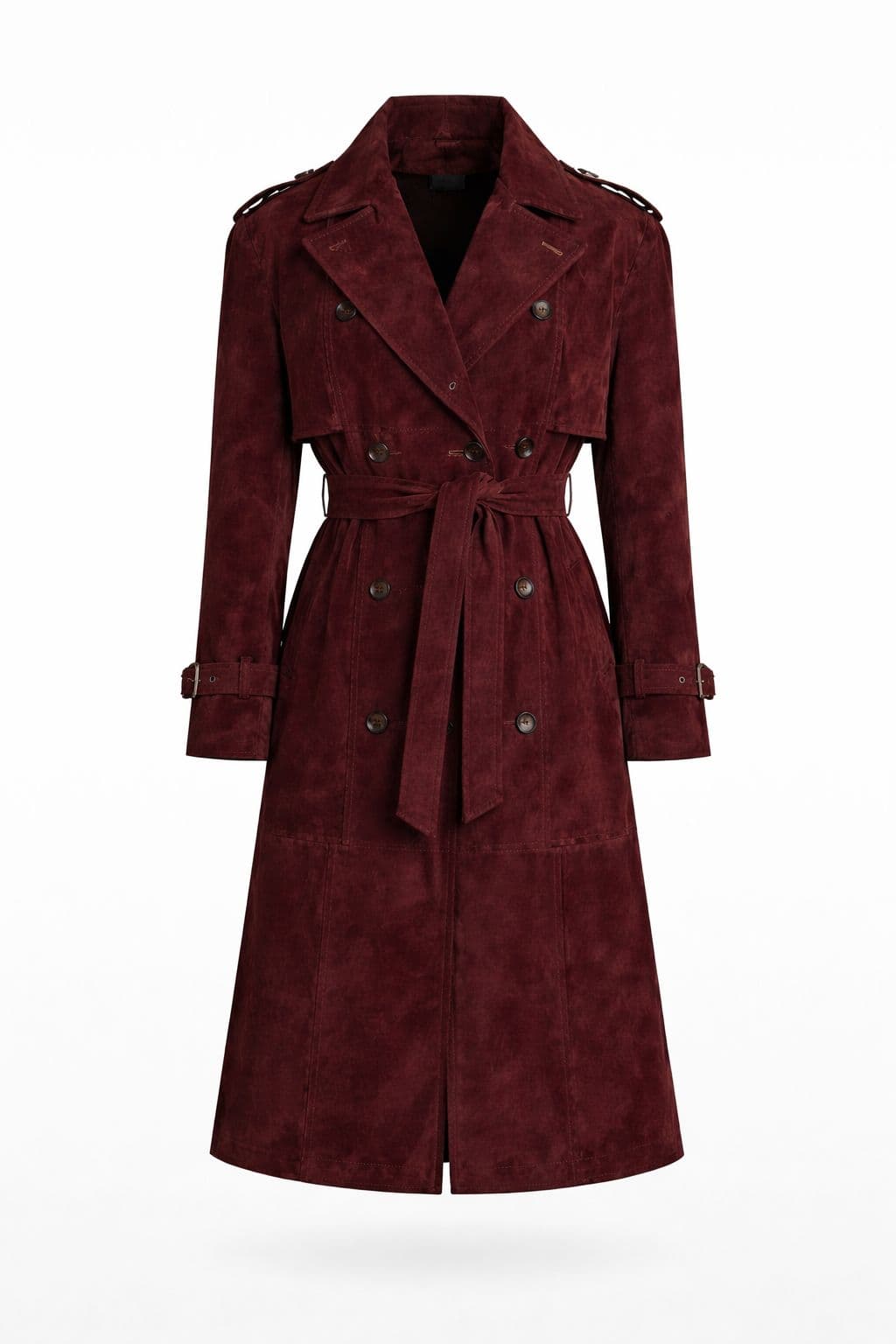
Clémence Bordeaux Suede Coat - 100% Genuine Premium Suede
$920
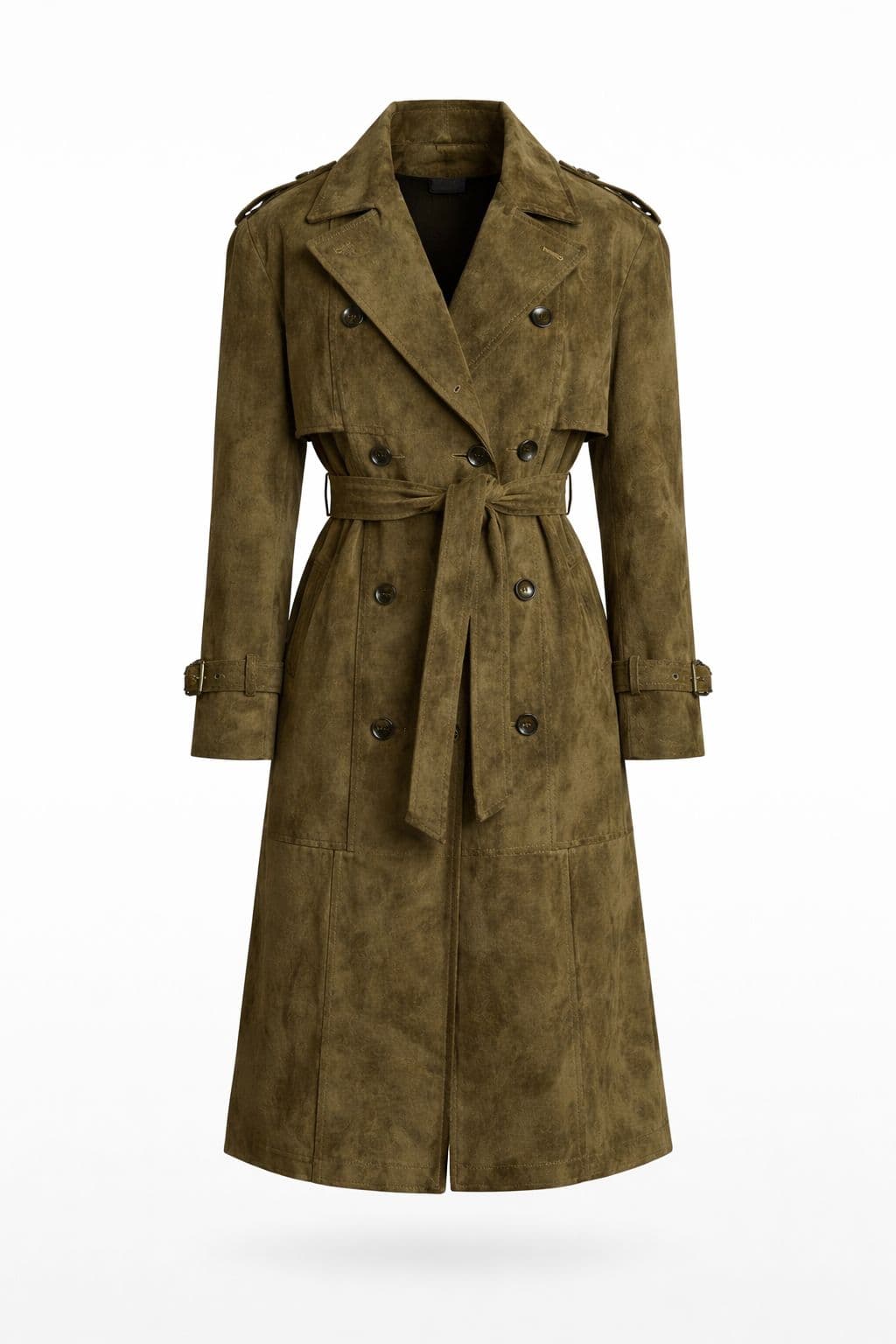
Clémence Olive Suede Coat - 100% Genuine Premium Suede
$920
Free shipping on orders above $330.