How to Spot a Quality Suede Coat in 60 Seconds: 8 Tells of Real Luxury

You can assess most of what matters about a suede coat in under a minute, before you even try it on. The signals that separate luxury from middle market are physical: the weight in your hands, the uniformity of the nap, the cleanness of the seams, the smell of the hide, and the construction of the lining. This guide gives you eight specific tells that work in a boutique, a vintage shop, or on a second-hand rail.
1. Weight and Hand-Feel
Lift the coat from the hanger. Quality suede has a noticeable but not heavy weight: a knee-length lambskin coat weighs around 1.4 to 1.8 kg; a goatskin equivalent weighs 1.7 to 2.2 kg. Anything under 1 kg is either very thin lower-grade hide or split suede pasted onto fabric backing. Anything over 2.5 kg is usually suede-finished split leather, which is stiffer and less breathable than true suede.
2. Nap Direction and Uniformity
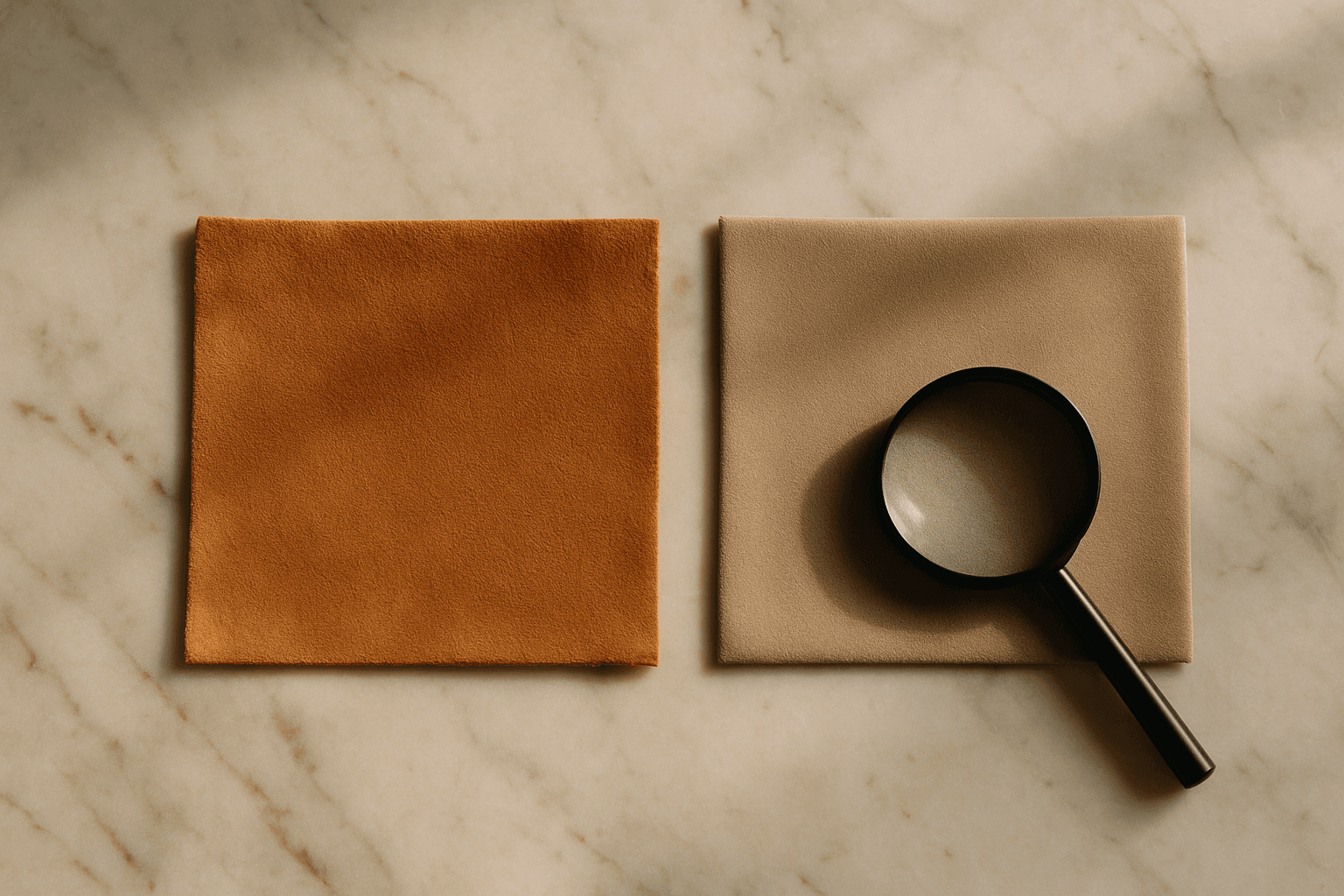
Run your hand across the nap in two directions. It should change tone visibly when brushed against the grain (lighter) versus with the grain (darker). The change should be smooth and consistent. Patches that do not respond, or that show a uniform painted-looking surface, are signs of pigment-coated split suede or microfibre, not full-grain suede.
3. The Smell Test
Bring the coat close to your face. Real suede has a faint earthy, slightly sweet leather scent. Vegetable-tanned suede smells warmer, almost tea-like. Chrome-tanned suede smells more neutral. Faux suede smells either of nothing or faintly of plastic and chemical solvents. A strong chemical smell on real suede is a sign of recent rushed dyeing and often signals lower quality.
4. Seam Construction
Turn the coat inside out if possible, or fold a seam between your fingers. Quality seams have small, regular stitches (8 to 12 per centimetre), tight tension, and no loose thread. Look at the shoulder seam and the side seam at the underarm. Puckering, irregular stitch length, or visible glue residue all indicate corner-cutting in construction. A Lustré Clemence Coat will show clean topstitching at consistent depth around every panel.
- 8 to 12 stitches per centimetre on visible seams.
- No loose thread at the bar tacks (pocket corners, belt loops).
- Lining stitched in, not glued.
- Buttonholes hand-finished or precisely keyhole-cut, not raw.
- No glue residue along seam allowances.
5. Lining Quality
Check the lining material and how it is attached. Quality suede coats use cupro, silk, or rayon viscose linings, attached at the shoulder and floated at the hem. Polyester linings are not automatically a problem, but they should at least be densely woven and smoothly stitched. A lining that is glued in flat to the suede (rather than floating) signals lower-grade construction.
6. Hardware
Buttons should feel cool and weighty. Horn, mother-of-pearl, corozo, and solid metal all read as quality. Plastic buttons stamped to look like horn feel light and warm immediately. Zips should be YKK or Riri, with a smooth glide and no catch. Snap closures should resist a deliberate pull; cheap snaps pop too easily.
7. Hide Consistency
Look across the coat in good light. Real suede shows minor natural variation: the hide is an organic material, and a panel may sit slightly differently from its neighbour. What you do not want to see is patchy colour, dye streaks, scarring on visible panels, or pinpricks where lower-grade hide has been over-buffed. A coat with truly uniform colour across every panel is suspicious; it usually indicates surface pigment rather than drum-dyed colour.
8. Origin and Tannery Information
Quality brands disclose where the hide was tanned. Italian (Tuscan), French, and Spanish tanneries lead the European market, with selected Turkish and Portuguese tanneries close behind. If a brand cannot or will not name the tannery, the hide is usually from a commodity supplier. The vegetable-tanned suede guide and the hide comparison guide explain what to ask.
| Tell | Quality signal | Warning sign |
|---|---|---|
| Weight (knee-length) | 1.4 to 2.2 kg | Under 1 kg or over 2.5 kg |
| Nap response | Tone changes with brushing | Uniform painted surface |
| Smell | Earthy, slightly sweet | Strong chemical or plastic |
| Stitch density | 8 to 12 per cm | Under 6 per cm or irregular |
| Lining | Cupro, silk, viscose | Glued polyester |
| Buttons | Horn, corozo, metal | Light plastic |
| Colour | Slight panel variation | Patchy or perfectly uniform |
| Origin | Named tannery | No origin disclosure |
Frequently Asked Questions
- Can I assess quality without trying the coat on?
Yes, mostly. The eight tells in this guide cover material, construction, and finishing, all of which are visible without wearing the coat. Fit is the only attribute that requires trying it on, and that is a separate question from quality.
- Is heavier always better with suede?
No. Heavier suede usually means thicker hide or split-leather construction, neither of which is inherently better. The right weight depends on the cut: a long topcoat benefits from heavier goatskin; a soft jacket benefits from lighter lambskin.
- What is split suede and why does it matter?
Split suede is the lower layer of a hide separated from the top grain. It is thinner, weaker, and often coated with pigment to disguise the surface. Most fast-fashion suede is split suede. Quality suede uses the full thickness of the hide, buffed to nap on the flesh side.
- How important is the brand's country of origin?
Less important than the tannery's country of origin. A coat designed in France but made in a Tuscan workshop with Italian hides is typically higher quality than a coat designed in Italy and sewn in a low-cost factory with commodity hides.
- Can a vintage suede coat still pass these tests?
Yes, often more easily than new fast-fashion suede. Vintage coats from the 1970s and 1980s were frequently constructed with heavier hides and better seam work than entry-level new coats. See the second-hand suede coat guide for more detail.
Shop the Collection
Every piece is cut from 100% genuine suede and made to be worn for years, not seasons.
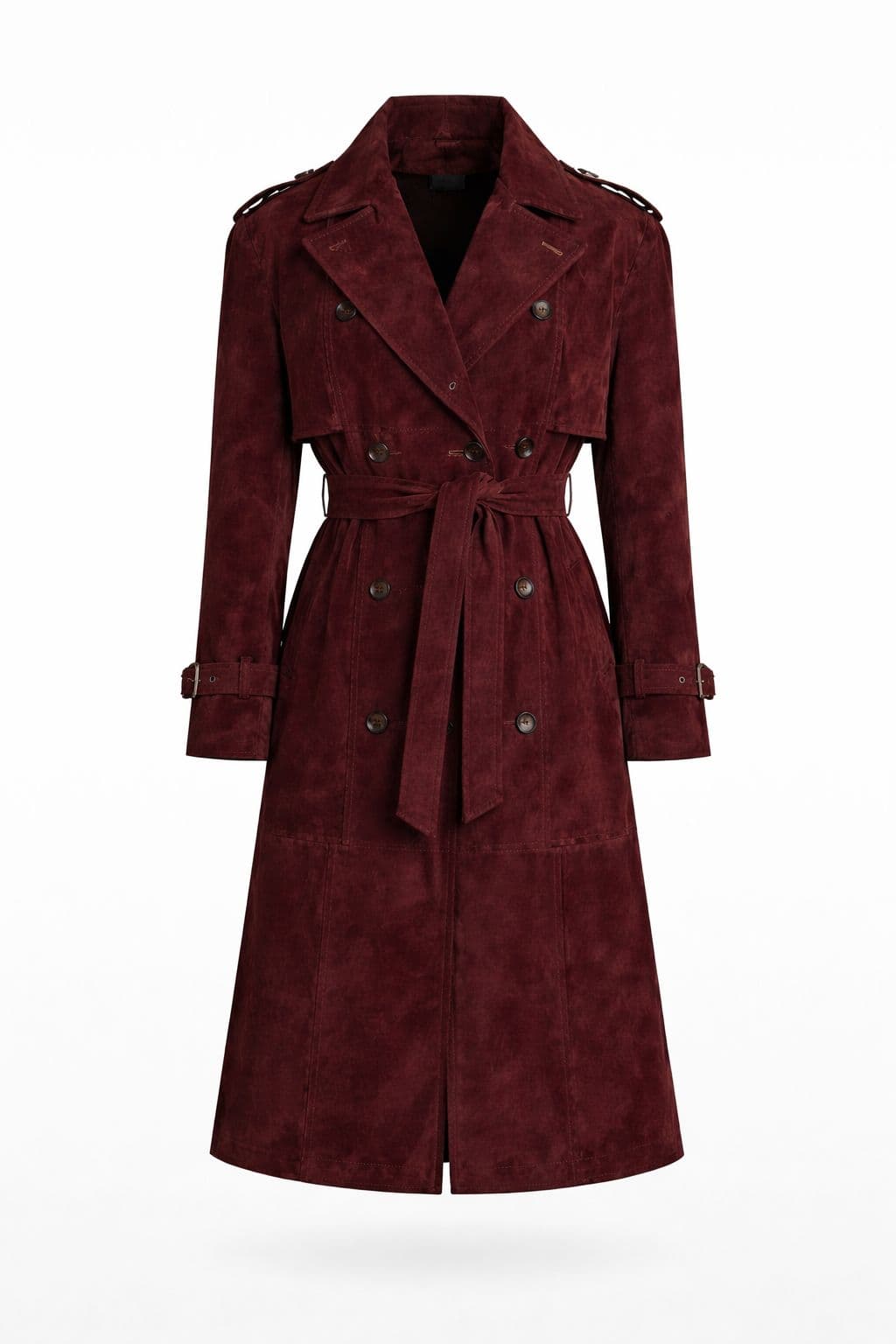
Clémence Bordeaux Suede Coat - 100% Genuine Premium Suede
$920
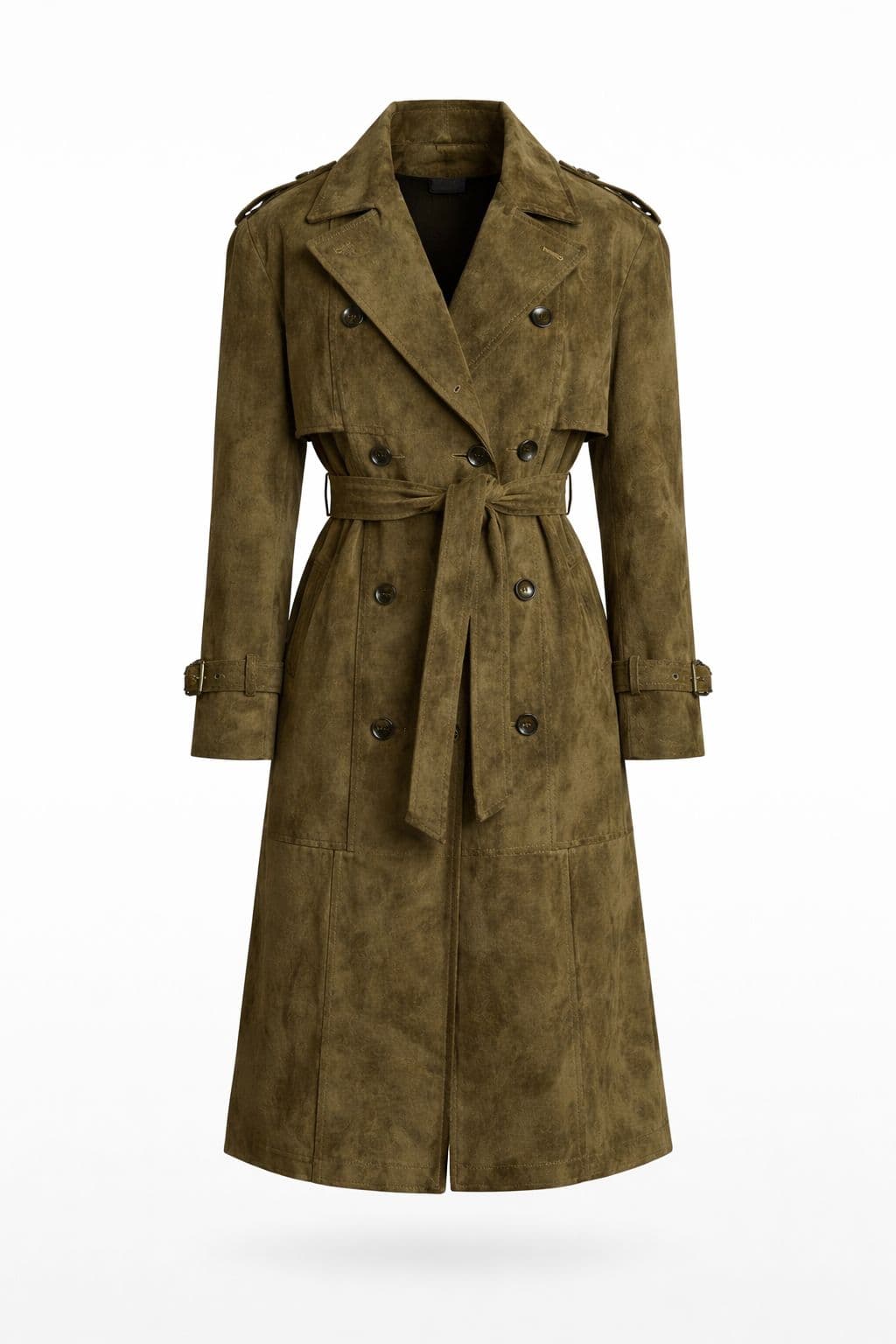
Clémence Olive Suede Coat - 100% Genuine Premium Suede
$920
Free shipping on orders above $330.