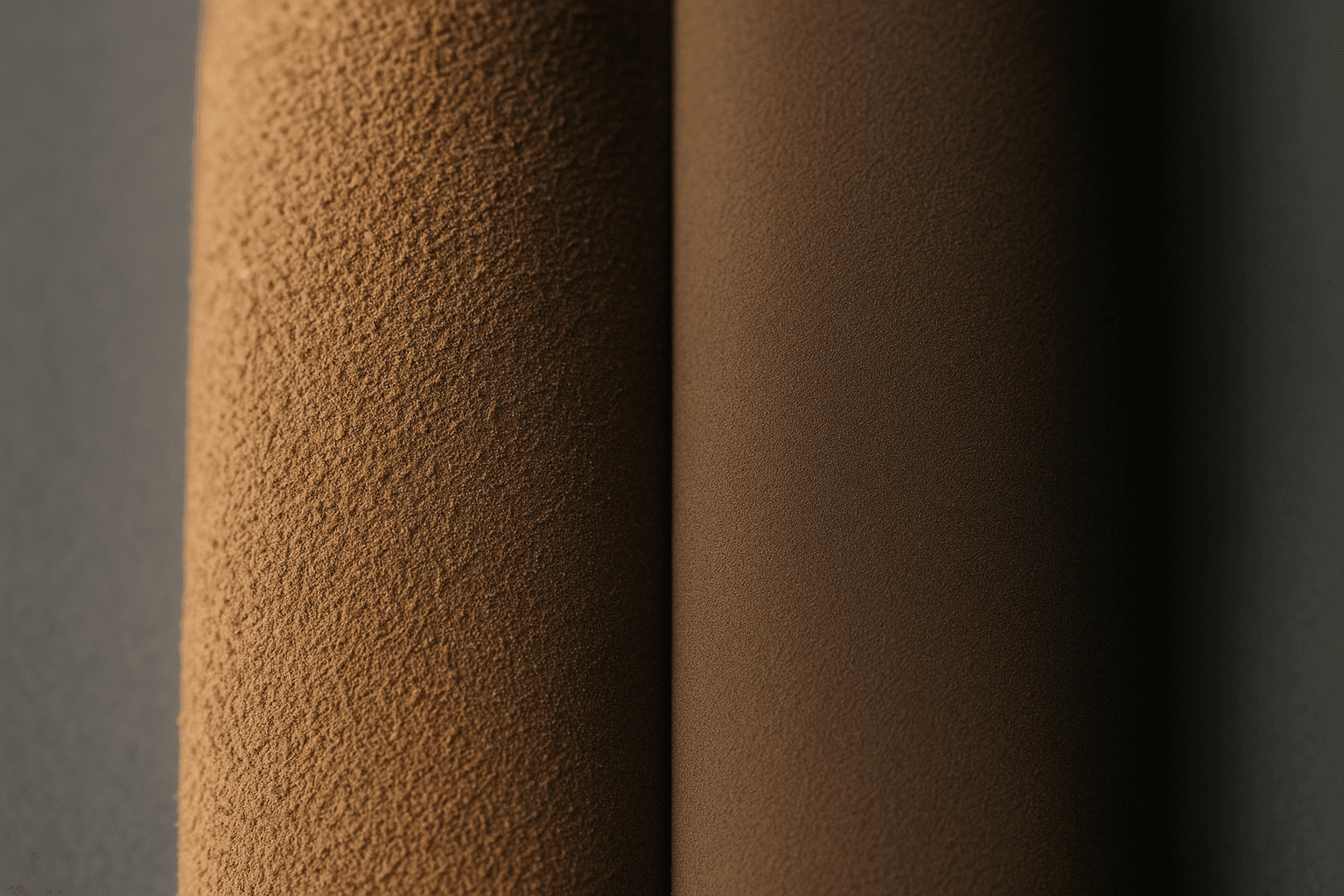
Types of Suede: A Complete Guide to Suede Varieties & Quality
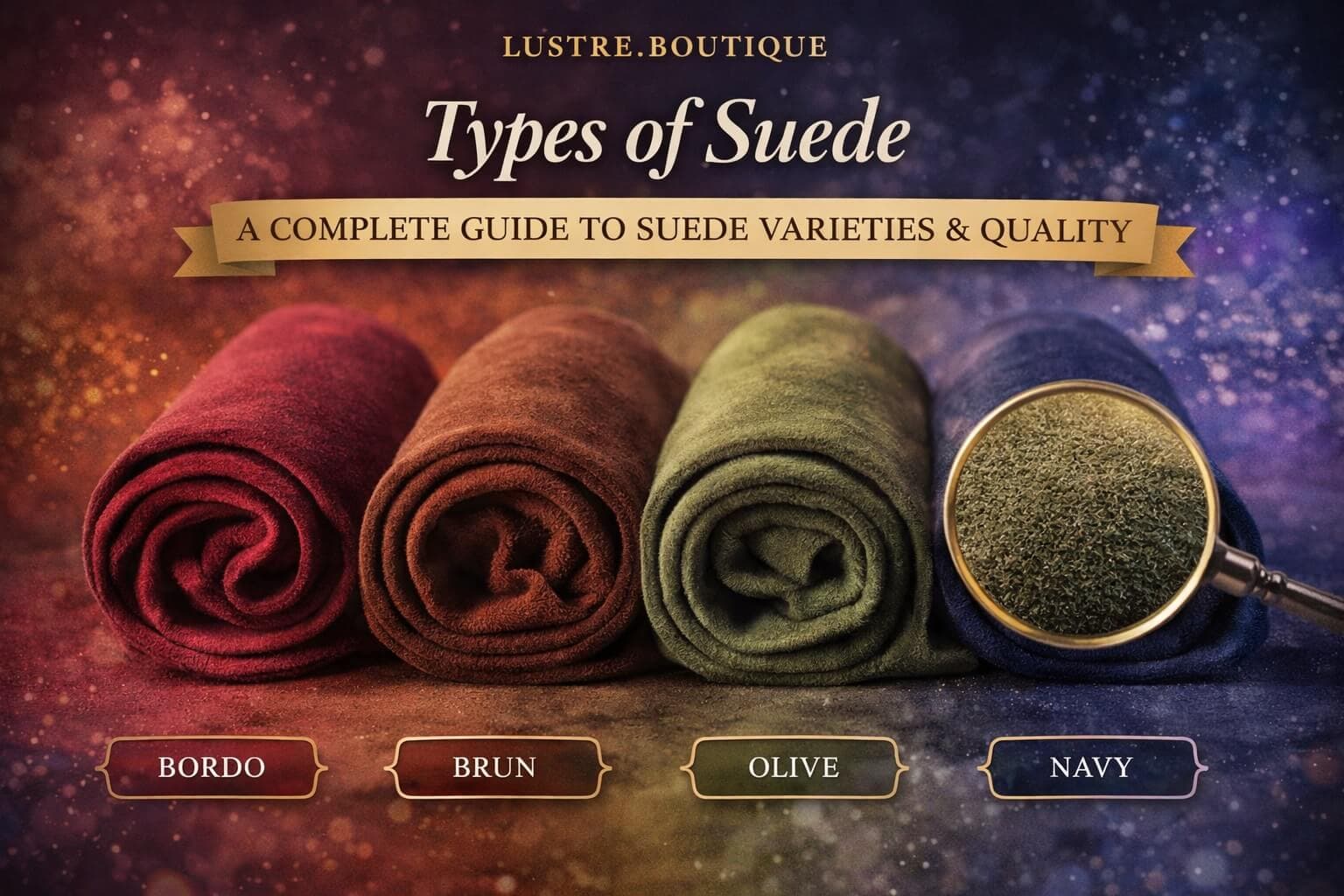
The word “suede” is often used as though it describes a single material, but in reality it is a family of leathers unified by one characteristic: the soft, napped finish created by buffing the inner split of an animal hide. The animal source, tanning method, and finishing technique all determine how a suede looks, feels, and performs. Understanding these differences is essential if you are investing in a luxury suede coat.
Goatskin Suede (Chevreau)
Goatskin produces one of the finest suedes available. The fibres are exceptionally tight and uniform, yielding a nap that is short, dense, and almost silky to the touch. Goatskin suede is naturally lightweight yet surprisingly strong, with an excellent strength-to-weight ratio that makes it a favourite for luxury outerwear.
- Nap: short, tight, silk-like.
- Weight: lightweight - ideal for unlined or lightly lined coats.
- Durability: high; resists stretching and retains shape well.
- Best for: Luxury suede coats, jackets, and accessories where refinement is paramount.
Lambskin and Sheepskin Suede
Lambskin suede is prized for its extraordinary softness. The fibres are finer and more loosely packed than goatskin, producing a plush, almost buttery nap. It is the most tactile of all suede types and is frequently used in high-end fashion.
The trade-off is delicacy. Lambskin is thinner and less abrasion-resistant than goatskin, so it requires careful handling and is best suited to garments that will receive gentle wear. Sheepskin from mature animals is slightly thicker and more durable but retains much of lambskin’s signature softness.
- Nap: medium to long, very soft and plush.
- Weight: light to medium.
- Durability: moderate; thinner skins are more prone to scuffing.
- Best for: Draped suede coats, evening outerwear, and pieces where softness is the priority.
Cowhide Suede (Split Cowhide)
Cowhide suede is thicker, heavier, and more robust than suedes from smaller animals. It has a coarser nap and a more rugged character, which makes it well-suited to workwear-inspired styles and pieces that will see heavy everyday use.
- Nap: longer, slightly coarser texture.
- Weight: medium to heavy.
- Durability: very high; excellent abrasion resistance.
- Best for: Casual suede jackets, boots, and accessories that need to withstand daily wear.
Pigskin Suede
Pigskin suede is recognisable by the distinctive pattern of small pore clusters visible on its surface. It is tough, affordable, and breathable, but the visible pore pattern and slightly stiffer hand make it less common in luxury outerwear. Pigskin suede is more often found in linings, gloves, and casual footwear.
- Nap: short to medium; visible pore pattern.
- Weight: medium.
- Durability: high; naturally resistant to moisture.
- Best for: Linings, gloves, casual bags, and budget-friendly accessories.
Nubuck: Suede’s Close Relative
Nubuck is sometimes confused with suede but is technically its opposite. While suede is buffed from the inner split, nubuck is sanded from the outer grain side of the hide. The result is a nap that looks similar to suede but sits on a denser, more durable base.
Nubuck tends to be stiffer than suede and develops a patina more readily. It is an excellent option for structured outerwear and footwear where the soft look of suede is desired alongside greater abrasion resistance.
Synthetic and Faux Suede
Modern microfibre fabrics such as Alcantara and Ultrasuede mimic the look and feel of genuine suede at a fraction of the cost. They are stain-resistant, machine-washable, and uniform in colour-advantages that make faux suede popular for automotive interiors and entry-level fashion.
However, synthetic suede cannot replicate the depth of colour, the way the nap shifts in changing light, or the subtle ageing character of genuine hide. For outerwear that is meant to last years and develop personal character, genuine suede remains the superior choice.
How to Identify Quality Suede
- Run your hand across the nap. Quality suede has a consistent, fine nap that changes shade uniformly when stroked.
- Check the edges. Genuine suede should have a natural, slightly fibrous edge, not a perfectly uniform cut that suggests synthetic backing.
- Smell the material. Genuine suede has a faint, earthy leather scent. Synthetics often carry a slight chemical odour.
- Assess the weight. High-quality suede feels substantial but not heavy; extremely light suede may indicate thin, lower-grade splits.
- Look for hide markings. Slight natural variations in texture and tone are signs of genuine, minimally corrected suede-hallmarks of premium quality.
Choosing the Right Suede for Your Coat
The ideal suede depends on how you intend to wear the garment. For a tailored, everyday luxury coat, goatskin suede offers the best balance of refinement and resilience. For an ultra-soft statement piece, lambskin is unmatched. For a rugged weekend jacket, cowhide’s toughness is your ally.
At Lustré, we select our hides based on the design requirements of each piece, ensuring that the suede type matches the coat’s intended purpose. Browse our collection to see how thoughtful material selection translates into outerwear that looks, feels, and lasts like a true luxury investment.
Going Deeper
For coat-specific hide guidance, read lambskin vs goatskin vs calfskin suede coats. For the chemistry that turns hide into stable suede, see vegetable-tanned suede coats. For how the resulting suede thickness affects coat performance, see heavyweight vs lightweight suede coats.
Hide Comparison
| Hide | Softness (1 to 10) | Durability (1 to 10) | Weight (g per m squared) | Typical Use |
|---|---|---|---|---|
| Lambskin | 10 | 6 | 350 to 450 | Luxury jackets, dresses, gloves |
| Goatskin | 8 | 9 | 400 to 550 | Coats, structured outerwear |
| Calfskin | 7 | 8 | 450 to 600 | Tailored coats, shoes |
| Cowhide | 5 | 10 | 550 to 800 | Workwear, heavy boots, accessories |
| Pigskin | 6 | 7 | 300 to 450 | Linings, lower-cost garments |
FAQ
Frequently Asked Questions
- Which suede hide is the softest?
Lambskin suede is the softest, with a hand feel close to fine velvet. It is the standard for luxury jackets, dresses, and gloves. The trade-off is reduced abrasion resistance, which is why lambskin is used less for hard-wearing pieces like work boots.
- Which hide is best for a suede coat that will last?
Goatskin offers the best balance of softness and durability for outerwear. It holds its shape, resists abrasion, and ages with character. Most luxury suede coats over 800 euros use either goatskin or premium calfskin.
- Is pigskin suede inferior?
Pigskin suede is lighter and less expensive, with three small hair pores visible in a triangle pattern across the surface. It is durable enough for linings and lower-cost garments but lacks the depth and refinement of lamb or goat.
- What is split suede?
Split suede comes from the lower layer of a thicker hide, usually cowhide, after the top grain has been removed. It is bulkier and less even in texture than top-grain suede. Most mass-market suede products under 400 euros use split suede.
- How can I tell which hide my suede coat uses?
Check the inner label and the brand specification sheet. Reputable houses always declare the hide. Visually, lambskin has a very fine even nap, goatskin shows slightly longer fibres, and cowhide split has a coarser, more uneven texture.
Shop the Collection
Every piece is cut from 100% genuine suede and made to be worn for years, not seasons.
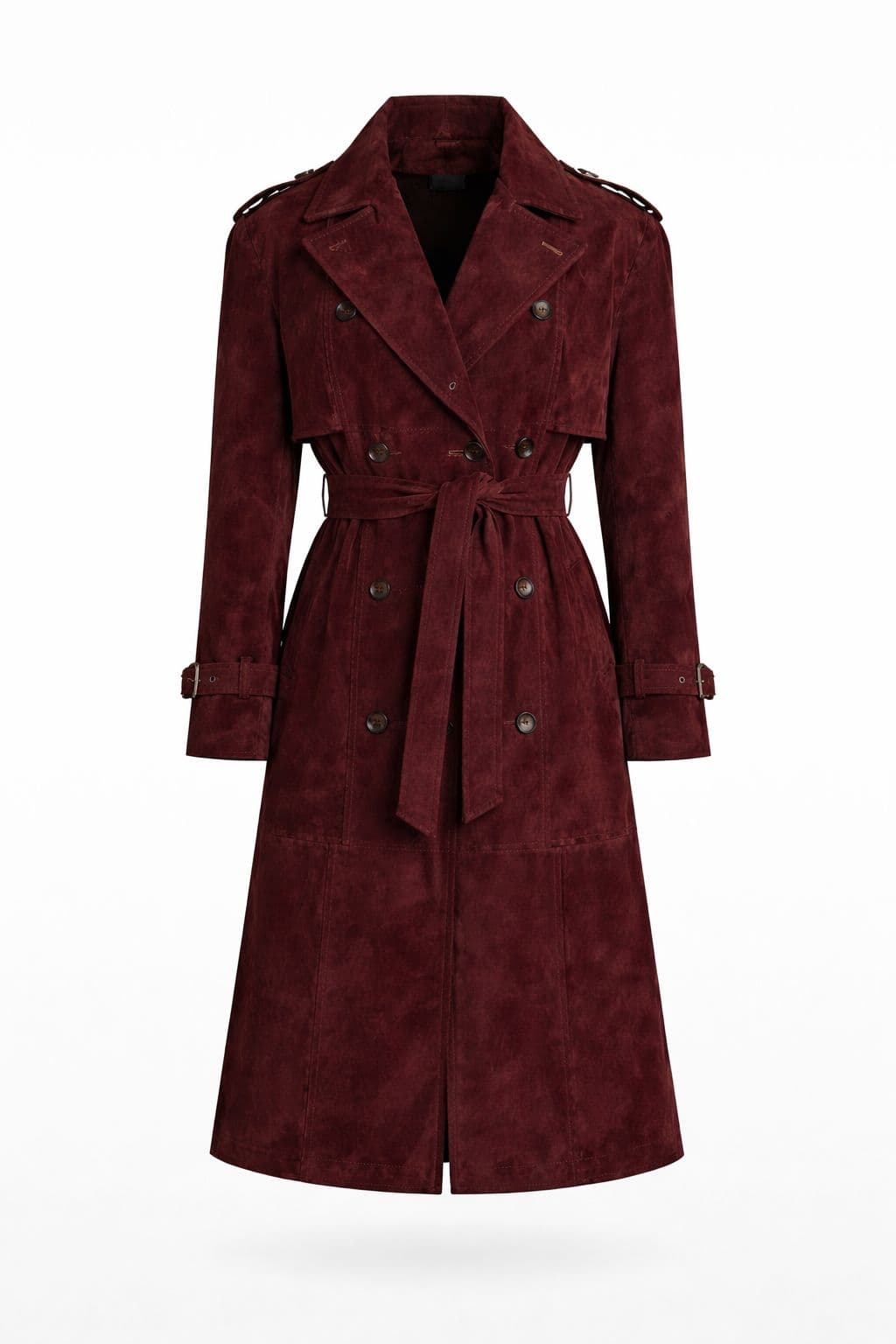
Clémence Bordeaux Suede Coat - 100% Genuine Premium Suede
$920
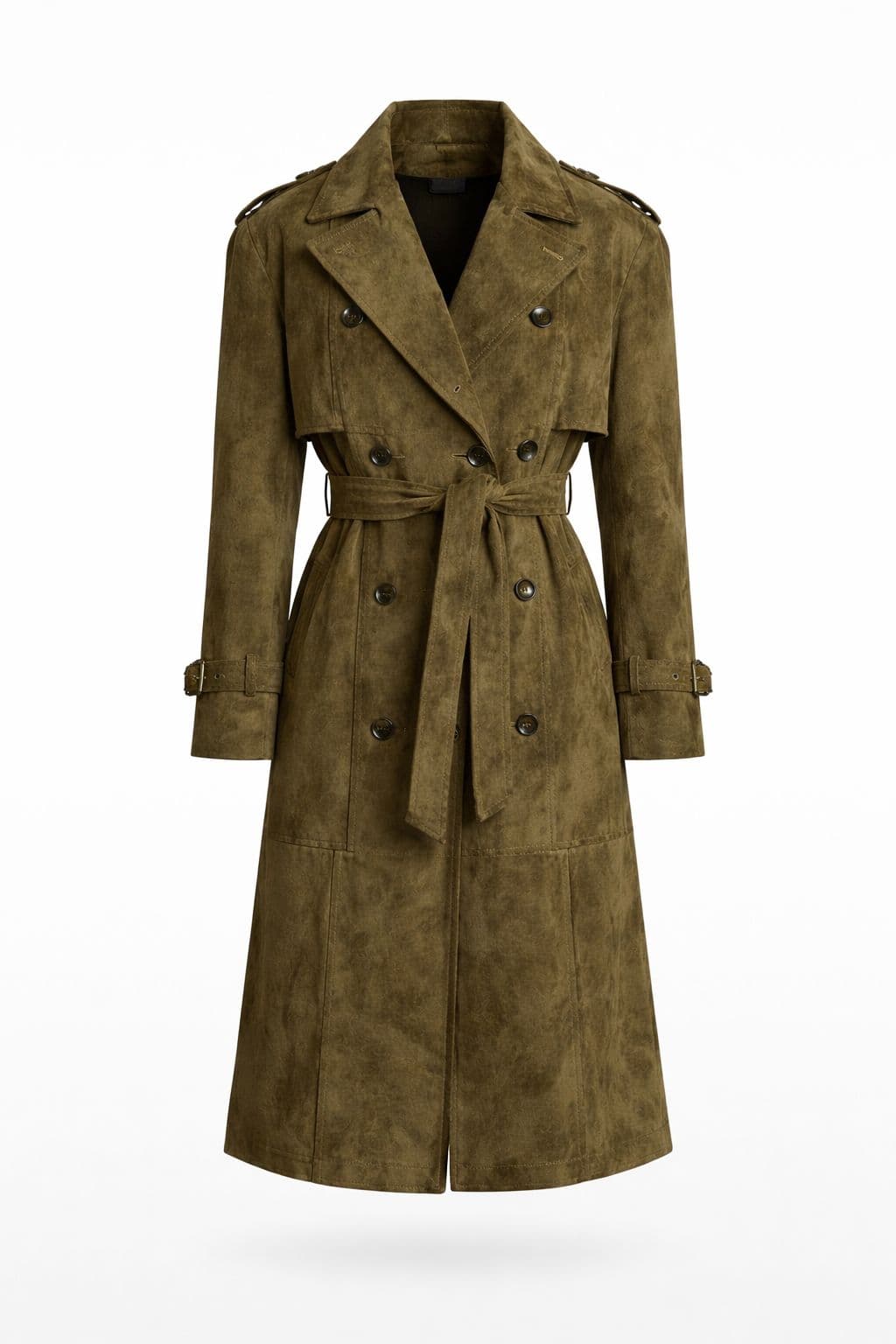
Clémence Olive Suede Coat - 100% Genuine Premium Suede
$920
Free shipping on orders above $330.