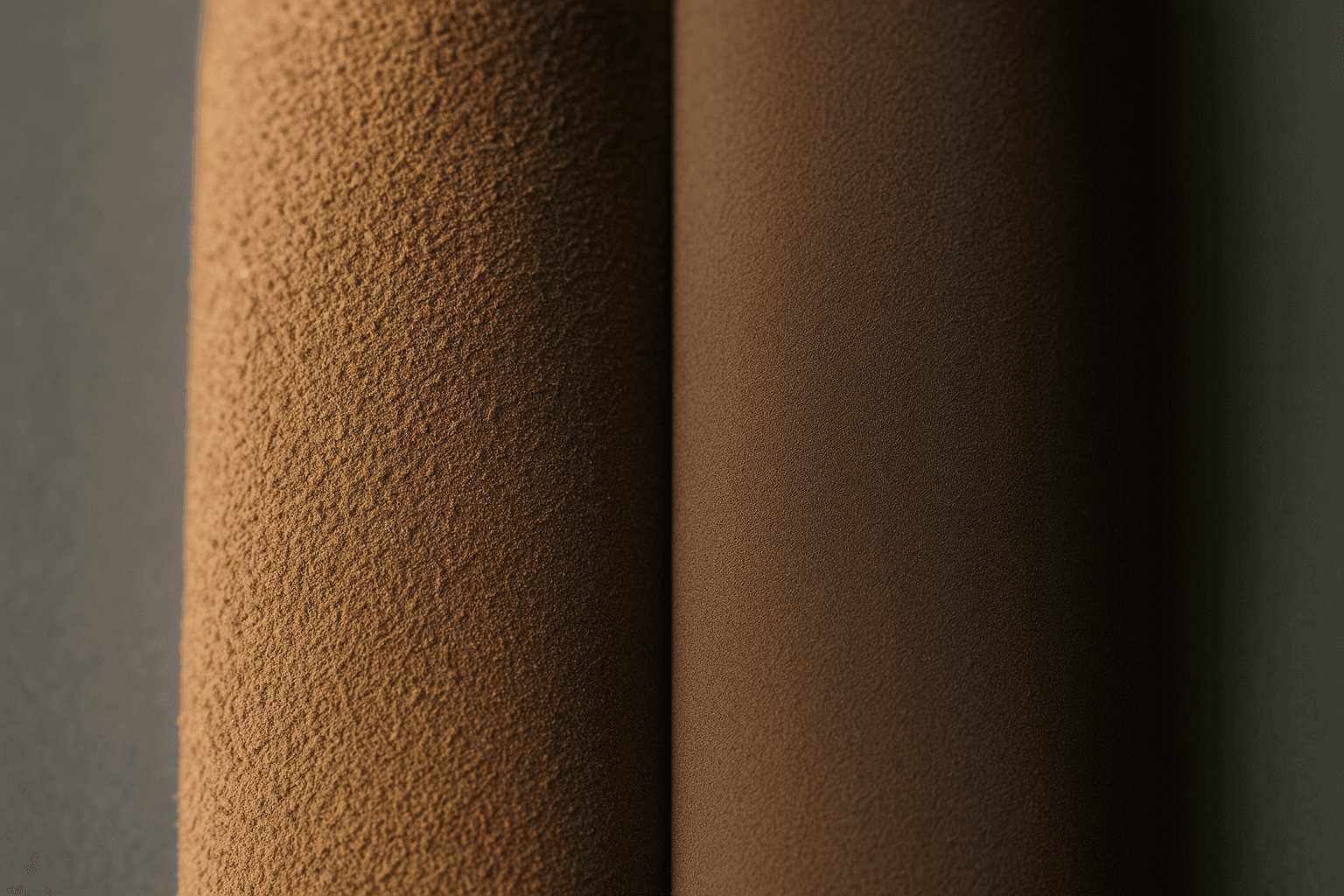
Where Does Suede Come From? A Plain Guide to Hides, Tanning, and Sourcing

Most buyers know suede is a kind of leather, but few know which animal, which layer of the hide, or which tanning method produces the soft napped finish. Here is suede sourcing explained in plain language, without industry jargon.
Which Animal Provides the Hide
Suede comes from the inner side of animal hides, most commonly:
- Goatskin: the most common source for soft, tailored suede outerwear in Europe.
- Lambskin: used for premium soft jackets and accessories. The most delicate.
- Calfskin: tighter grain than goatskin, used for high-end jackets and boots.
- Cowhide (split leather): heavier, used for structured trench coats and rugged pieces.
- Pigskin: less common in luxury, but used in some workwear and budget suede.
- Deerskin: rare, used in artisanal pieces. Very soft, less consistent.
Which Layer of the Hide Becomes Suede
An animal hide has a top grain (the smooth outer skin) and a flesh side (the inner side of the skin). Suede is created by splitting the hide into layers and brushing the inner layer to raise the soft fibres. This is why suede has its characteristic nap, and why it absorbs water more readily than smooth leather - the fibres are exposed.
Some brands make suede from the flesh side of a single full-thickness hide; others split a thicker hide into top grain (which becomes smooth leather) and a separate suede split. The latter produces lower-quality suede with less integrity, often called 'split suede'. Premium suede is made from the flesh side of a full-thickness hide.
The Tanning Process
Tanning is the process that converts a raw hide into stable leather. There are three main methods, each producing a different feel and environmental footprint:
- Chrome tanning: fast, consistent, dominant in mass-market production. Uses chromium salts. Produces softer, more pliable suede with consistent colour.
- Vegetable tanning: traditional, slower (4 to 8 weeks), uses plant tannins (oak, chestnut, mimosa). Produces firmer suede with deeper character. Used for premium and heritage products.
- Combination tanning: chrome first, then vegetable retanning. Compromise between speed and character.
Where Quality Suede Is Made
The world's most respected suede tanneries cluster in three regions:
- Italy (especially Tuscany and the Veneto): the global benchmark for luxury suede. Strict environmental rules, deep craftsmanship tradition.
- Spain (especially Andalusia and Catalonia): respected for goatskin and lambskin suede, often supplying European brands.
- France (especially Aveyron): smaller scale, premium, often artisanal.
- Asia (China, India, Pakistan): high volume production. Quality varies enormously; the best Asian tanneries supply many luxury brands quietly.
Drum Dyeing vs Surface Dyeing
Once tanned, suede is dyed. There are two methods:
- Drum dyeing: the suede is rotated in large drums with dye, allowing the colour to penetrate the full thickness of the hide. Colour is deep, even, and stable. Used by premium makers.
- Surface dyeing: dye is applied only to the napped side. Cheaper, faster, but the colour can fade or rub off where the suede flexes. Common in budget suede.
Ethical and Environmental Considerations
Suede is a byproduct of the meat and dairy industries. The hides used would be discarded if not tanned into leather, which means responsibly sourced suede has a smaller environmental footprint than is sometimes assumed. The largest environmental factors in suede production are:
- Tannery water and chemical management. EU and Italian tanneries operate under strict regulation; many tanneries elsewhere do not.
- Energy use during finishing.
- Transport (locally tanned hides have a smaller footprint than globally shipped ones).
Choose suede from brands that disclose tannery location, hide source, and tanning method. Vague 'genuine leather' labelling without specification is a warning sign.
Frequently Asked Questions
- Is suede a byproduct of the meat industry?
In most cases, yes. The hides used for suede come from animals raised primarily for meat or dairy. The leather industry uses hides that would otherwise be discarded.
- What is the difference between suede and nubuck?
Both have a napped surface, but suede is brushed on the flesh side of the hide, while nubuck is buffed on the grain side. Nubuck is slightly stiffer and more durable; suede is softer and more flexible.
- Is vegetable-tanned suede better than chrome-tanned?
Better is contextual. Vegetable-tanned suede has more character and is often considered more environmentally responsible. Chrome-tanned suede is softer, more colour-stable, and easier to work with for tailored garments. Most tailored coats use chrome or combination tanning for the best drape.
Sourcing Reference
| Layer | Animal | Suede Grade |
|---|---|---|
| Top split, brushed underside | Lamb | Premium luxury |
| Top split, brushed underside | Goat | Premium luxury (durable) |
| Top split, brushed underside | Calf | Luxury, structured |
| Lower split | Cow | Standard, heavier |
| Top split | Pig | Light to mid grade |
| Lower split | Buffalo | Workwear, accessories |
Shop the Collection
Every piece is cut from 100% genuine suede and made to be worn for years, not seasons.
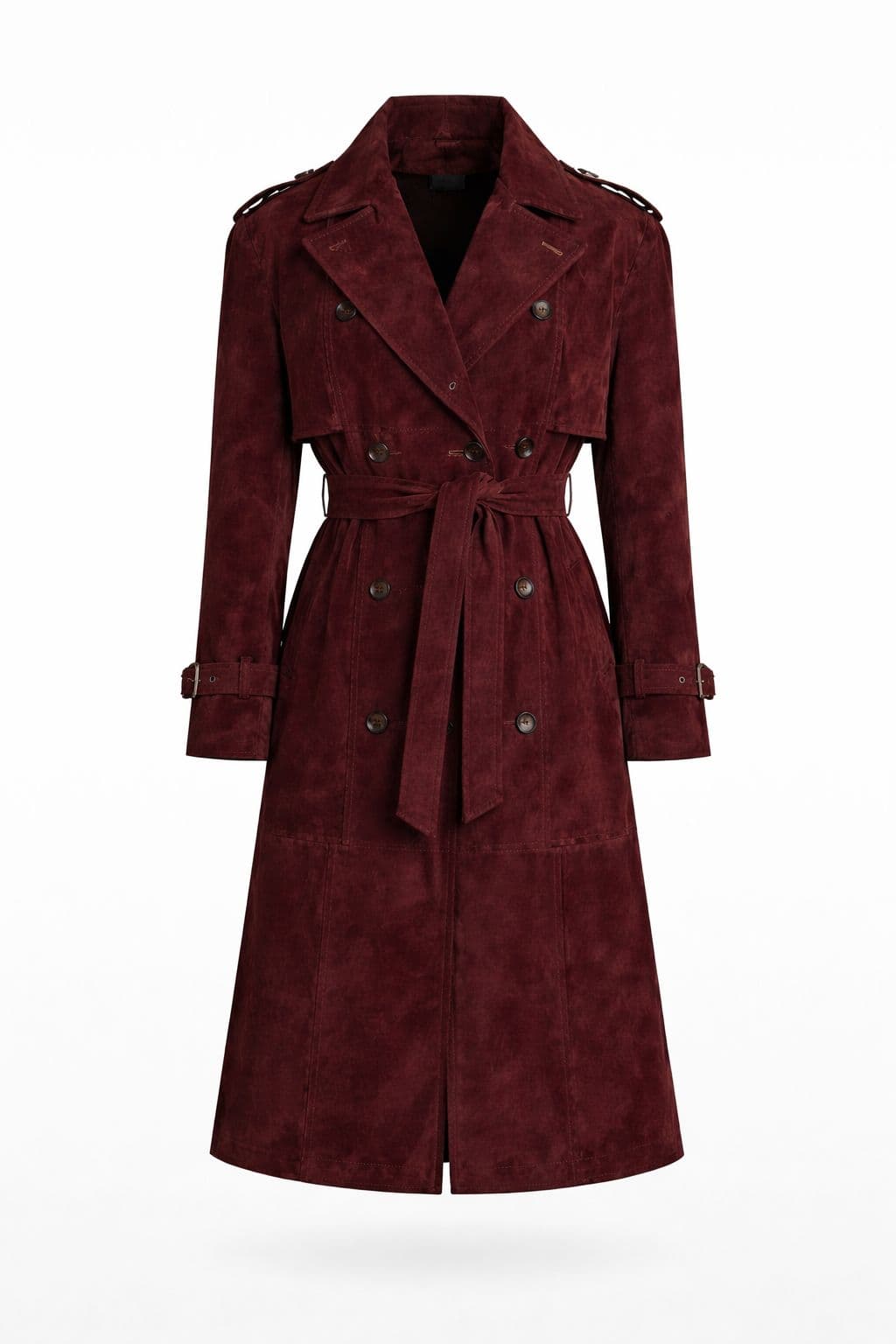
Clémence Bordeaux Suede Coat - 100% Genuine Premium Suede
$920
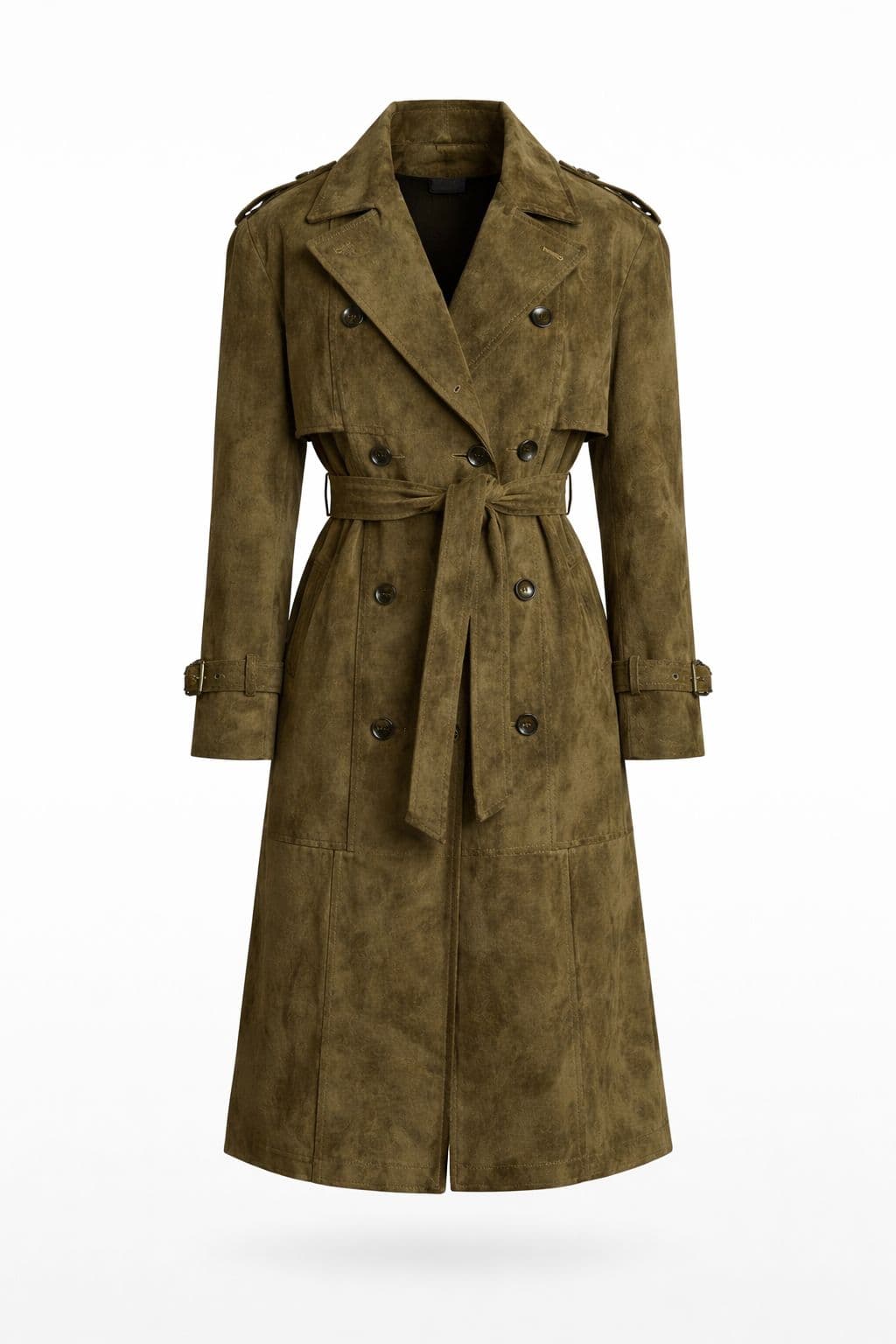
Clémence Olive Suede Coat - 100% Genuine Premium Suede
$920
Free shipping on orders above $330.