Genuine Suede vs Microsuede: How to Tell the Difference Before You Buy

Microsuede is everywhere now. Often labelled in ways that obscure its synthetic origin, it appears in fast fashion, mid-tier outerwear, and even some pieces marketed as luxury. Knowing how to spot the difference between genuine animal suede and polyester microsuede before you buy saves both money and disappointment.
What Each Material Actually Is
Genuine suede is the inner side of an animal hide (typically goat, lamb, or calf), brushed to create a soft napped surface. It is a natural fibre with tiny variations in texture, colour saturation, and grain.
Microsuede is woven polyester (sometimes blended with rayon) processed to mimic the look and feel of suede. It is a synthetic fibre, manufactured to be uniform.
The Five-Second Visual Test
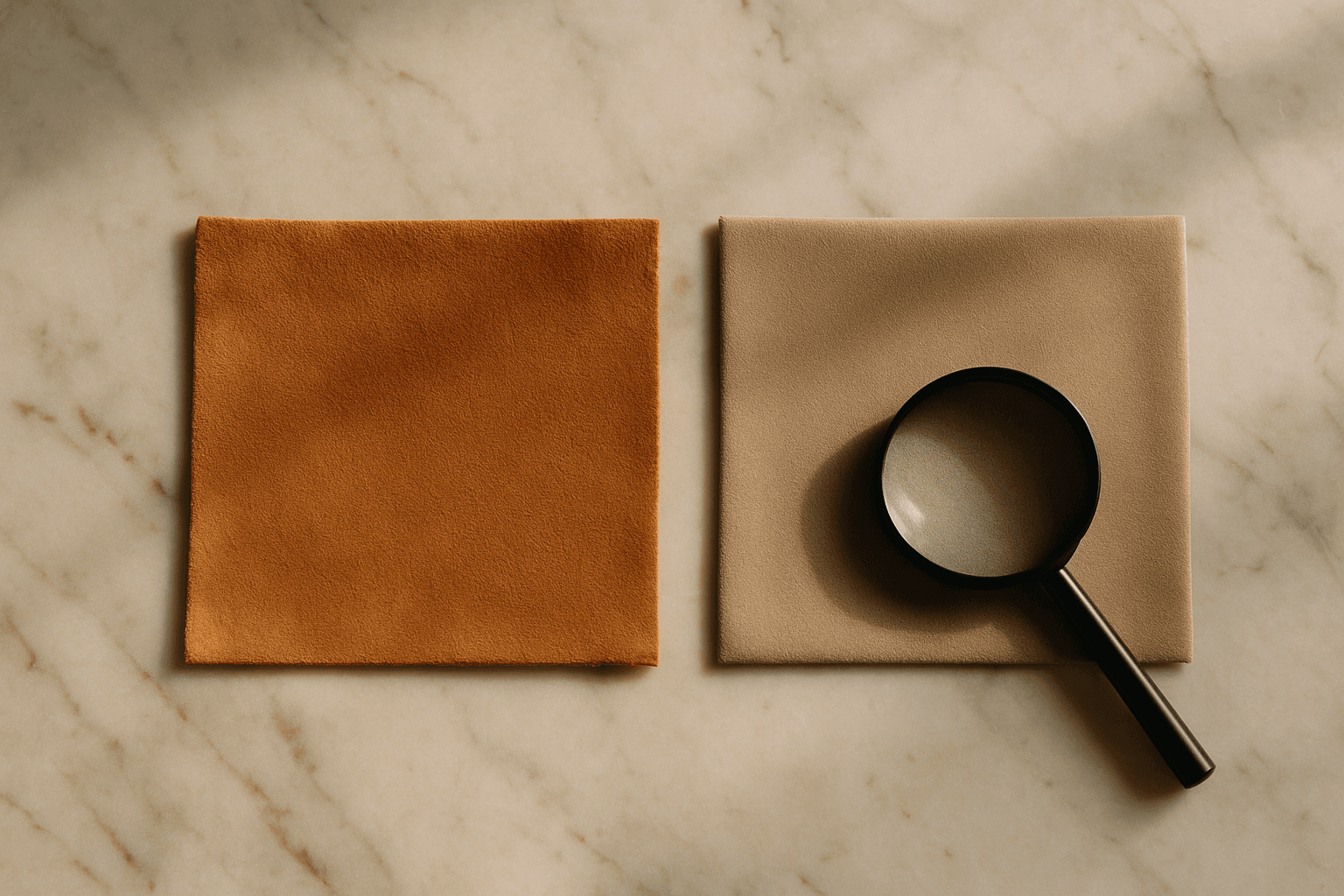
- Genuine suede shows slight variations in colour saturation across a panel. Microsuede is perfectly uniform.
- Genuine suede has a directional nap that changes colour visibly when brushed in different directions. Microsuede shows minimal directional change.
- Genuine suede has hide-edge irregularities at seams. Microsuede has perfectly clean machine-cut edges.
- Genuine suede has a faint, distinctive smell (similar to dry leather). Microsuede has no smell or a faint chemical scent.
- Genuine suede absorbs a drop of water immediately and darkens. Microsuede beads water on the surface initially.
The Touch Test
Press your fingernail gently into the surface, then lift. Genuine suede holds the impression briefly and rebounds. Microsuede springs back instantly. The difference is subtle but unmistakable once you have felt both.
Why the Difference Matters for Longevity
- Genuine suede ages: it develops a patina, softens with wear, and moulds to your body.
- Microsuede degrades: it pills at friction points, holds creases permanently, and fades unevenly over 2 to 3 years.
- Genuine suede is repairable: scuffs lift with a brush, stains can be addressed by specialists.
- Microsuede is not repairable: once worn out, the only option is replacement.
- Genuine suede outlasts microsuede 3 to 5 times in normal use.
The Label Game: How to Read Specifications
Brands that sell microsuede rarely call it 'polyester microsuede' on the prominent label. Look for these terms, all of which indicate synthetic:
- Faux suede / vegan suede / sustainable suede (synthetic).
- Suedette (synthetic).
- Ultrasuede (a higher-quality synthetic, but still synthetic).
- Polyester suede / polyester microfiber (synthetic).
- 100% polyester or polyester blends (synthetic).
Genuine suede is labelled as: '100% genuine leather (suede)', 'genuine suede', 'goatskin suede', 'lambskin suede', or with the leather composition disclosed clearly.
Price as a Signal
A genuine suede coat from any reputable brand sits at €400 minimum. Below €300, it is almost always microsuede or split leather (a lower grade leather). At Lustré, the Clémence at €840 reflects 100% genuine premium goatskin suede with full hide tanning and Italian construction. Microsuede equivalents typically retail at €100 to €250.
Frequently Asked Questions
- Is microsuede ever a good choice?
For occasional wear or budget-conscious purchases, microsuede can be acceptable. But it is not an investment piece. A microsuede coat at €200 every 3 years costs more long-term than a genuine suede coat at €840 every 12 years.
- Can microsuede look as good as genuine suede?
On day one, sometimes. After 6 months of wear, no. The texture, drape, and ageing differ visibly within a season.
- Is vegan suede the same as microsuede?
Yes, in most cases. 'Vegan suede' is a marketing term for polyester or polyurethane microsuede. Some newer plant-based alternatives (cactus suede, mushroom suede) exist but are rare and expensive.
Spec Comparison
| Trait | Real Suede | Microsuede |
|---|---|---|
| Material | Animal hide (lamb, goat, calf) | Polyester microfibre |
| Breathability | High | Low to moderate |
| Lifespan (years) | 15 to 25 with care | 3 to 7 |
| Water Behaviour | Marks easily, needs spray | Repels water naturally |
| Hand Feel | Variable, deepens with wear | Uniform, plastic-like over time |
| Price (jacket entry) | 700 to 1200 euros | 80 to 250 euros |
| Patina | Deepens beautifully | Pills and flattens |
Shop the Collection
Every piece is cut from 100% genuine suede and made to be worn for years, not seasons.
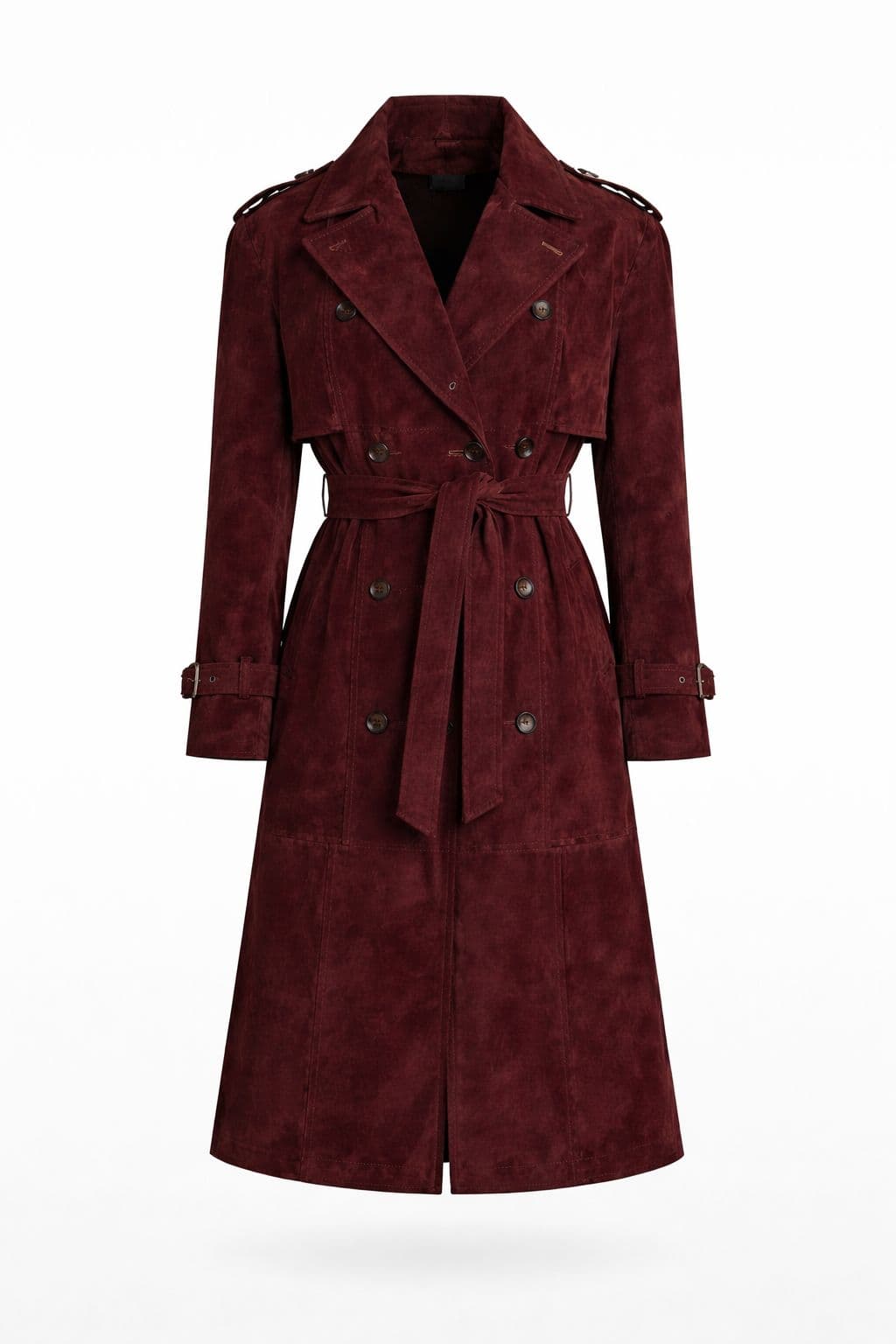
Clémence Bordeaux Suede Coat - 100% Genuine Premium Suede
$920
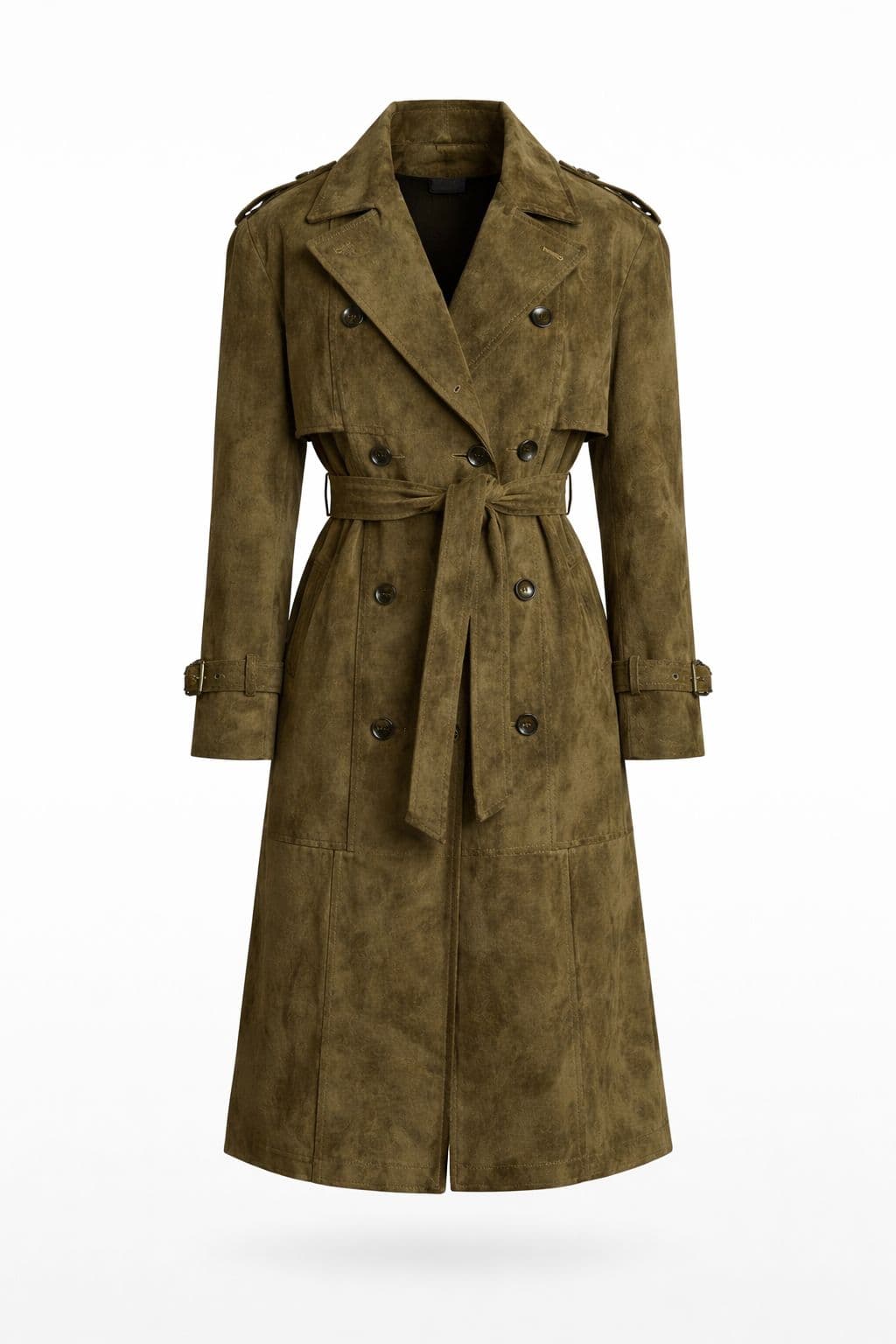
Clémence Olive Suede Coat - 100% Genuine Premium Suede
$920
Free shipping on orders above $330.