Buying a Second-Hand Suede Coat: How to Inspect, Restore, and Negotiate
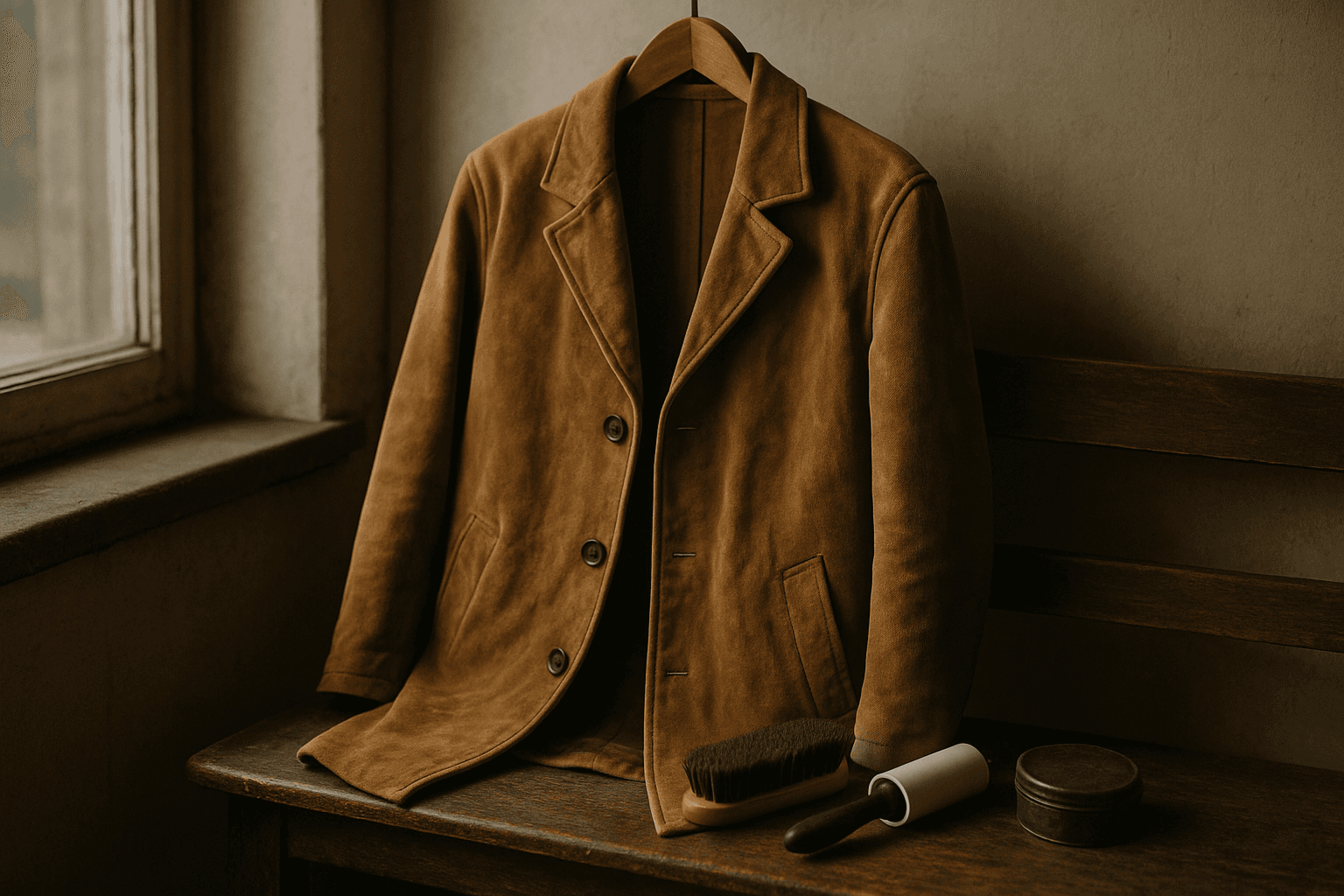
A second-hand suede coat can be one of the best buys in luxury wardrobe-building, or one of the worst. The difference lies in inspection, restoration cost, and price. A 1980s European-tanned goatskin coat at 180 euros from a vintage shop can outperform a 600 euro new fast-fashion coat across every metric. A neglected, sun-faded, mildewed coat at the same price is a money pit. This guide walks through how to inspect, what is restorable, and how to negotiate.
Why Second-Hand Suede Can Be Excellent Value
Suede made between roughly 1970 and 1995 was usually thicker, more carefully tanned, and constructed with heavier hardware than entry-level suede made today. European tanneries dominated supply, and chrome-free tanning was more common before the cost pressures of fast fashion. A well-cared-for vintage coat from this era can retail at 120 to 350 euros and outperform a 500 euro new coat in lifespan and feel. The investment piece analysis explains the value logic in more detail.
Inspecting Before You Buy
Take the coat off the rail and inspect it in good light, ideally near a window. Work systematically through the following checklist. The first three items are deal-breakers; the rest are negotiating points.
- Smell. Mildew, smoke, or strong chemical odour is rarely fully reversible in suede. Walk away or budget 80 to 150 euros for professional ozone treatment.
- Lining integrity. A torn lining is fixable for 60 to 120 euros. A lining glued to the suede that has bubbled away is a structural problem and not worth the price.
- Major hide damage. Cuts, tears, or deep cracking through the hide cannot be invisibly repaired. Surface scuffs and shine spots usually can.
- Colour fade. Light, even fade can be re-dyed by a specialist for 90 to 180 euros. Patchy fade or sun-bleached panels are difficult to even out.
- Hardware. Replacing buttons or a zip costs 30 to 80 euros and is usually worth it.
- Fit. Suede tailoring is possible but limited. Taking in side seams and shortening sleeves is straightforward; reshaping shoulders or letting out from a smaller size is not.
- Seam integrity. Loose seams can be re-sewn cheaply. Seams that have torn through the suede itself are not worth fixing.
- Nap condition. Crushed or compacted nap can be revived with brushing and steaming; permanently shiny worn patches at the cuffs and elbows cannot.
What Restoration Actually Costs
Build a realistic restoration budget before you negotiate. A professional cleaning is 60 to 120 euros. Re-dyeing is 90 to 180 euros. Lining replacement is 100 to 200 euros. Tailoring is 50 to 200 euros. A full restoration on a tired but structurally sound coat can run 250 to 500 euros, and the result will rival a new mid-tier coat. Compare that against a new piece such as the Lustré Clemence Coat at 840 euros to decide whether the second-hand route makes sense.
What Cannot Be Fixed
- Permanent oil and grease stains that have penetrated the full thickness of the hide.
- Water damage that has caused the hide to stiffen or the dye to lift in patches.
- Mould and mildew that has reached the lining and seams.
- Cuts and tears longer than about 3 cm.
- Sun bleaching that has lightened a panel two or more shades from its neighbours.
- Glue staining from previous amateur repairs.
Negotiating the Price
Vintage and consignment shops expect negotiation; charity shops and casual private sellers often do not, but it does not hurt to ask. Lead with specifics: identify two or three issues that need professional repair and quote the cost. A 220 euro coat with a 150 euro restoration bill is genuinely a 370 euro coat; a fair offer to the seller is 130 to 160 euros, which leaves you near the original asking price after restoration.
If the seller will not move, factor in whether the coat is irreplaceable. A specific 1970s saddle-brown European-tanned coat in your size is rarer than the listing suggests. Generic mid-2000s mall-brand suede is not.
Restoring at Home Versus Professionally
Light restoration is reasonable at home: brushing the nap, conditioning with a suede-specific product, and treating with a fluorocarbon-free protector. Anything involving water, dye, or stitching belongs with a professional. The care and storage guide covers safe at-home practice. Choose a leather specialist who can name their cleaning chemistry; a cleaner who simply says they handle suede without specifics often does not.
| Issue | Restorable? | Typical cost | DIY or pro |
|---|---|---|---|
| Light surface dirt | Yes | 0 to 20 euros | DIY (brush, eraser) |
| Crushed nap | Yes | 0 to 30 euros | DIY (steam, brush) |
| Even colour fade | Yes | 90 to 180 euros | Pro |
| Patchy fade | Sometimes | 150 to 250 euros | Pro |
| Torn lining | Yes | 60 to 120 euros | Pro |
| Loose hem | Yes | 20 to 50 euros | Pro |
| Replace buttons | Yes | 30 to 80 euros | Pro or DIY |
| Mildew smell (mild) | Sometimes | 80 to 150 euros | Pro (ozone) |
| Cuts or tears 3 cm+ | No | n/a | n/a |
| Deep oil stains | No | n/a | n/a |
Frequently Asked Questions
- Where do I find quality second-hand suede coats?
Specialist vintage shops in Paris, Milan, Antwerp, and Berlin are reliably good. Online consignment platforms (Vestiaire Collective, The RealReal) carry authenticated luxury pieces, often at 30 to 60 percent of new retail. Local charity shops occasionally surprise but require frequent visits.
- How do I authenticate vintage luxury suede?
Compare stitch density, lining material, hardware (buttons, zips), and label printing against verified examples from the brand's archive. Reputable consignment platforms authenticate before listing, which is worth the platform fee on pieces over 300 euros.
- Should I dry-clean a second-hand suede coat as soon as I buy it?
Not automatically. Dry cleaning suede is a specialist process; a generic dry cleaner can damage it. If the coat smells clean, brush it, condition it, and wear it. If there is genuine soiling or a smell, take it to a leather specialist and ask about their suede process specifically.
- Is a 1970s suede coat too dated to wear today?
Cut tells the story, not era. A 1970s knee-length tan or chocolate suede coat with a clean lapel and a soft shoulder reads as current. A heavily fringed, deeply yoked, Western-style coat reads as costume. See the what is a suede coat overview for cut typology.
- Can I have a vintage coat tailored to fit me?
Yes, within limits. Side seams can be taken in by 4 to 6 cm safely. Sleeves can be shortened from the cuff if there is no detail at the cuff, otherwise from the shoulder seam (more expensive). Letting out a smaller coat is rarely possible because suede has limited seam allowance.
Shop the Collection
Every piece is cut from 100% genuine suede and made to be worn for years, not seasons.
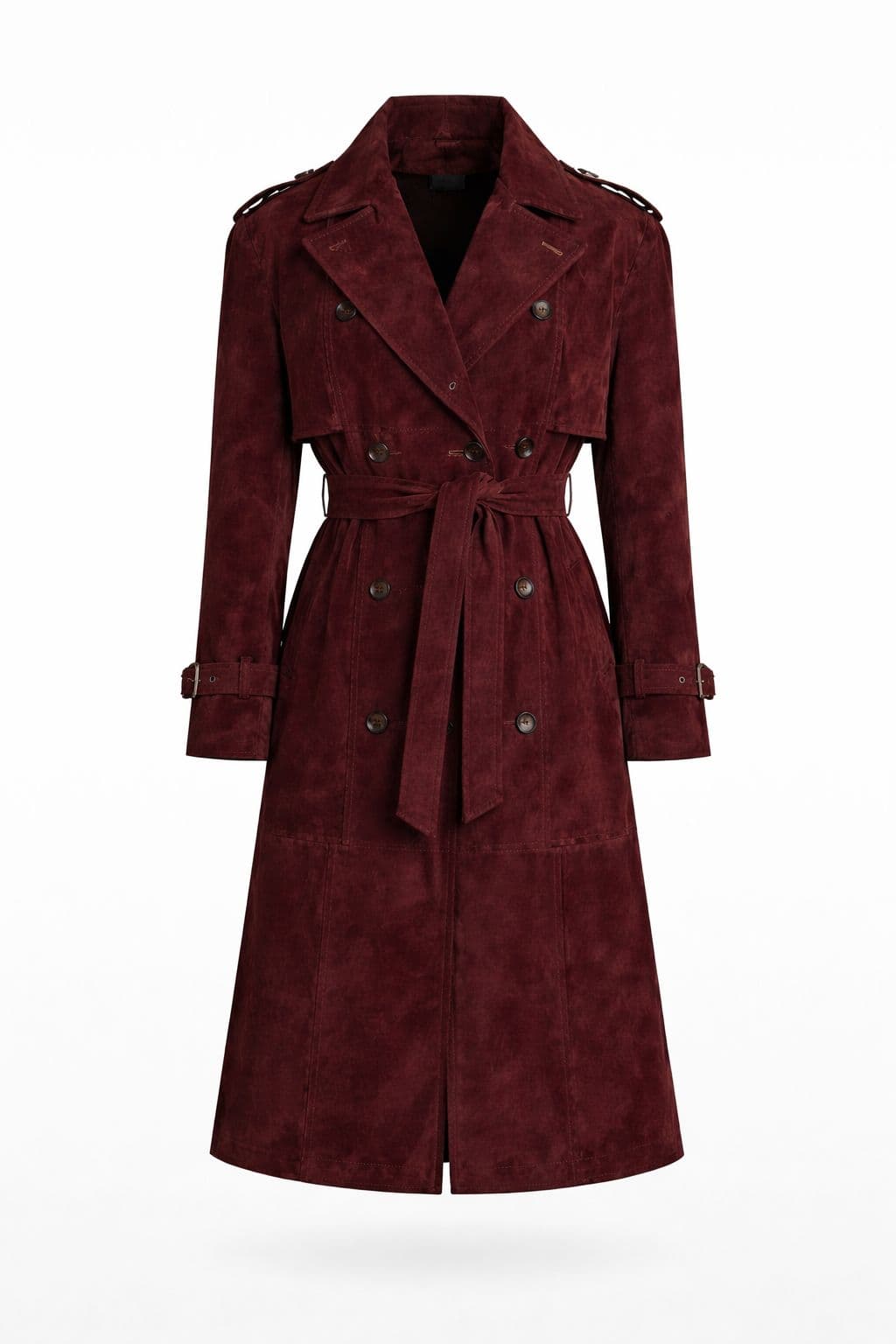
Clémence Bordeaux Suede Coat - 100% Genuine Premium Suede
$920
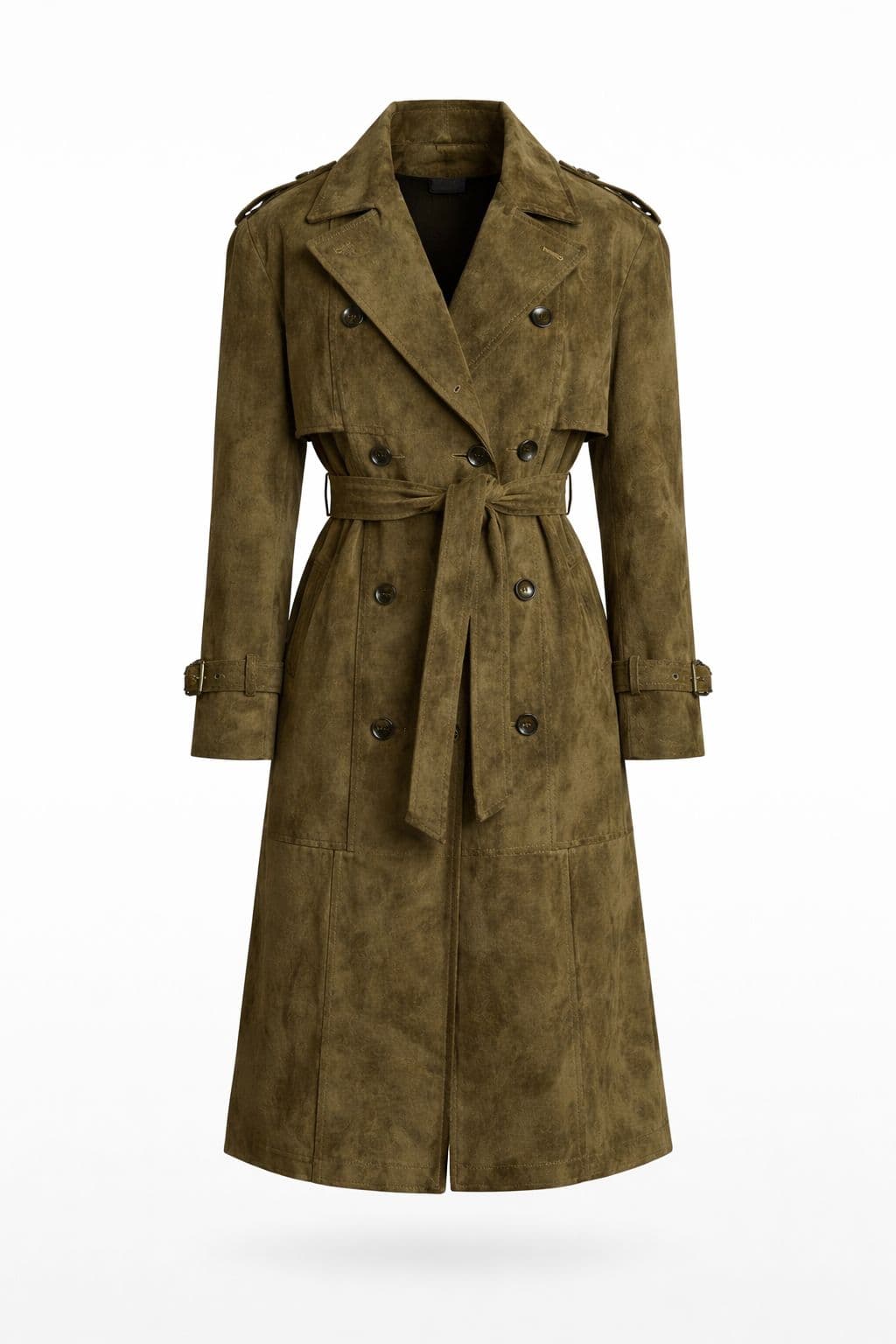
Clémence Olive Suede Coat - 100% Genuine Premium Suede
$920
Free shipping on orders above $330.