How to Find Your Perfect Suede Coat Size: A Measuring & Fit Guide
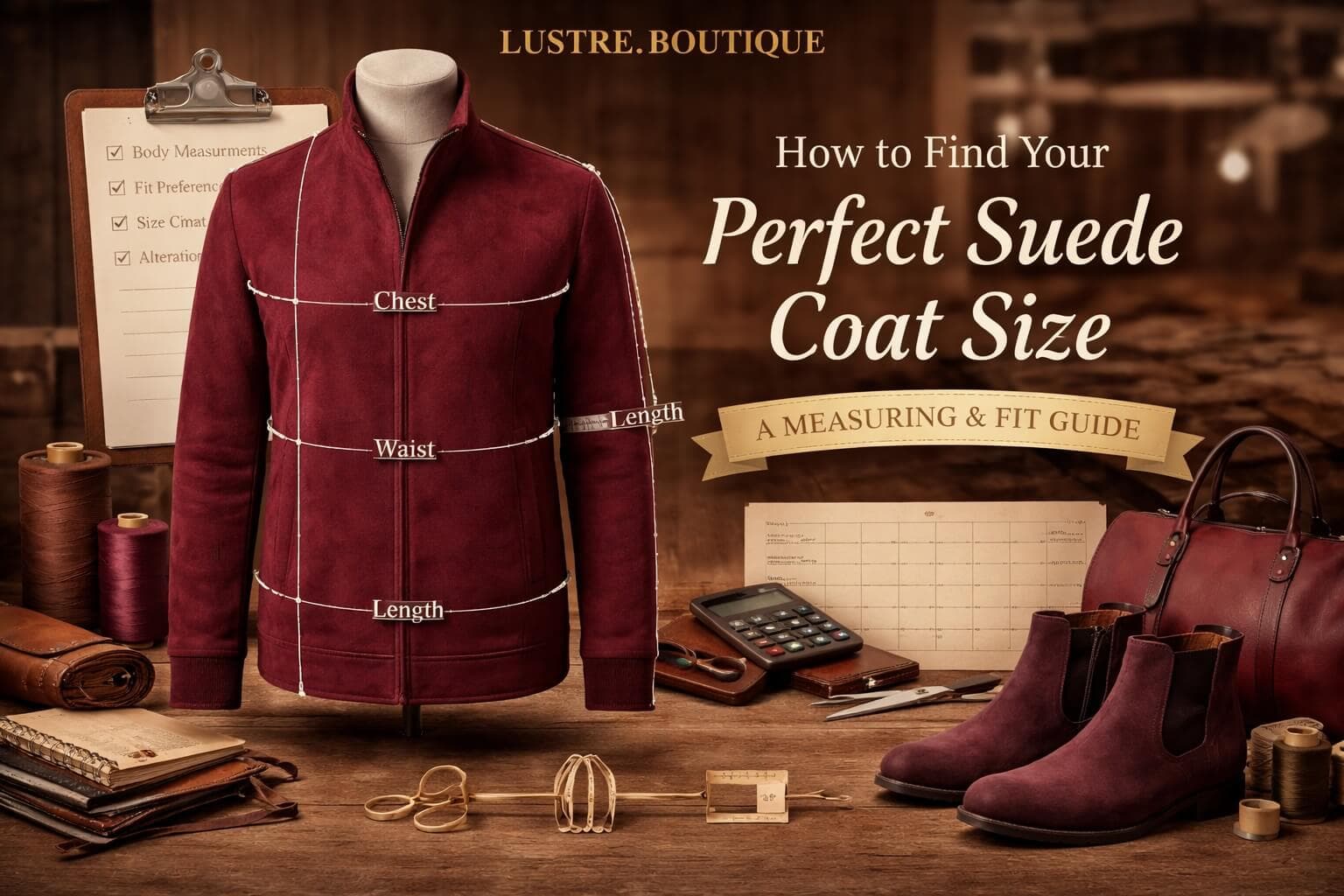
A beautifully crafted suede coat can only deliver on its promise if the fit is right. Unlike cotton or synthetic fabrics, suede is a natural skin with its own stretch behaviour, drape characteristics, and break-in period. Getting the size right from the start ensures that your coat will look impeccable on day one and only improve over time.
How Suede Fit Differs from Fabric Outerwear
Fabric coats are woven from yarn, giving them predictable stretch along the warp and weft. Suede, being a buffed leather split, stretches in all directions-but unevenly. Over the first few weeks of wear, a suede coat will “give” slightly at the elbows, across the upper back, and around the waist, conforming to your body’s unique contours.
This means a suede coat that feels slightly snug on first try-on will often settle into the perfect fit after a short break-in period. Conversely, choosing a size too large can result in a coat that becomes progressively shapeless.
Taking Your Measurements
Accurate measurements are the foundation of a great fit. Use a flexible measuring tape and, if possible, have someone help you. Wear a light layer underneath-the same type of clothing you plan to wear beneath your coat.
Step-by-Step Measuring Guide
- Chest / Bust: Wrap the tape around the fullest part of your chest, passing under your arms and across your shoulder blades. Keep the tape level and snug but not tight. Record in centimetres or inches.
- Shoulders: Measure from the tip of one shoulder bone straight across the back to the tip of the other. This determines how the coat sits on your frame.
- Sleeve length: With your arm relaxed at your side and slightly bent, measure from the tip of the shoulder down to the wrist bone. For coats, some people prefer the sleeve to reach the base of the thumb-add one to two centimetres if so.
- Waist: Measure around your natural waistline (the narrowest point of your torso, usually just above the navel). This is relevant for belted or fitted styles.
- Hips: Measure around the widest point of your hips. Important for longer coats that fall past the hip.
- Torso length: For trench or overcoat styles, measure from the base of the neck down to where you want the hem to hit-mid-thigh, knee, or below.
Understanding How Suede Stretches
Suede stretches most where there is repeated movement: across the upper back when you reach forward, at the elbows when you bend your arms, and at the waist if the coat is buttoned. The stretch is gradual and generally amounts to half a size to one size of ease over the garment’s first months of regular wear.
- If you are between sizes, choose the smaller size for a tailored silhouette that will mould to you.
- If you prefer a relaxed, oversized drape from the outset, choose your standard size or the larger of the two.
- Shoulder width and sleeve length do not stretch significantly. Prioritise getting these two measurements right.
Tailored Fit vs Relaxed Fit
A tailored fit follows the body more closely through the chest and waist, creating a refined, structured silhouette. It is well-suited to professional settings and evening wear. In suede, a tailored fit also showcases the material’s drape and texture beautifully.
A relaxed fit sits further from the body, offering a laid-back, contemporary aesthetic. This style is ideal for layering heavier knits underneath and works well for weekend and travel wear. In suede, a generous cut emphasises the material’s fluidity.
Layering Considerations
Think about what you will wear under the coat in practice. If you plan to layer thick knits, blazers, or scarves, consider sizing up or choosing a cut designed with layering room. If the coat will mainly sit over light shirts and thin blouses, your standard measured size should be ideal.
Common Sizing Mistakes to Avoid
- Buying too large because suede “feels tight.” New suede is naturally firmer; it softens and stretches with wear.
- Ignoring shoulder width. A coat that is too wide in the shoulders will never sit correctly, regardless of alterations.
- Forgetting to account for sleeve length. Suede sleeves that are too long bunch awkwardly at the wrist; too short and the coat looks undersized.
- Choosing purely by size label. Every brand’s sizing is different-always refer to the specific size chart and your own measurements.
Can a Suede Coat Be Altered?
Yes, but with caveats. A skilled leather tailor can shorten sleeves, take in side seams, and adjust hemlines. However, letting out seams is difficult because stitch holes remain visible in suede. Major structural changes-like narrowing shoulders-are generally not recommended. This is why getting the right size from the start is important.
Lustré Size Charts
All measurements below are in centimetres (cm). For inches, multiply by 0.394. Sizes are garment measurements, not body measurements - refer to the step-by-step guide above for how to measure yourself and choose your size.
Suede Coats - Clémence Range
| Size | Shoulder | Bust | Sleeve | Length |
|---|---|---|---|---|
| S | 53 | 92 | 53 | 111 |
| M | 54 | 96 | 54 | 112 |
| L | 55 | 100 | 55 | 113 |
| XL | 56 | 104 | 56 | 114 |
| 2XL | 57 | 108 | 57 | 115 |
Suede Jackets - Violette Range
| Size | Shoulder | Bust | Sleeve | Length |
|---|---|---|---|---|
| S | 65 | 106 | 49 | 52 |
| M | 66 | 110 | 50 | 53 |
| L | 67 | 114 | 51 | 54 |
| XL | 68 | 118 | 52 | 55 |
| 2XL | 69 | 122 | 53 | 56 |
Suede Skirts - Manon Range
| Size | Waist | Hip | Length |
|---|---|---|---|
| S | 66 | 88 | 27-37 |
| M | 70 | 92 | 28-38 |
| L | 74 | 96 | 29-39 |
| XL | 78 | 100 | 30-40 |
| 2XL | 82 | 104 | 31-41 |
Lustré Sizing Tips
If you fall between sizes or have questions about fit and styling, our concierge team is available to provide personalised guidance. A perfect fit is part of the luxury experience - we are happy to help you find it.
Beyond Sizing: Fit, Length, and Silhouette
Sizing is one input. Fit, length, and silhouette are the others. For a complete picture, read how a suede coat should fit which goes through the five fit points (shoulder, chest, sleeve, hem, layering room), the suede coat lengths guide for cropped through maxi, and suede coat silhouettes for figuring out which shape suits your body.
Quick Size Reference
| Size | Bust (cm) | Sleeve (cm) | Length (cm) | Recommended Height (cm) |
|---|---|---|---|---|
| XS | 82 to 86 | 52 | 109 | 158 to 165 |
| S | 86 to 90 | 53 | 111 | 162 to 170 |
| M | 90 to 94 | 54 | 112 | 165 to 173 |
| L | 94 to 98 | 55 | 113 | 168 to 176 |
| XL | 98 to 102 | 56 | 114 | 170 to 178 |
| 2XL | 102 to 106 | 57 | 115 | 172 to 180 |
FAQ
Frequently Asked Questions
- Should I size up for a suede coat to layer underneath?
If you intend to wear thick knitwear underneath regularly, size up by one. If you mostly layer over a fine knit or shirt, take your true size. Suede has very little stretch, so a coat that fits snugly in store will not give over time.
- How do I measure my bust correctly?
Wrap a soft tape measure around the fullest part of the bust, keeping it parallel to the floor. Wear a regular bra, not a sports bra. Note the measurement and compare to the coat size chart, allowing 6 to 10 cm of ease for layering.
- What if I am between two sizes?
Size up for a more relaxed silhouette and easier layering. Size down for a sharper, more tailored look. For belted or fitted suede coats, sizing down usually flatters more. For loose car coats and cocoon shapes, size up to keep the proportions correct.
- Can a suede coat be tailored after purchase?
Sleeves, hems, and side seams can be adjusted by a leather specialist. Shoulders and structural seams cannot be altered cleanly because stitch holes remain visible in suede. Order the size with the correct shoulder fit first, then adjust other measurements if needed.
- Do suede coats stretch over time?
Suede stretches slightly across the bust and shoulders with regular wear, by around 1 to 2 cm over the first six months. Length and sleeve length do not change. Choose the size that fits the shoulders correctly on day one.
Shop the Collection
Every piece is cut from 100% genuine suede and made to be worn for years, not seasons.
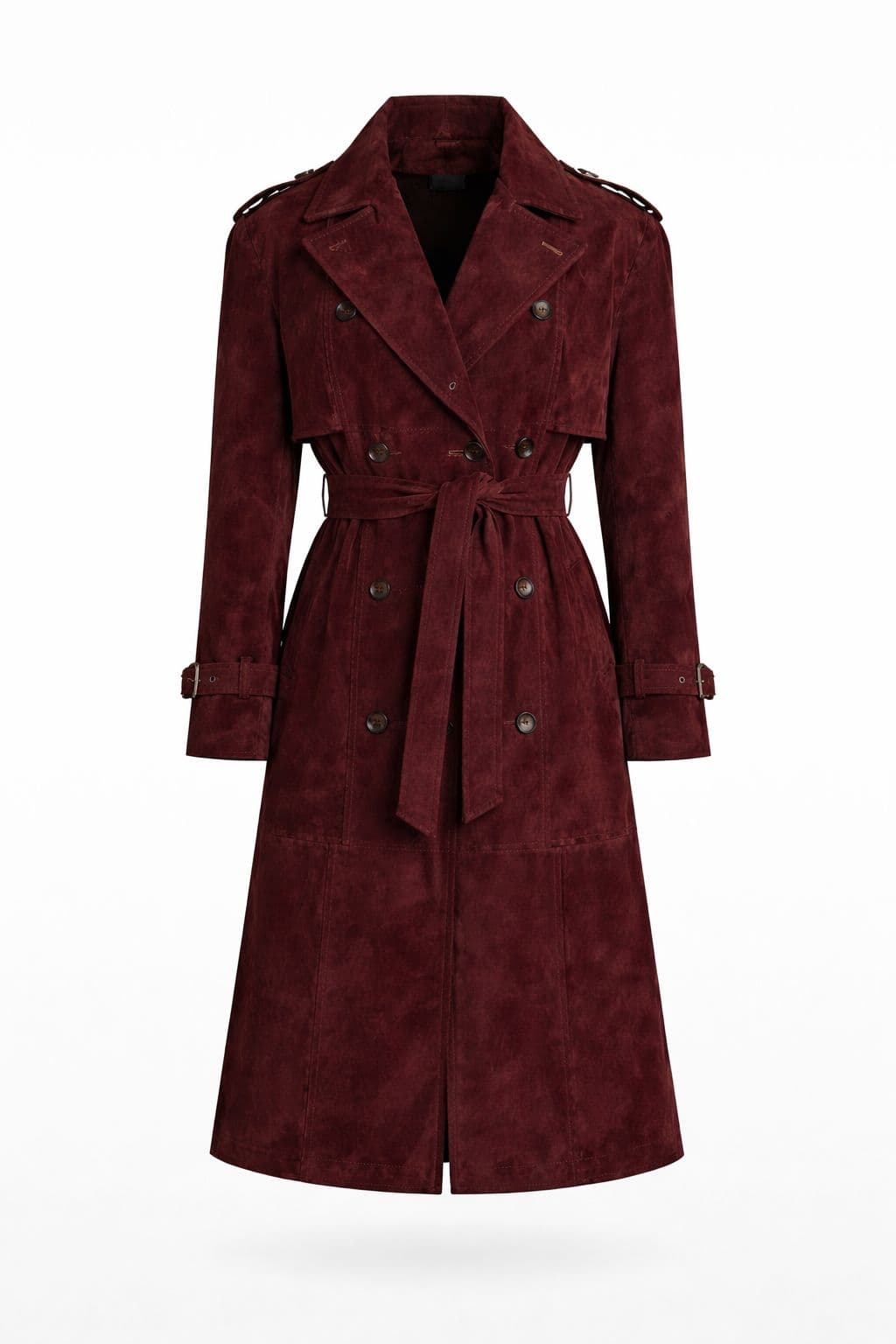
Clémence Bordeaux Suede Coat - 100% Genuine Premium Suede
$920
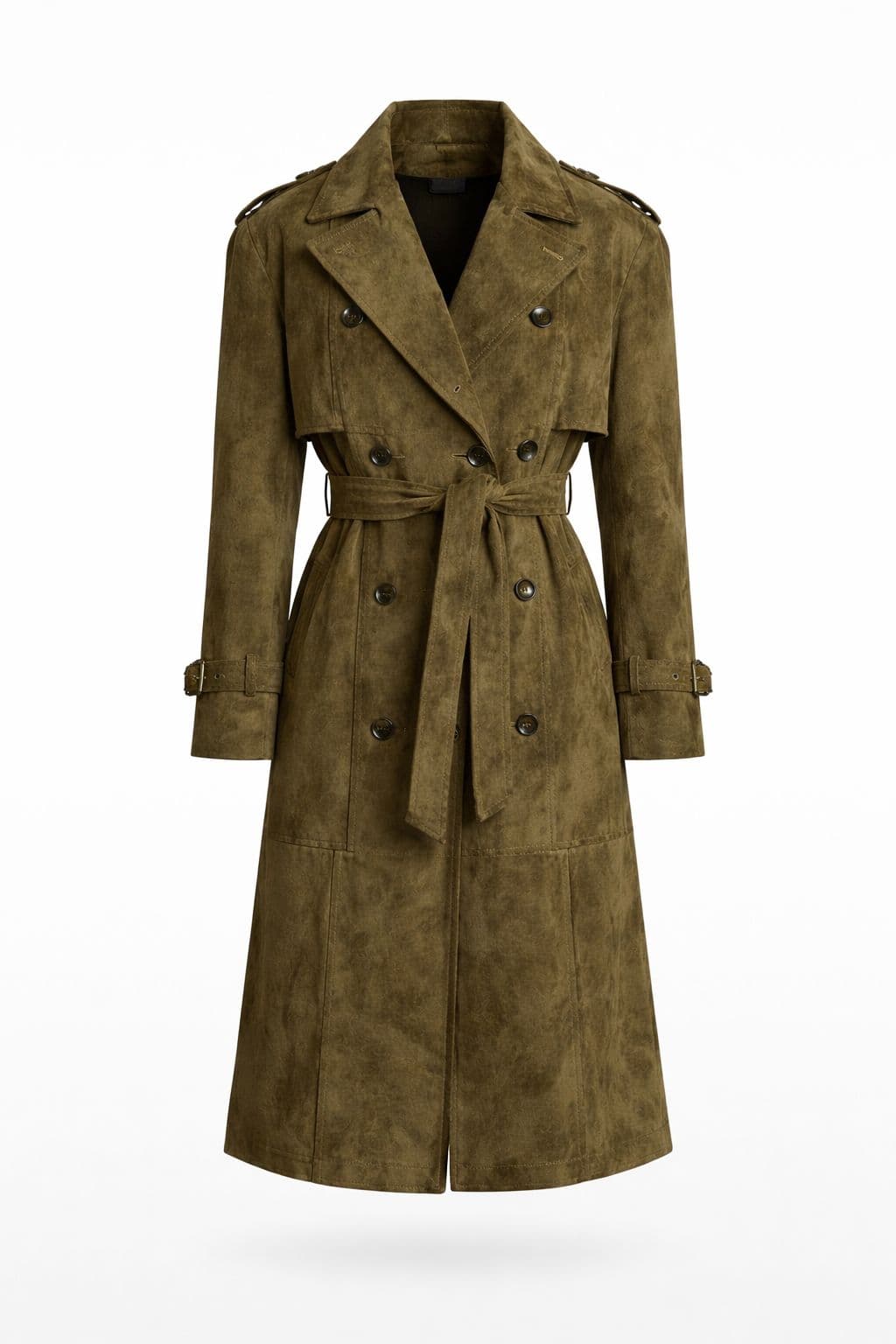
Clémence Olive Suede Coat - 100% Genuine Premium Suede
$920
Free shipping on orders above $330.