How to Style a Black Suede Coat: The Modern Minimalist's Guide
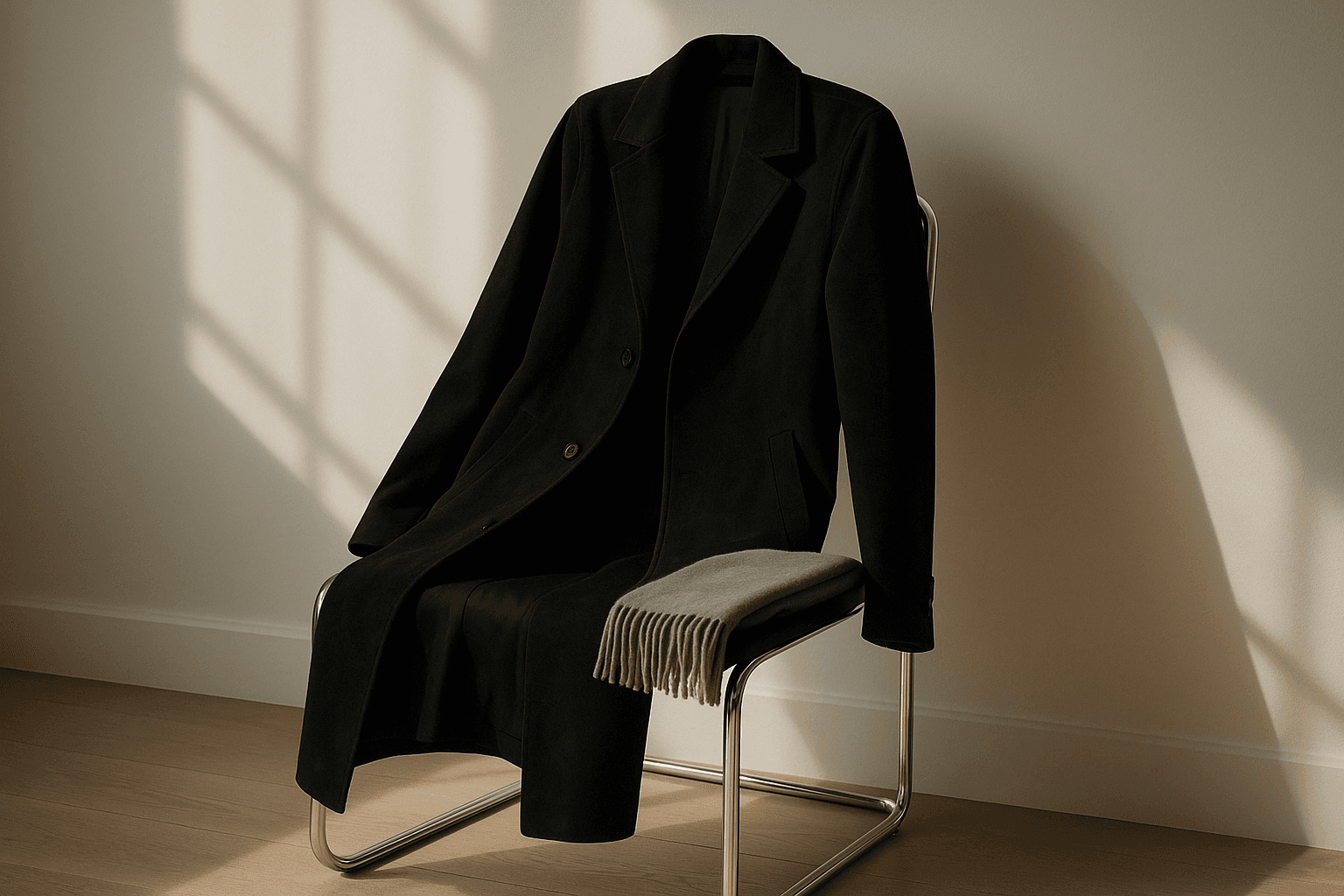
Black is the most worn coat colour in luxury outerwear and the hardest to make interesting. A black wool coat reads as a uniform; a black suede coat reads as a choice. The texture is what carries the colour, which is why a poorly chosen black suede looks cheap and a well chosen one looks like nothing else in the room. This guide covers the formulas, the texture pairings, and the weight considerations that turn a black suede coat into the most useful piece in a minimalist wardrobe.
Why Black Suede Reads Differently to Black Wool or Leather
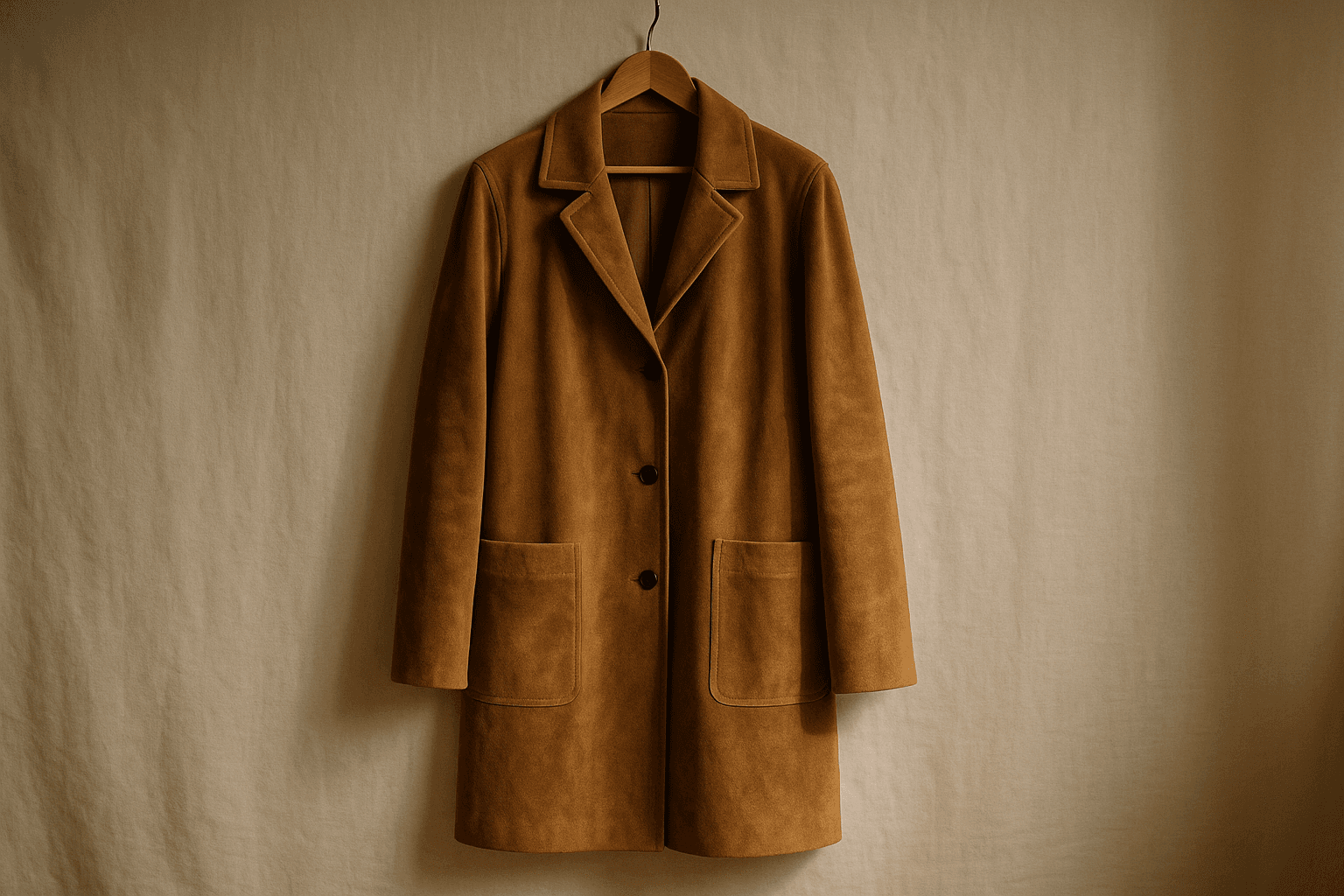
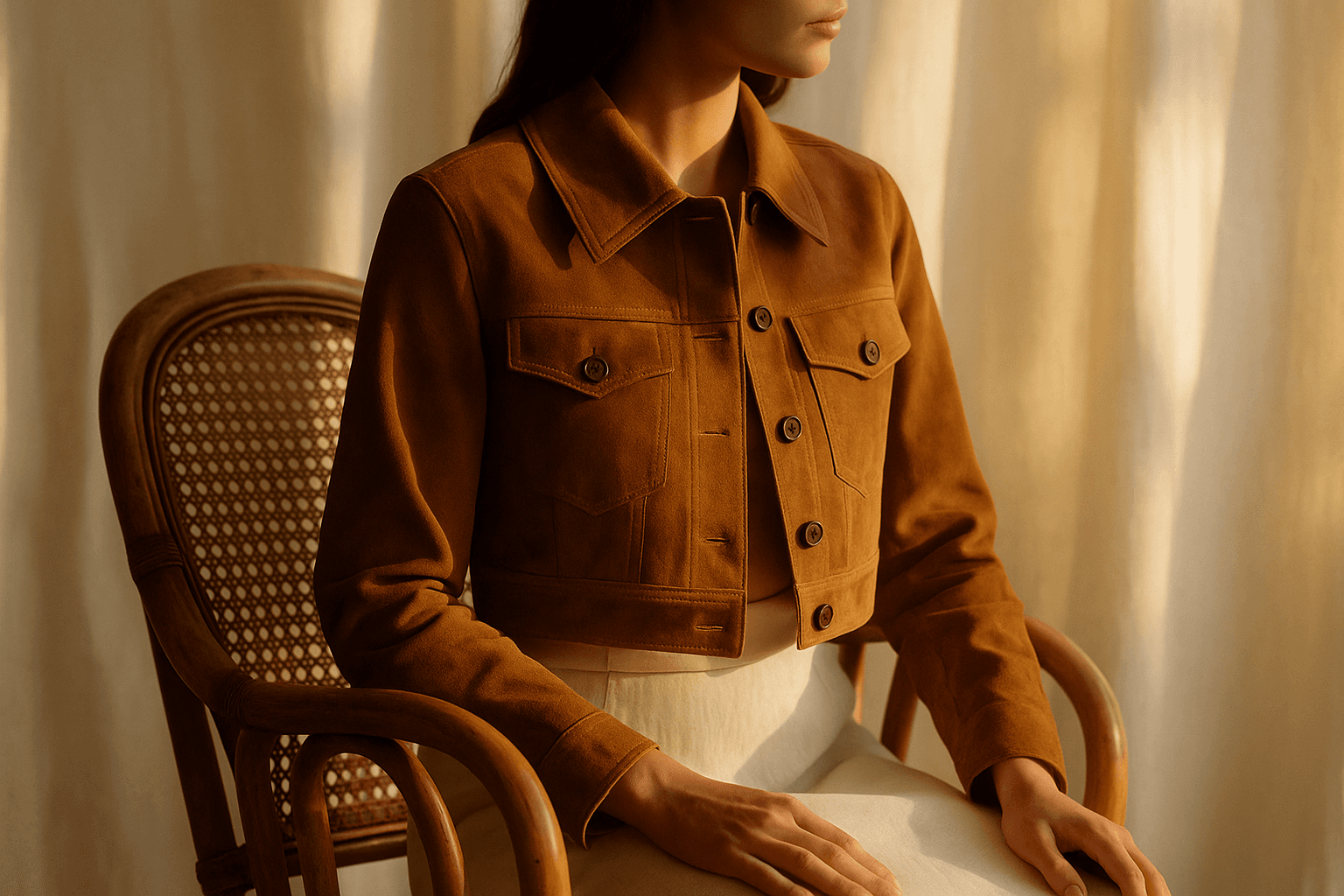
Black wool absorbs light and reads as a flat, neutral base. Black smooth leather reflects light and reads as sharp and slightly aggressive. Black suede sits in between: it absorbs more light than leather but the open nap creates a soft halo of depth. In daylight, black suede looks slightly brown-tinted, which is why it photographs warmer than a leather equivalent and pairs more easily with off-whites and warm browns.
Ten Black Suede Coat Outfit Formulas
- Cream cashmere roll-neck, charcoal trousers, black ankle boots. The cleanest minimalist formula.
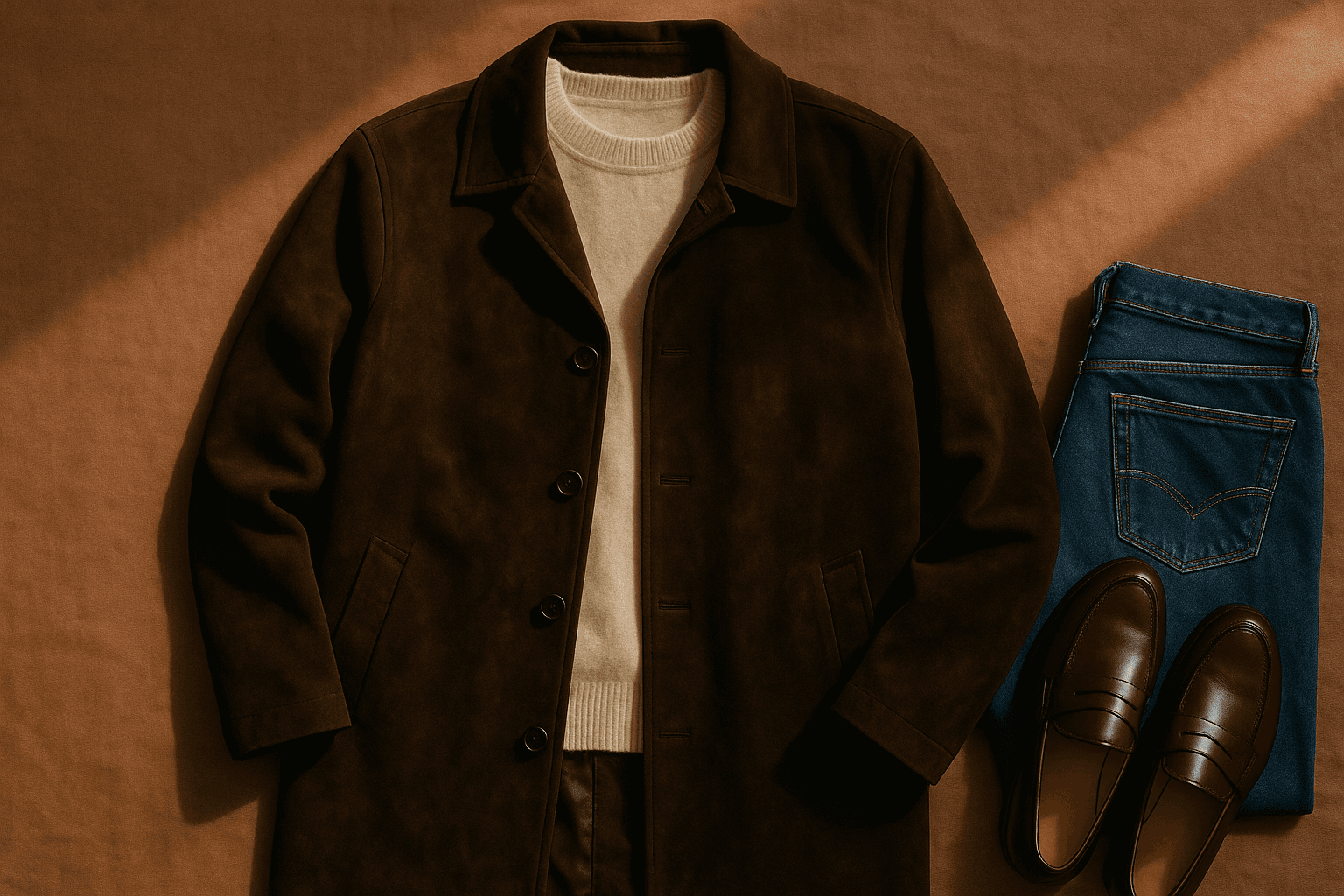
- White poplin shirt, dark indigo straight jeans, black loafers. Smart casual that reads pulled together for any context.
- Black knit, black wide-leg trousers, black pointed boots. Full-black column; the suede nap is the only visible contrast.
- Camel roll-neck, ivory wool trousers, chocolate boots. Warm-on-warm core with black suede providing the structure.
- Bordeaux silk midi dress, sheer black tights, black knee-high boots. Evening-leaning formula for autumn.
- Striped Breton tee, white denim, black flats. The least obvious black suede formula and one of the most flattering.
- Grey marl knit dress, opaque grey tights, black Chelsea boots. Cool tonal layering that flatters every height.
- Forest green silk shirt, black slim trousers, black loafers. Saturated jewel tone against suede texture.
- Black silk slip dress, black mules, gold jewellery. Black suede over a slip dress reads as evening rather than office.
- Cream knit dress, black opaque tights, black knee-high boots. The single most flattering formula for under-168 cm frames.
Texture Mixing With Black Suede
Black-on-black outfits succeed or fail on texture. Repeating the same finish (suede coat, suede boots, suede bag) reads heavy and slightly costume-like. The most flattering black-on-black pairings combine three textures from different families:
- Suede coat with smooth leather boots and a wool knit.
- Suede coat with silk dress and patent or polished leather shoes.
- Suede coat with cashmere knit and brushed denim.
- Suede coat with crepe trousers and matt leather loafers.
Avoid full suede top-to-toe in black, and avoid pairing black suede with black nylon or technical fabrics, which highlight the suede's softness in an unflattering way.
Length and Weight Choices for Black Suede
Black recedes more than any other colour, which means a long black suede coat does not visually extend the body the way a long camel coat might. Frames between 158 and 175 cm are well served by knee-length or just-below-the-knee black suede coats around 100 to 110 cm in total length. Above 175 cm, full-length black suede coats around 120 cm sit beautifully. The heavyweight vs lightweight suede guide explains how grams per square metre affect drape: black suede typically reads more elegant in heavier weights (around 700 to 900 g/m² total panel weight including lining) because the colour benefits from substantial drape.
Shoes, Bags, and Hardware
Black suede pairs cleanly with black smooth leather, polished leather, brushed metal, and matte chrome. It also works against ivory, cream, and chocolate accessories. Avoid bright tan and yellow gold accessories that read too warm against black suede; cooler metals (silver, gunmetal, palladium) are typically more flattering. Glossy patent leather makes a strong statement against black suede and works well in evening contexts.
| Skin tone | Most flattering inner layer | Avoid | Reason |
|---|---|---|---|
| Cool fair | Cream, ivory, soft pink | Pure white, mustard | Pure white pulls too much contrast against cool skin |
| Warm fair | Camel, off-white, bordeaux | Mid grey, beige | Warm tones echo the suede's brown undertone |
| Olive | Forest, ivory, charcoal | Khaki, taupe | Earthy mids fight olive's natural warmth |
| Deep cool | Cream, bordeaux, true white | Brown, taupe | High-contrast neutrals frame the face |
| Deep warm | Camel, gold, ivory | Cool greys, slate | Warm brights lift; cool tones flatten |
Frequently Asked Questions
- Does black suede look cheap in photographs?
Only if the suede itself is poor quality or the cut is wrong. Black suede photographs better in soft daylight than under harsh artificial light, where it can read flat. A high-quality lambskin in black holds its depth in nearly any lighting.
- Is black suede practical in rain?
Black suede shows water marks less than camel or sand but more than chocolate. A protector spray applied at the start of each season is the minimum care. Avoid wearing black suede in heavy rain entirely; for that, see the cold climate guidance below.
- Can a black suede coat replace a black wool coat?
For most occasions, yes. The exception is formal evening events that call for tailored wool overcoats. A black suede coat handles smart-casual, business, and most evening contexts comfortably.
- What hide is best for a black suede coat?
Lambskin gives the softest, most luxurious finish in black. Goatskin gives a slightly more structured drape with visible grain that adds character. Calfskin reads sportier. For an everyday black suede coat, lambskin is typically the best balance.
- How do I stop a black suede coat looking dusty?
Brush weekly in one direction with a soft suede brush. Black suede shows lint and dust visibly because the colour absorbs light, so regular brushing is essential. Store on a padded hanger in a breathable cotton garment bag.
Shop the Collection
Every piece is cut from 100% genuine suede and made to be worn for years, not seasons.
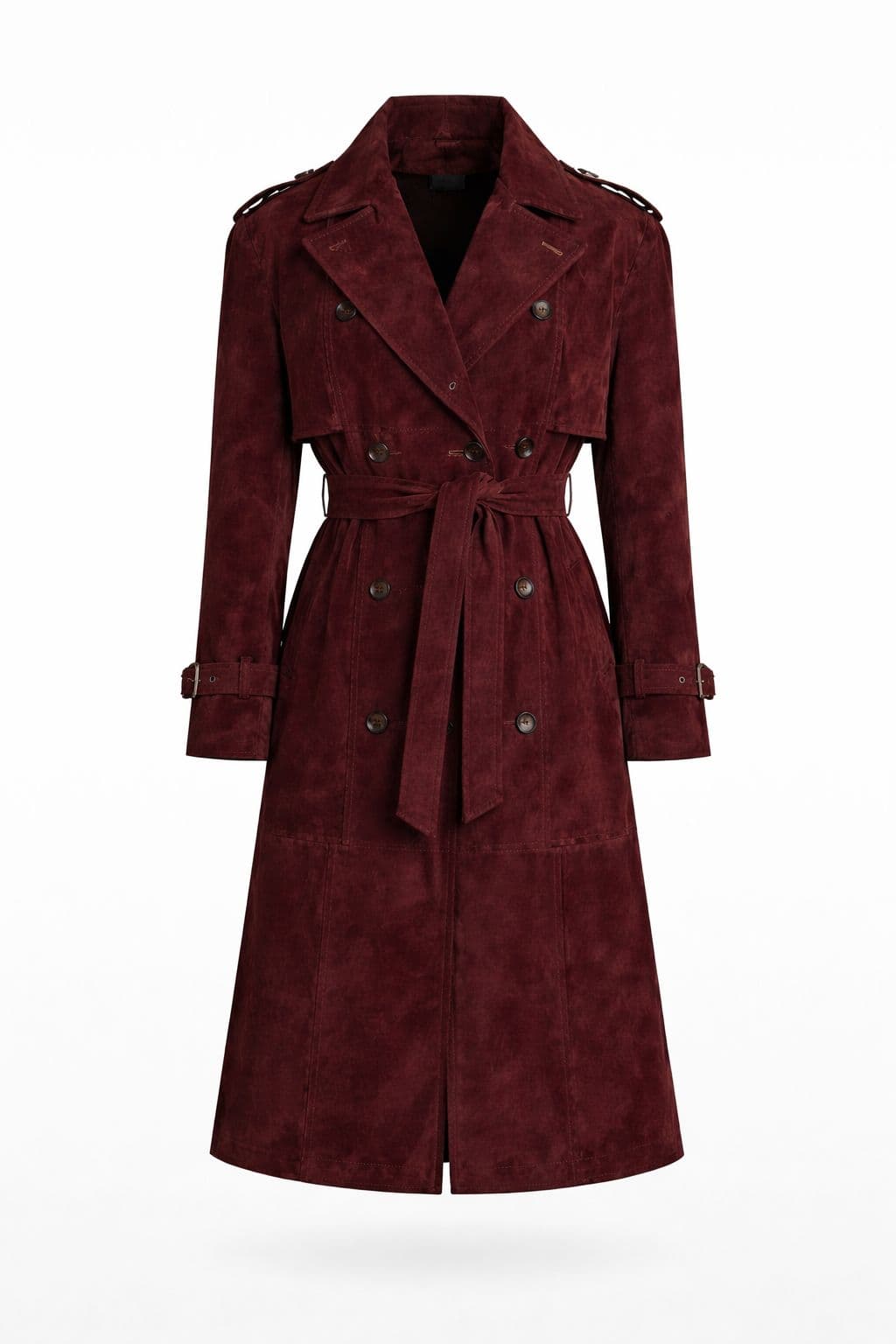
Clémence Bordeaux Suede Coat - 100% Genuine Premium Suede
$920
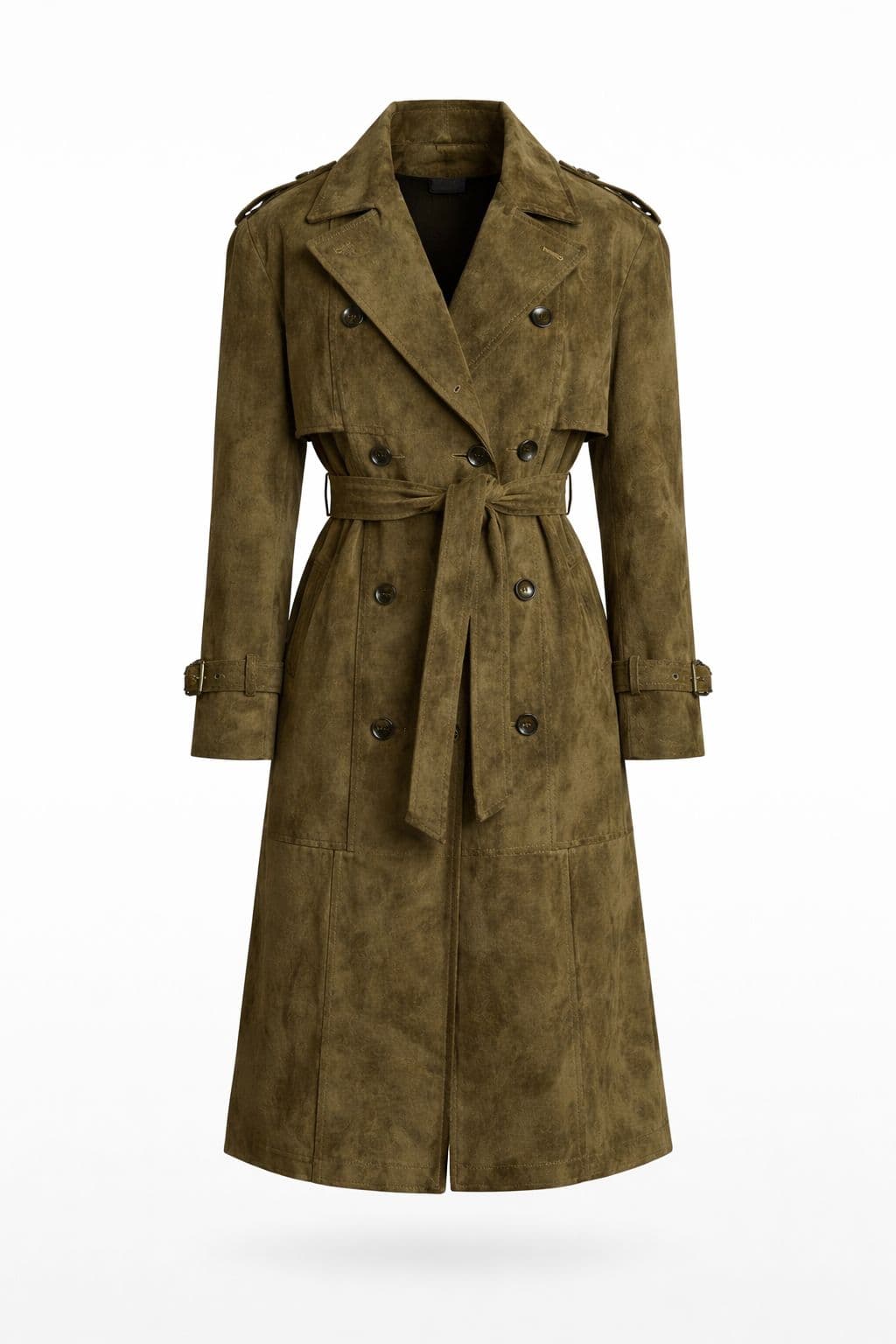
Clémence Olive Suede Coat - 100% Genuine Premium Suede
$920
Free shipping on orders above $330.