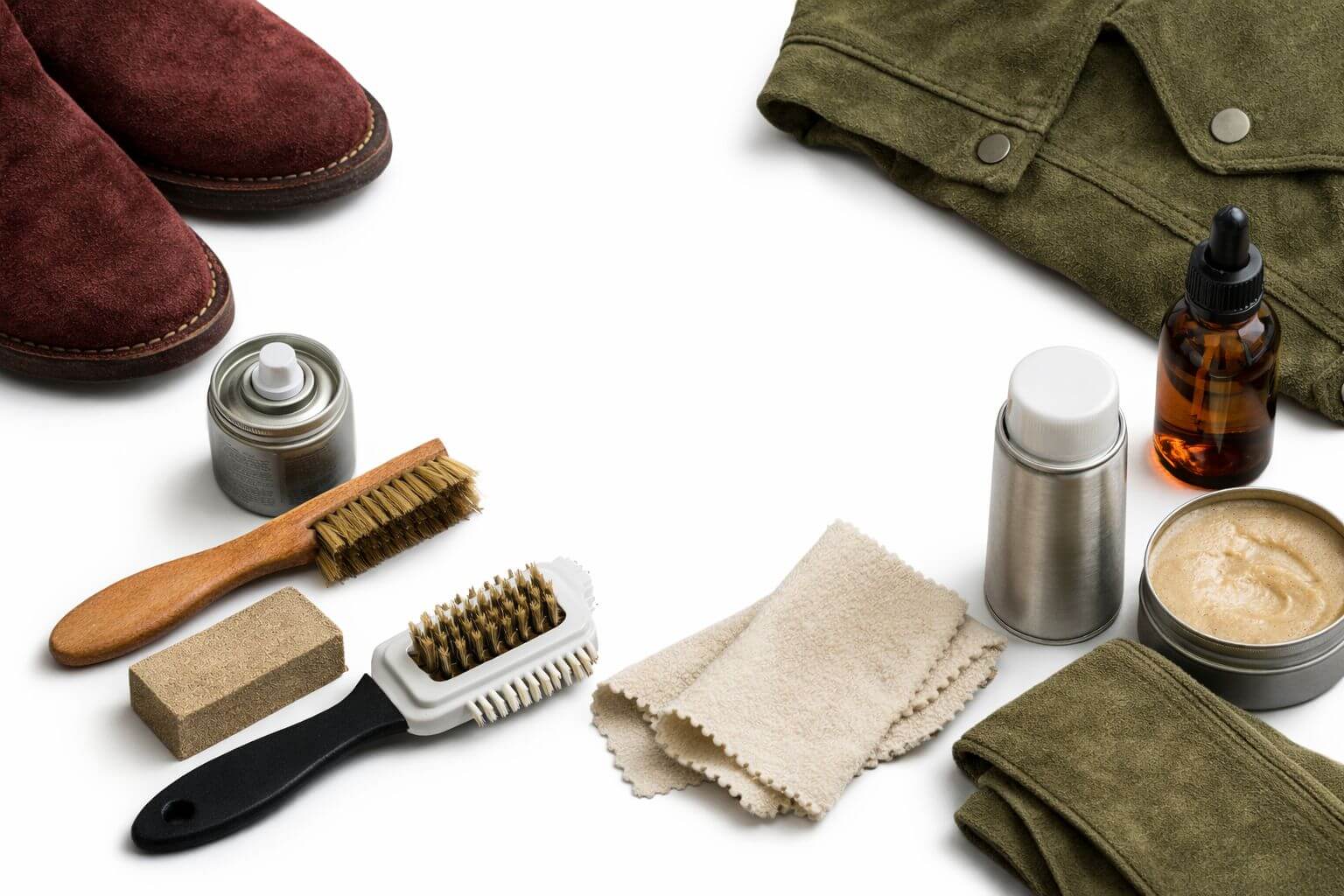
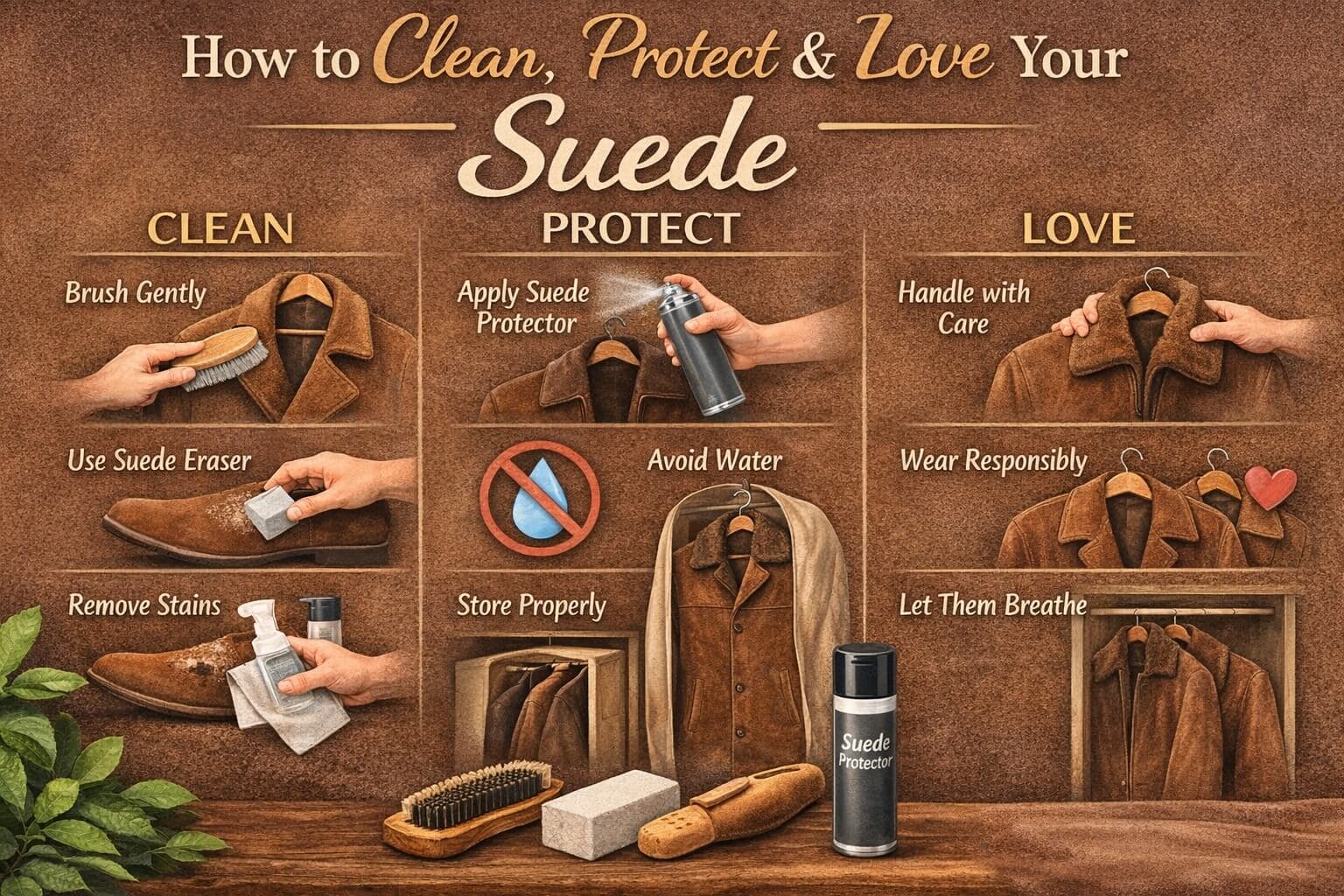
Removing Stains from Suede: Oil, Wine, Ink, Mud, and Salt
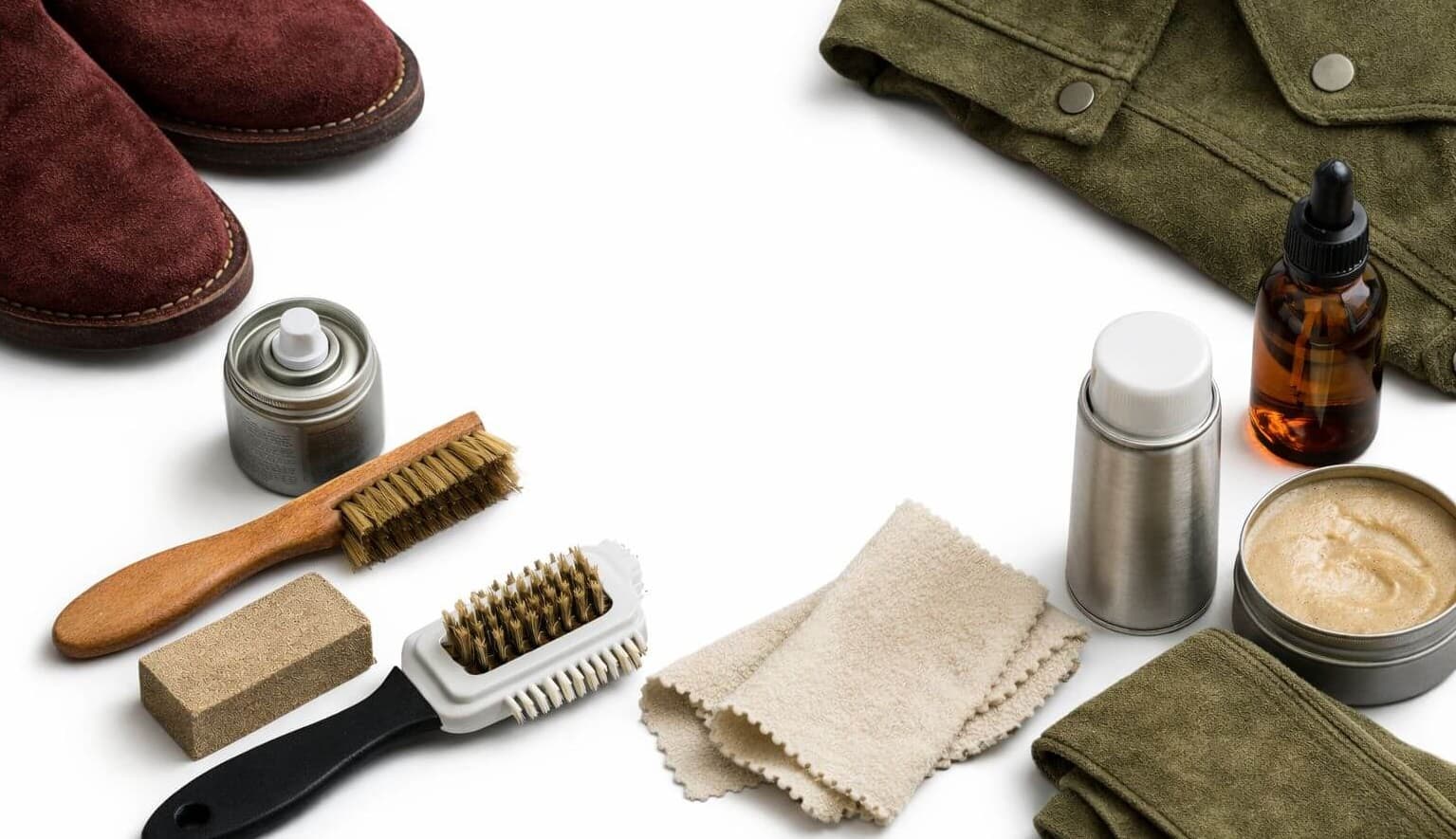
Suede is more forgiving than its reputation suggests, but only if you treat each stain with the right method. The five most common stains all need different approaches, and using the wrong technique on the wrong stain is what creates permanent damage.
Oil and Grease Stains
Oil is the most common stain on suede. The trick is to absorb it before it spreads, not to wash it out.
- Sprinkle cornstarch or talc generously over the fresh stain. Cover the entire affected area.
- Leave it for at least 4 hours, ideally overnight. The powder draws oil out of the suede fibres.
- Brush off the powder with a suede brush, gently and in one direction.
- If a faint shadow remains, repeat the process. Stubborn oil stains may need 2 to 3 cycles.
- If the stain persists after 3 cycles, take it to a specialist cleaner.
Wine and Coffee Stains
Liquid stains spread faster than oil. Speed matters more than technique.
- Blot immediately with a clean dry cloth. Press, lift, repeat. Do not rub.
- Once you have absorbed as much as possible, let the area dry completely at room temperature.
- Brush gently with a suede brush to lift the nap.
- If a colour mark remains, use a suede eraser specifically (not a regular pencil eraser) to gently rub the affected area.
- For deep colour stains that resist erasing, use a suede-specific cleaner foam following the manufacturer's instructions.
Ink Stains
Ink is the hardest stain to remove from suede at home. If the ink is fresh, blot immediately with a clean cloth. Then take the item to a specialist cleaner. Do not attempt rubbing alcohol or hairspray remedies you find online; they often spread the ink and dry out the suede.
Mud and Dirt
Counterintuitively, the best mud stain treatment is to do nothing while it is wet.
- Let mud dry completely. Trying to wipe wet mud spreads it deeper into the nap.
- Once dry, gently break off chunks with your fingers.
- Brush the remaining residue out with a suede brush. Most mud will lift entirely with brushing alone.
- If a faint shadow remains, use a suede eraser on the area.
Salt Stains (Winter)
Road salt is the most common winter problem for suede boots and the lower edges of long coats. Salt creates white tide marks that look alarming but are usually fixable.
- Mix one part white vinegar with one part distilled water.
- Dampen a clean cloth lightly with the solution. The cloth should be barely damp, not wet.
- Dab the salt mark gently. Do not rub.
- Let the area dry fully at room temperature.
- Brush the nap once dry. Reapply waterproofing spray after the area is fully restored.
When to Stop and Call a Specialist
Take the piece to a professional suede cleaner if: the stain is more than 48 hours old and at-home methods have not worked, the stain covers a large surface area, the stain is ink, blood, or unknown chemical, or the suede piece is high-value and you do not want to risk further damage.
Frequently Asked Questions
- Can baking soda remove oil stains from suede?
Yes, baking soda works similarly to cornstarch or talc. Cornstarch tends to be gentler on dyed suede, but baking soda is a reasonable alternative if you do not have either.
- Will water remove a stain from suede?
Plain water can remove some surface dirt but tends to spread oil stains and create new water rings. Use water sparingly and only when misting evenly across a panel.
- Are at-home suede stain methods safe for expensive coats?
Cornstarch for oil and brushing for mud are universally safe. For high-value pieces, send anything beyond those basics to a specialist cleaner.
Stain Rescue Reference
| Stain | Urgency | Tool | Technique |
|---|---|---|---|
| Water | High - blot immediately | Clean dry cloth | Blot, dry flat, brush |
| Red wine | Very high - act in seconds | Dry cloth then talc | Blot, cover with talc, brush after 4 hours |
| Oil or grease | High | Talc or corn starch | Cover, leave overnight, brush |
| Mud | Wait until dry | Suede brush | Let dry fully, break off, brush |
| Ink | Very high | Suede eraser, then specialist | Eraser only - escalate to professional |
| Salt residue | Within 24 hours | Damp cloth, vinegar mix | Wipe with 1:1 white vinegar and water |
Shop the Collection
Every piece is cut from 100% genuine suede and made to be worn for years, not seasons.
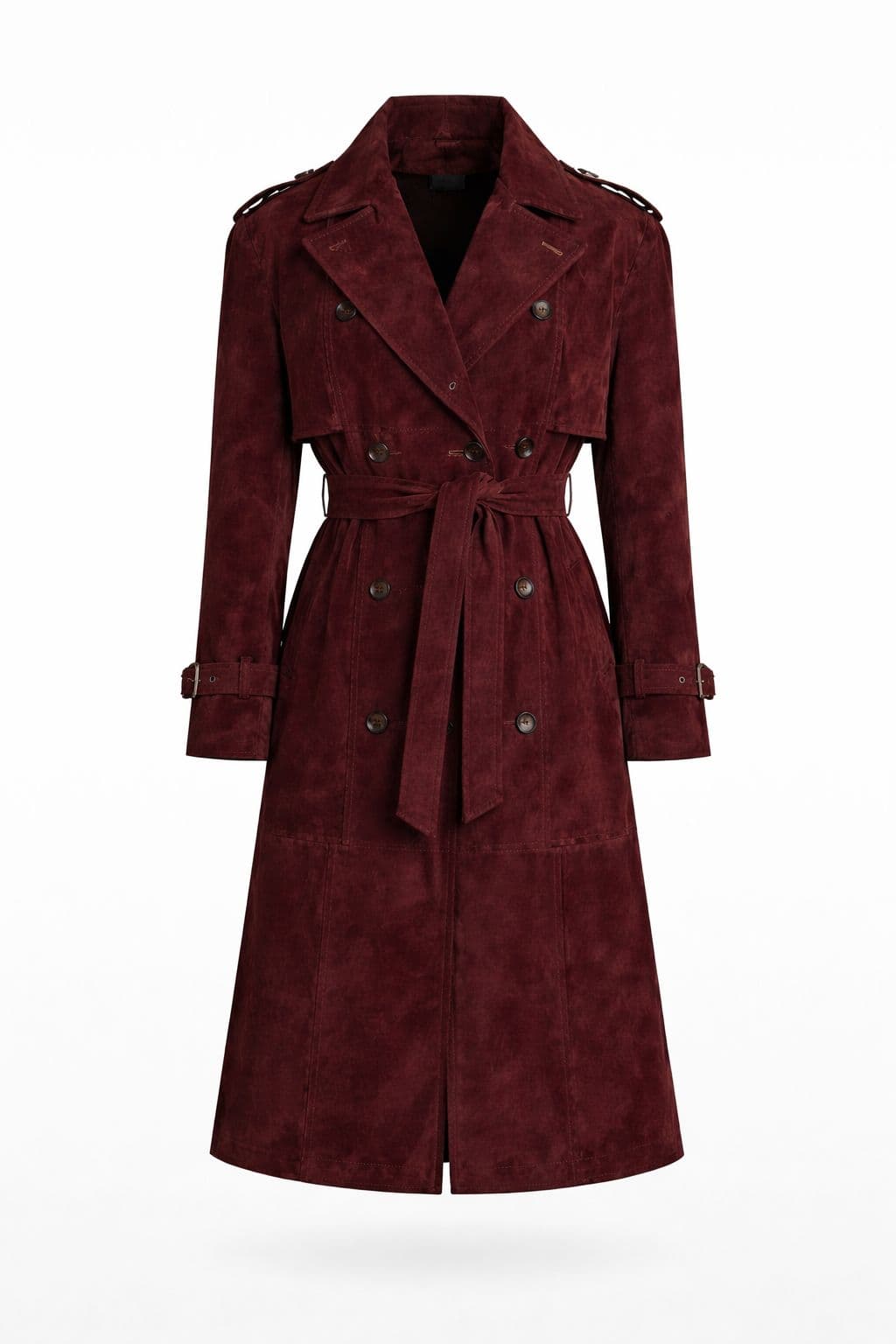
Clémence Bordeaux Suede Coat - 100% Genuine Premium Suede
$920
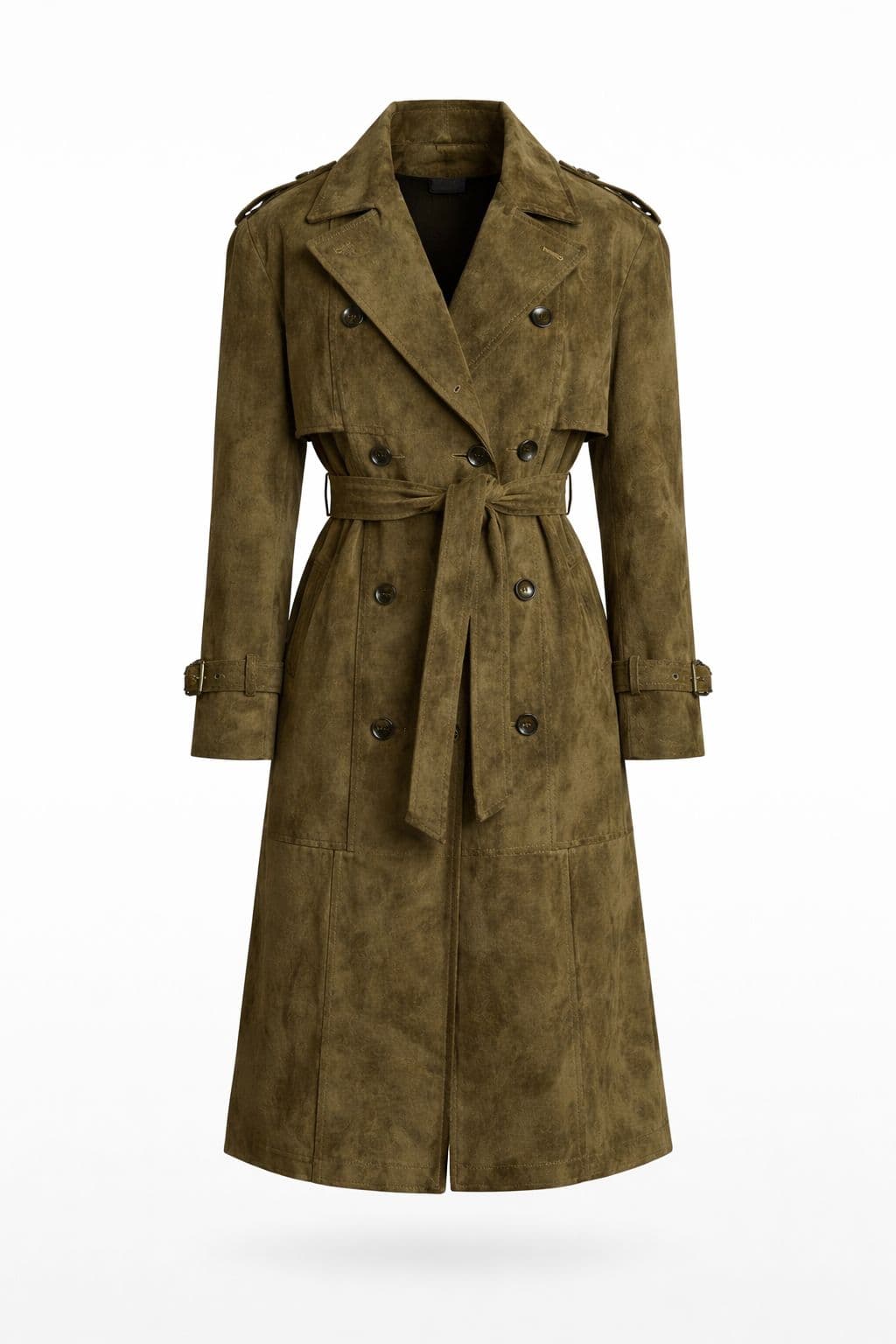
Clémence Olive Suede Coat - 100% Genuine Premium Suede
$920
Free shipping on orders above $330.